Architectural Reverence: The Temple Church as a Silhouette Catalyst
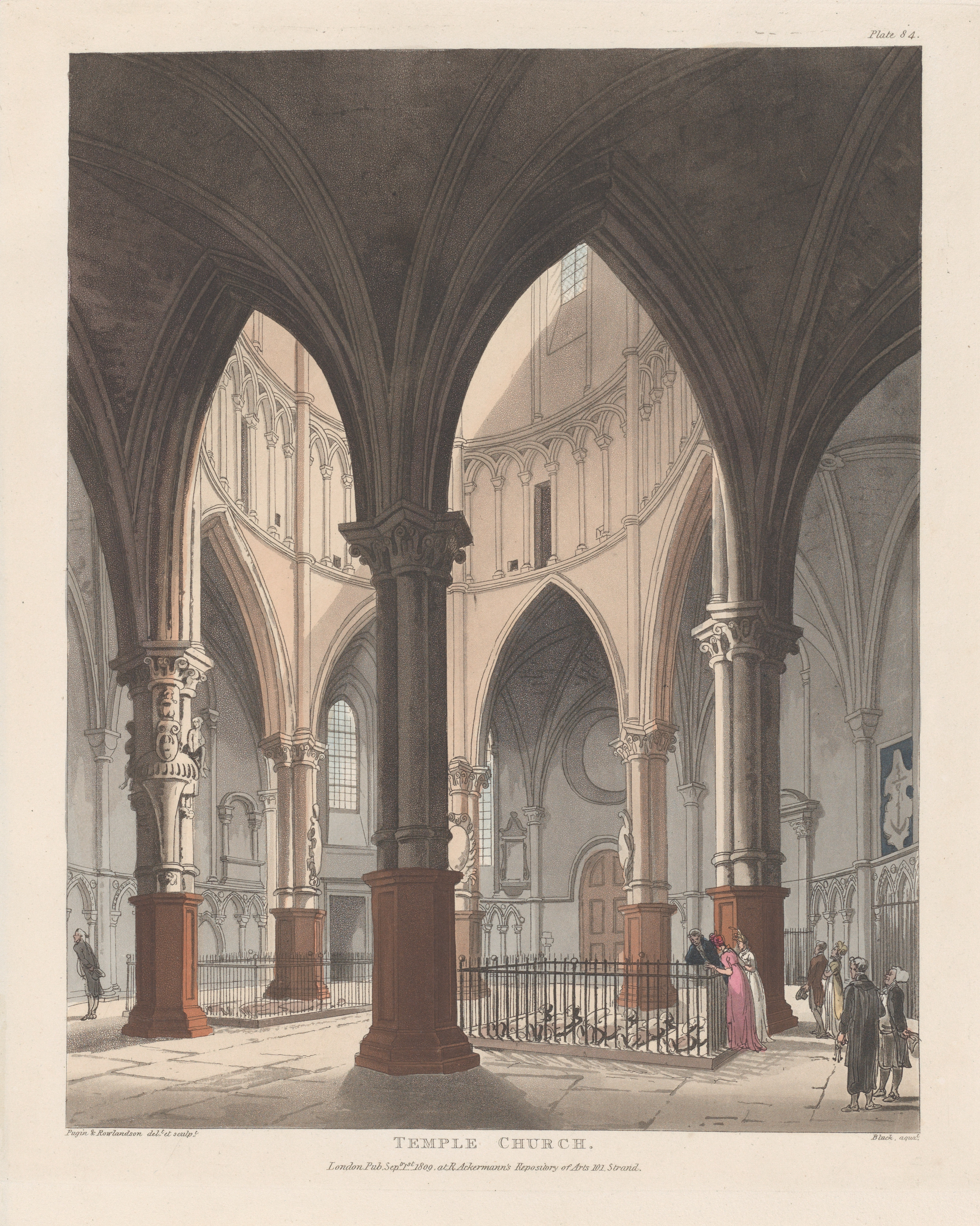
The Temple Church, a circular edifice consecrated in 1185 and steeped in the chivalric history of the Knights Templar, presents an extraordinary case study in aesthetic archaeology. Its geometry—a perfect rotunda juxtaposed against a later Gothic nave—offers a narrative of time, structure, and light. For the 2026 Haute Couture season, this heritage is not merely referenced; it is deconstructed. A hand-colored etching and aquatint of the Temple Church, preserved in the Natalie Fashion Atelier archive, serves as the primary artifact. This print, with its deliberate tonal washes and precise linework, captures the interplay of shadow and stone, informing a silhouette that is both monumental and ethereal. The 2026 collection, titled *Lumière du Temps*, translates the church’s architectural vocabulary into a language of fabric and form, emphasizing classical elegance through structural integrity and restrained opulence.
Geometric Foundations: The Round Church and the Circular Silhouette
The most immediate architectural echo in the 2026 silhouettes is the circular motif. The Temple Church’s rotunda, a symbol of the Holy Sepulchre, dictates a primary silhouette: the dome-shaped cape. This is not a simple circle; it is a volumetric exploration. The hand-colored etching reveals the subtle gradations of light across the church’s limestone columns, inspiring a complex play of opacity and translucency. The cape is constructed from a double-faced silk gazar, one side hand-dyed in a pierre de taille grey, the other in a pale, luminous ivory. The structure is achieved through a series of internal, hidden boning channels that mimic the church’s radiating ribs. This creates a silhouette that is both protective and revealing, a classical elegance born from architectural necessity. The hemline is not straight; it follows the curve of the etching’s shadow line, creating an asymmetrical, almost geological drape that references the wear of time on stone.
Materiality of Light: Hand-Colored Etching and Aquatint Techniques
The chosen artifact—a hand-colored etching and aquatint—is not a passive image. It is a material process that dictates the collection’s entire textile narrative. The aquatint provides a granular, tonal base, while the hand-coloring introduces deliberate, saturated accents. For 2026, this translates into a textile technique we call *Aqua-Tint Broderie*. The base fabric is a micro-pleated organza, its pleats set at varying depths to mimic the aquatint’s granular texture. Over this, a hand-embroidered network of silk floss and fine metallic threads replicates the etching’s linework. The color palette is directly lifted from the print: indigo wash for the shadows, terracotta for the hand-colored accents (a reference to the church’s original painted decorations), and grisaille for the stonework. This is not a print; it is a three-dimensional, textile translation of a two-dimensional process. The result is a surface that changes character under different lighting conditions, echoing the church’s own play of light through its clerestory windows.
Structural Draping: The Gothic Nave and the Vertical Line
While the rotunda inspires the cape, the Gothic nave—with its pointed arches and vertical thrust—informs the silhouette’s elongation. The etching captures the nave’s ribbed vaults as a series of converging lines, a visual momentum that the 2026 collection translates into a corseted bodice with an exaggerated, architectural waist. The bodice is constructed from a single piece of sculpted horsehair canvas, hand-molded to the body, and then covered in the *Aqua-Tint Broderie*. The boning follows the path of the vaulting ribs, creating a structure that is both supportive and visually dynamic. This is paired with a column skirt that falls in a single, unbroken line from the hip to the floor, its weight and drape referencing the church’s massive stone pillars. The skirt is cut on the bias from a heavy silk duchesse satin, its surface left unadorned to contrast with the intricate bodice. This interplay of heavy and light, structured and flowing, is the core of the collection’s classical elegance.
Color as Narrative: The Palette of the Aquatint
The hand-coloring in the etching is not arbitrary; it is a narrative of time and restoration. The original aquatint is monochromatic, but the hand-applied washes—primarily a muted ochre and a faded verdigris—suggest the church’s medieval polychromy and the patina of age. For 2026, this palette is distilled into three primary colorways. The first, *Temple Stone*, is a spectrum of greys and beiges, achieved through a combination of undyed silks and hand-dyed wools. The second, *Verdigris*, is a series of greens and teals, used for evening wear and referencing the church’s lost painted details. The third, *Ochre*, is a warm, earthy gold, reserved for accent pieces and linings. These colors are not applied as flat fields; they are layered through a process of hand-painting and resist-dyeing, directly referencing the etching’s hand-colored washes. This creates a depth of color that is impossible to achieve through digital printing, reinforcing the collection’s commitment to historical craftsmanship.
Silhouette Proportions: The 2026 Architectural Shift
The Temple Church’s influence on the 2026 silhouette extends beyond individual garments to the overall proportion and scale. The etching’s perspective, which emphasizes the church’s verticality within a confined frame, inspires a new approach to the human form. The collection features a raised waistline, echoing the church’s arcade level, and a lengthened torso that mimics the nave’s height. The shoulders are defined by a structural cap, reminiscent of the church’s corbels, creating a strong, architectural line. The hemline, for daywear, falls at the ankle, while evening pieces extend to a train, creating a sense of processional grandeur. This is not a nostalgic recreation; it is a deconstruction of classical elegance into its essential geometric components. The 2026 client is not wearing a costume; she is inhabiting a space defined by light, structure, and time. The silhouette is a dialogue between the body and the built environment, a testament to the enduring power of aesthetic archaeology.
Conclusion: The Artifact as a Living Blueprint
The hand-colored etching and aquatint of the Temple Church is not a relic; it is a living blueprint for the 2026 Haute Couture collection. By deconstructing its classical elegance—its geometry, its materiality, its color, and its light—the Natalie Fashion Atelier has created a silhouette that is both historically informed and radically contemporary. The collection *Lumière du Temps* demonstrates that true luxury lies not in ornamentation, but in the structural integrity and narrative depth of a garment. The Temple Church, through this archival artifact, becomes a source of endless inspiration, a reminder that the most profound innovations often emerge from a deep, technical understanding of the past.