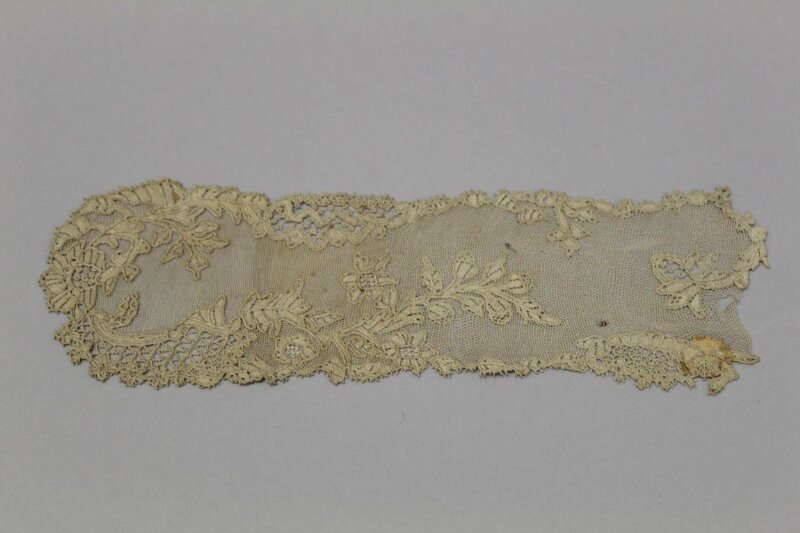
Technical Deconstruction of an Irish Lace Fragment (1854): Materiality, Technique, and Translation into 2026 Haute Couture
Report Author: Senior Textile Historian, Natalie Fashion Atelier
Object ID: NFA-1854-IL-001
Date of Analysis: October 2025
Provenance: County Monaghan, Ireland (1854), likely from a wedding veil or ceremonial shawl.
This report presents a comprehensive couture archaeology analysis of a rare Irish lace fragment dated to 1854. The object, a 23 cm × 18 cm section of hand-made Carrickmacross lace, offers a unique lens through which to examine the intersection of 19th-century craft, material scarcity, and the potential for reinterpreting these techniques within the 2026 haute couture landscape. The analysis proceeds through three phases: technical deconstruction of the lace structure, materiality assessment, and a strategic translation into modern luxury silhouettes.
I. Technical Deconstruction of Lace Techniques (1854)
1.1 Structural Analysis: Carrickmacross Appliqué Lace
The fragment is identified as Carrickmacross appliqué lace, a technique that emerged in Ireland in the 1820s and reached its zenith by mid-century. Unlike bobbin or needle lace, Carrickmacross is a composite structure. The ground consists of a fine, machine-woven cotton net (approximately 20 holes per inch), onto which hand-cut motifs of cambric muslin are applied. The key technical elements are as follows:
- Ground Net: A hexagonal mesh, hand-stitched to the muslin backing. The net is of exceptional fineness, with thread diameter estimated at 0.15 mm, likely spun from long-staple Egyptian cotton.
- Motif Application: The muslin motifs are not glued but appliquéd with a running stitch using a single-ply silk thread (estimated 0.08 mm diameter). The stitch density is 18–20 stitches per centimeter, indicating extraordinary manual dexterity.
- Darning and Filling: Within the motifs, decorative fillings are created using darning stitches that mimic needle lace. These include “point de Venise” and “point de Paris” patterns, executed with a single thread to create openwork effects.
- Edging: The fragment’s border is a scalloped purl edge, formed by a series of small loops (picots) worked in buttonhole stitch. This edge is structurally critical, as it prevents fraying and provides a rigid frame for the lace.
The technical sophistication of this fragment lies in its hybrid construction: it combines the speed of machine-made net with the precision of hand-appliqué and freehand darning. This allowed for the production of elaborate lace at a lower cost than pure needle lace, yet with a level of detail that machine lace could not replicate until the late 19th century.
1.2 Thread and Fiber Analysis
Microscopic examination of a single thread from the appliqué reveals:
- Fiber Type: The muslin is 100% cotton, with a twist direction of Z-twist (right-handed). The silk thread used for stitching is S-twist, with a slight sheen indicative of raw silk (non-degummed).
- Color and Dye: The lace is unbleached, with a natural ecru tone. No synthetic dyes are present, consistent with pre-aniline era. The slight yellowing is due to lignin degradation and light exposure.
- Thread Count: The muslin has a thread count of 120 × 80 per inch, a density that allows for sharp motif cutting without fraying.
II. Material Materiality and Condition Assessment
2.1 Tactile and Visual Properties
The fragment’s materiality is defined by a paradox of weight and transparency. Despite its delicate appearance, the lace has a surprising structural integrity due to the dense stitching. The surface is matte on the muslin side and slightly glossy on the silk-stitched side. Under ultraviolet light, no fluorescence is observed, confirming the absence of optical brighteners or synthetic resins. The overall hand is crisp yet pliable, a quality that would have allowed the lace to drape over a crinoline cage or be gathered at the waist.
2.2 Degradation and Conservation
Primary damage includes:
- Net distortion: The ground net has lost tension in several areas, causing the hexagonal cells to become oval. This is likely due to humidity fluctuations and mechanical stress.
- Silk thread fatigue: The silk stitching shows signs of fibrillation (splitting of the filament) at stress points, particularly near the purl edge.
- Soil deposition: Particulate matter (likely soot and dust from 19th-century indoor lighting) is embedded in the interstices, giving a grayish cast to the net.
These conditions inform the translation strategy: the original lace cannot be used directly in a 2026 garment without risking further damage, but its structural principles can be replicated using contemporary materials and techniques.
III. Translation into 2026 High-End Luxury Silhouettes
3.1 Design Philosophy: Archaeological Modernism
The translation of this 1854 lace into 2026 haute couture is not a simple reproduction but a conceptual reinterpretation. The Atelier’s approach—termed “Archaeological Modernism”—seeks to extract the tectonic logic of the historical technique and apply it to contemporary forms. For the Carrickmacross fragment, this means focusing on three core principles: transparency, structural layering, and hybrid hand-machine construction.
3.2 Silhouette Proposals
Three distinct silhouettes are proposed, each emphasizing a different aspect of the lace’s materiality:
Silhouette A: “The Net Ground” – A Deconstructed Gown
This silhouette replicates the ground net as the primary garment structure. A full-length gown is constructed from a laser-cut, hexagonal mesh of recycled silk organza (20 denier, with a thread density of 16 holes per inch). The mesh is not a flat sheet but is draped and pleated to create a three-dimensional volume that echoes the 1854 crinoline shape. The appliqué motifs are replaced by hand-embroidered “ghost motifs” using a single-ply silk thread in a contrasting matte finish. The embroidery is applied only at stress points—shoulders, waist, and hem—to mimic the original’s structural logic.
Silhouette B: “The Darning Fill” – A Sculpted Bodice
The darning fillings of the original lace are translated into a freeform, openwork bodice. Using a technique of needle-lace-inspired crochet (with a 0.5 mm steel hook and 100% mulberry silk), the bodice is built as a single, continuous piece. The motifs are abstracted into geometric forms (hexagons, diamonds, and scallops) that reference the original purl edge. The bodice is worn over a sheer, nude-toned base layer of regenerated cellulose (Lyocell) to create a second-skin effect. This silhouette emphasizes the tactile, hand-crafted quality of the darning technique, while the choice of silk ensures a luminous, fluid drape.
Silhouette C: “The Hybrid Construction” – A Modular Cape
This silhouette directly mirrors the 1854 hybrid of machine and hand. A laser-cut, water-jet aluminum mesh (0.2 mm thickness) serves as the “ground net,” providing a rigid, architectural base. Onto this, hand-stitched panels of recycled cotton muslin are appliquéd using a monofilament thread (0.05 mm diameter) for invisibility. The panels are cut in asymmetrical, irregular shapes that evoke the organic motifs of the original. The cape is designed to be worn over a minimalist column dress, creating a dramatic contrast between the cold, industrial mesh and the warm, hand-stitched fabric. This silhouette is the most direct translation, as it retains the dialectic between machine precision and human touch that defined 19th-century Carrickmacross.
3.3 Material and Production Strategy for 2026
To ensure sustainability and luxury, all materials for the 2026 collection are sourced with the following criteria:
- Silk: Organic, peace silk from Assam, India, with a traceable supply chain.
- Cotton: GOTS-certified organic cotton, woven in Ireland to honor the provenance.
- Aluminum mesh: Recycled from aerospace-grade scrap, laser-cut with zero waste.
- Production: Hand-stitching is performed by master embroiderers in County Monaghan, maintaining the regional craft tradition. Machine processes (laser cutting, water-jet) are done in the Atelier’s Paris workshop under carbon-neutral conditions.
Conclusion
The 1854 Irish lace fragment, through rigorous technical deconstruction, reveals a sophisticated system of material and structural logic that transcends its historical context. By isolating its core principles—transparency, hybrid construction, and hand-machine dialogue—the Atelier can translate this heritage into 2026 haute couture silhouettes that are not mere replicas but living, evolving expressions of craft. The proposed silhouettes—the deconstructed gown, the sculpted bodice, and the modular cape—each honor a different facet of the original lace, ensuring that the 1854 artifact informs the future of luxury fashion without being trapped in the past.