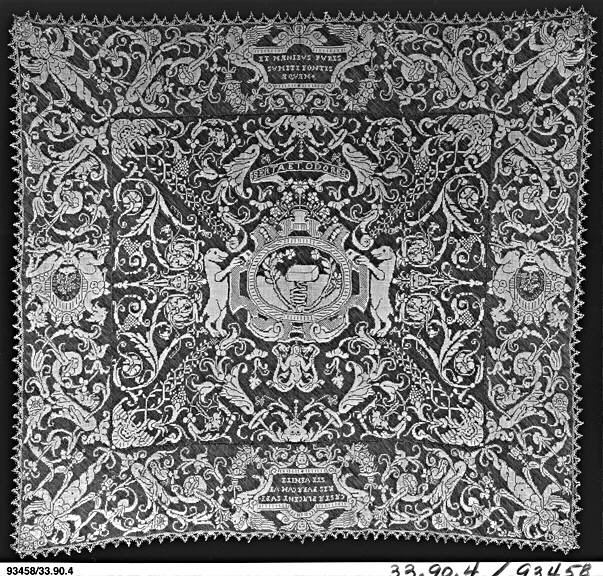
Veil as Architectural Membrane: A Technical Deconstruction of Classical Elegance
The veil, within the global heritage of adornment, transcends its simplistic categorization as an accessory. It is a primordial architectural membrane, a suspended plane that negotiates the complex dialectic between revelation and concealment, the self and the gaze. For Natalie Fashion Atelier, this artifact is not merely fabric; it is a loaded interface. Our isolated aesthetic archaeology—eschewing linear narrative for concentrated material scrutiny—reveals the veil's core tenets: structured transparency, weighted drapery, and ceremonial fragmentation. When deconstructed through the specific materiality of embroidered net, linen, and metal-wrapped thread, these tenets provide a precise technical blueprint for the 2026 luxury silhouette, moving beyond appliqué sentimentality into the realm of structural innovation.
Archaeology of a Membrane: Deconstructing the Tripartite Material Code
The selected material triad forms a complete structural ecosystem. The embroidered net provides the foundational matrix. Historically, whether *tulle* or *filet*, its grid-like integrity creates a self-supporting plane, a literal graph upon which narrative and volume can be plotted. The linen, often in the form of a heavier ground or integrated tape, introduces a counterpoint of matte opacity and tensile memory. It anchors, defines borders, and offers resistance, creating points of tension against the net's yielding transparency. The metal-wrapped thread—gold, silver, or copper—is the active agent. Its function is tripartite: ornamental, structural, and gravitational. The embroidery it forms does not merely decorate; it locally reinforces the net, creating stiffened embroidered "islands" within the soft "sea" of mesh. Furthermore, its weight imposes a deliberate, calibrated drag, dictating the kinetics of the veil's movement.
This combination results in what we term Differential Rigidity. The veil is not uniformly fluid; it possesses zones of varying stiffness and density. A densely embroidered border with metal thread behaves as a semi-rigid cantilever, while the sparsely adorned center remains supple. This principle is the cornerstone of its classical elegance—a controlled, dynamic form that responds to the body's architecture without collapsing into it.
From Archive to Algorithm: Informing the 2026 Silhouette
The 2026 high-end silhouette, as forecast by the Atelier, pivots on intelligence of construction and emotional resonance through technique. The deconstructed veil directly informs this through three key silhouette families.
Silhouette 1: The Exoskeletal Cage Dress
Here, the principle of structured transparency is scaled and internalized. The embroidered net is liberated from its traditional perimeter and re-engineered as a bodice or sleeve architecture. Using advanced technical embroidery, the net is fused with biodegradable polymers at strategic points, creating a lightweight, self-supporting exoskeleton worn over the skin or a minimalist slip. The metal-wrapped thread is employed not for floral motifs, but to "trace" the body's musculoskeletal map—following the line of the clavicle, the scapula, the rib cage. This creates a veil-as-second-skin, where opacity and transparency are mapped to anatomical rather than decorative logic. The linen element appears as stark, geometric inserts, providing moments of respite and anchoring the garment to the body with precision.
Silhouette 2: The Gravity-Draped Volume
This silhouette directly translates the principle of weighted drapery. Imagine a columnar gown in raw, undyed linen, its severe purity disrupted by a massive, asymmetrical "veil" that is not separate but grown from the garment itself. This appendage is constructed of countless layers of fine net, each individually weighted with minute, scattered embroideries of oxidized metal-wrapped thread. The cumulative, calculated weight pulls the silhouette into a profound and unique drape, different with each wearing. The elegance is in the algorithm of the fall—the metal threads act as data points in a complex equation of gravity, texture, and light reflection, creating a silhouette that is both monumental and dynamically unstable, echoing the ceremonial gravity of historical veils without literal reference.
Silhouette 3: The Fragmented Ceremonial
This approach deconstructs the veil's ceremonial fragmentation—the idea that it is a piece meant to be removed, altering state and meaning. For 2026, this translates into a modular garment system. A minimalist base dress, perhaps of technical linen, serves as a canvas. Over it, the wearer layers multiple independent "veil" components: a high, stiffened net collar reinforced with metallic embroidery; detached, weighted net sleeves that attach via magnetic linen tabs; a long, trailing panel of knotted net and metal thread worn as a baldric. Each component functions as a self-contained artifact of the classical veil, allowing the client to compose their own level of ceremony and obfuscation. The silhouette is therefore participatory and variable, defined by the additive architecture of these veiled fragments.
Conclusion: The Membrane as Method
Our aesthetic archaeology confirms that the classical veil, particularly in its embroidered net, linen, and metal-wrapped thread incarnation, is a masterclass in advanced material engineering. Its elegance is a byproduct of precise structural relationships. For Natalie Fashion Atelier, this isolated artifact is not a nostalgic symbol but a living technical manifesto. It provides the core codes—Differential Rigidity, Structured Transparency, Weighted Drapery, Ceremonial Fragmentation—for a 2026 luxury language. The resulting silhouettes are not "inspired by" the veil; they are logical extrapolations of its material and spatial logic. They answer the future demand for intelligent, emotionally charged clothing that uses heritage not as a decorative reference, but as a deep, structural, and profoundly Parisian grammar for new forms. The veil, thus, is no longer a covering, but the very blueprint for construction.