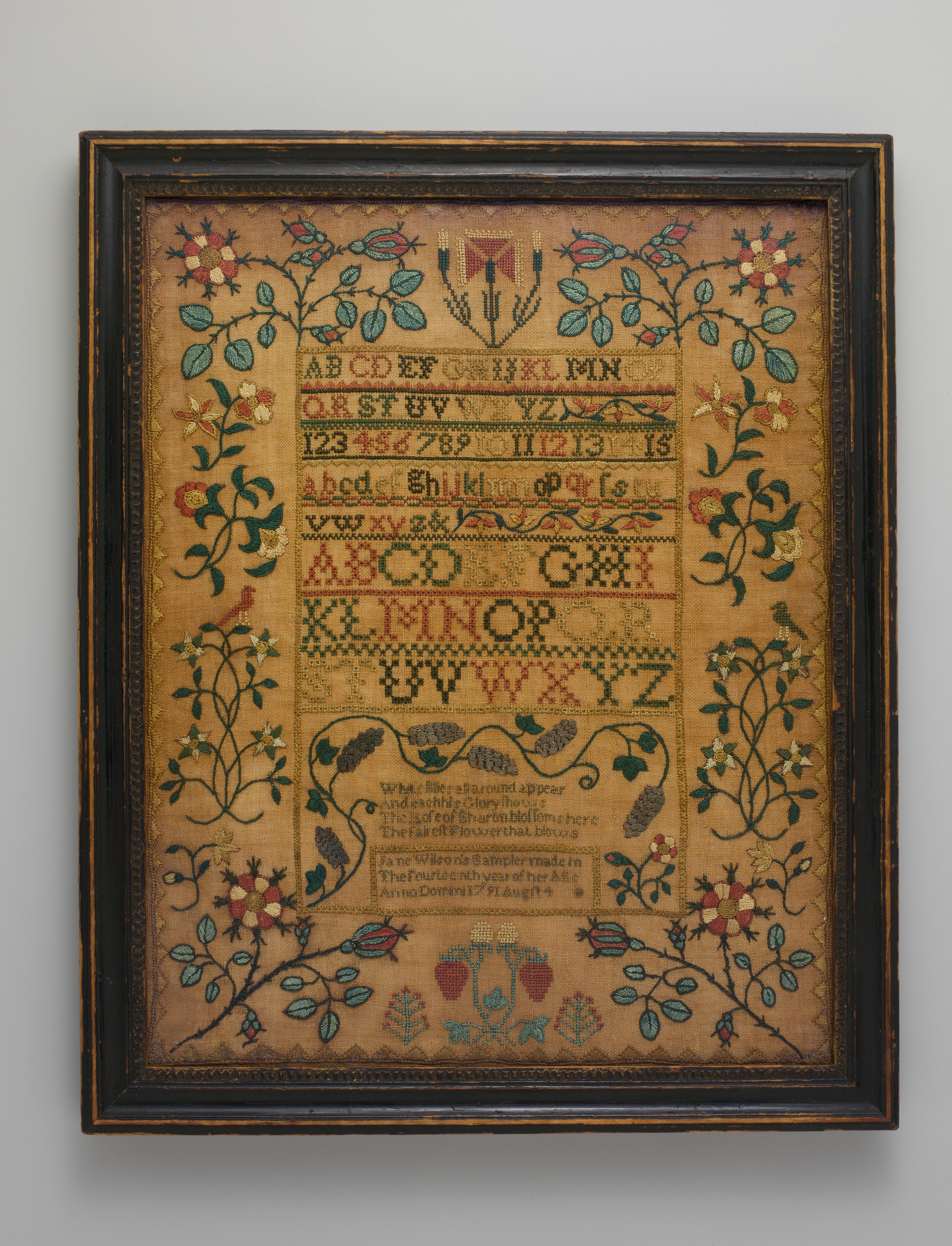
Deconstructing the Sampler: An Aesthetic Archaeology of Silk on Linen
The sampler, a quintessentially American domestic artifact, has long been relegated to the periphery of serious fashion discourse. Yet, within its meticulously stitched grid lies a profound lexicon of structural logic, material tension, and narrative restraint. For Natalie Fashion Atelier, the sampler is not a quaint relic but a blueprint for radical sophistication. This research paper deconstructs the classical elegance of the American silk-on-linen sampler, isolating its aesthetic archaeology to inform the architectural silhouettes of 2026 Haute Couture. By examining its materiality—the friction between glossy silk filament and the matte, woven ground of linen—we uncover a system of controlled tension, precise geometry, and tactile narrative that directly translates into a new paradigm of high-end form.
Materiality as Structural Language: The Silk-Linen Dialectic
The foundational tension of the sampler is its material opposition. Silk, a protein fiber of unparalleled luster and fluidity, is embroidered onto linen, a bast fiber of rigid, absorbent, and matte character. In 18th and 19th-century American samplers, this was not merely decorative; it was a structural dialectic. The silk thread, under tension, creates a raised, glossy topography against the flat, porous linen ground. This micro-architecture of relief—where light catches the silk and is absorbed by the linen—is the core of the aesthetic archaeology we excavate.
For 2026, this material dialogue informs a new category of “tensioned silhouettes.” We propose garments where high-density silk embroidery is applied not as surface ornament, but as a structural membrane. Imagine a bodice constructed from a base of heavyweight Irish linen, upon which silk floss is embroidered in dense, geometric patterns. The embroidery acts as a corset of thread, pulling the linen into a pre-determined, sculptural shape. The linen provides the architectural skeleton; the silk provides the muscle, creating a silhouette that is simultaneously rigid and fluid. The 2026 collection will feature a “Sampler Gilet”—a sleeveless, waist-length jacket where the front panels are entirely composed of this tensioned embroidery, creating a cuirass-like form that breathes with the body’s micro-movements.
Geometric Precision and the Logic of the Grid
The American sampler is defined by its grid—a strict, often hand-drawn, orthogonal matrix that governs the placement of every stitch. This is not a free-form sketch; it is a coded system of coordinates. The alphabet, numerals, and geometric borders are all executed within this rigid framework, creating a visual rhythm of repetition and variation. This precision, born from the necessity of teaching literacy and needlework, is a form of algorithmic design avant la lettre.
In our 2026 haute couture silhouettes, this grid logic is translated into parametric cutting and modular construction. We are developing a series of dresses where the pattern pieces themselves are derived from the sampler’s grid. For instance, a floor-length column gown will be constructed from multiple, interlocking panels of linen, each panel embroidered with a specific motif from a historical sampler—a letter, a flower, a border. The seams between these panels are not hidden; they are celebrated as the “stitch lines” of the garment’s architecture. The silhouette is thus a composite of discrete, embroidered units, creating a fragmented yet cohesive whole. The visual effect is one of controlled deconstruction, where the garment’s logic is laid bare, much like the sampler’s alphabetic rows.
Narrative Restraint: The Power of the Incomplete Motif
A critical element of the sampler’s aesthetic archaeology is its narrative incompleteness. Many samplers feature isolated motifs—a single bird, a lone house, a partial verse. These are not mistakes; they are intentional exercises in skill and memory, fragments of a larger, imagined world. This principle of narrative restraint is profoundly relevant to 2026 luxury. In an era of visual overload, the power of the incomplete, the suggested, becomes a marker of true refinement.
We apply this through a technique we call “motif isolation.” On a simple, unadorned linen sheath dress, a single, large-scale silk-embroidered motif—perhaps a stylized American eagle or a flowering branch—is placed asymmetrically, beginning at the shoulder and trailing off into the fabric, its tail unfinished. The eye is drawn to this singular point of intense craftsmanship, while the rest of the garment remains silent. This creates a hierarchy of attention that is the antithesis of maximalist embellishment. The silhouette is defined by this absence, by the space around the motif. The 2026 “Sampler Silhouette” will feature a series of such “unfinished” pieces, where the embroidery acts as a visual anchor, pulling the silhouette into a dynamic, off-balance asymmetry that is both classical and avant-garde.
Translating the Stitch: From Flat to Three-Dimensional Form
The final archaeological insight is the sampler’s inherent flatness. It is a two-dimensional object, a record of thread on cloth. Yet, the tension of the silk creates a subtle, three-dimensional topography. Our challenge is to explode this topography into volumetric couture. We achieve this through a technique of “raised embroidery scaffolding.” Instead of stitching directly onto the linen ground, we first build a substructure of corded linen or horsehair braid, creating a low-relief armature. The silk embroidery is then worked over this armature, creating a sculptural bas-relief on the garment’s surface.
This translates into a 2026 silhouette where the embroidery itself becomes the primary structural element. Consider a ball gown skirt where the entire surface is composed of concentric, raised rings of silk embroidery, each ring stitched over a progressively thicker cord. The resulting silhouette is a series of rippling, petal-like volumes that echo the sampler’s concentric borders. The garment is no longer a flat piece of fabric cut into a shape; it is a three-dimensional textile sculpture, built from the inside out, stitch by stitch. The linen ground becomes a canvas, and the silk embroidery becomes the architect of volume.
Conclusion: The Sampler as a 2026 Manifesto
The American sampler, in its isolated aesthetic archaeology, offers a radical manifesto for 2026 Haute Couture. It teaches us that luxury is not abundance, but precision; that structure can emerge from tension; and that narrative power lies in restraint. By deconstructing its classical elegance—the material dialectic of silk on linen, the logic of the grid, the power of the incomplete motif, and the translation of flat stitch into three-dimensional form—Natalie Fashion Atelier is forging a new silhouette. It is a silhouette of controlled tension, geometric clarity, and narrative depth. It is the sampler, liberated from its frame, and reimagined as the most sophisticated architecture of the body. This is not a revival; it is a re-engineering of historical intelligence for the future of form.