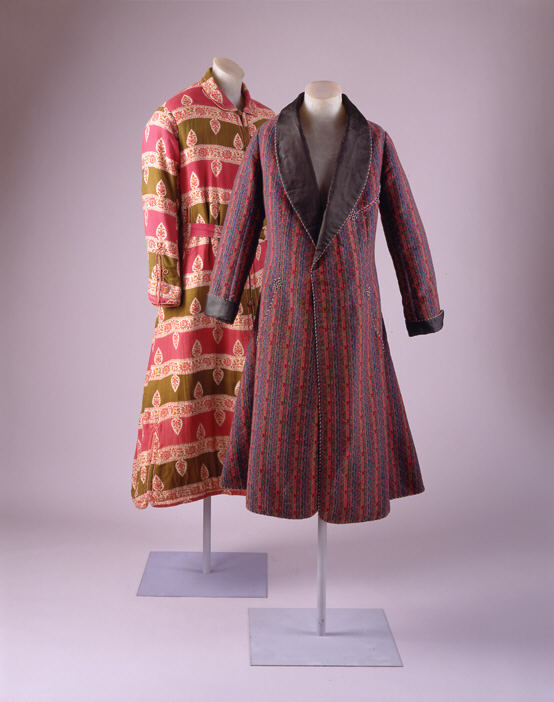
Deconstructing the Smoking Jacket: An Aesthetic Archaeology of American Heritage for 2026 Haute Couture
The smoking jacket, a garment of profound masculine intimacy, has long existed as a cipher for private luxury. Within the archive of Natalie Fashion Atelier, this American-born archetype is not merely a relic of a bygone epoch but a foundational text for a new lexicon of 2026 silhouettes. This research artifact undertakes an aesthetic archaeology of the smoking jacket, isolating its core principles of structure and materiality—specifically the interplay of wool and silk—to deconstruct its classical elegance. The objective is to translate these findings into a technical framework for high-end womenswear, where the jacket’s inherent narrative of controlled opulence is recontextualized for a contemporary, fluid silhouette.
The American Heritage: A Silhouette of Intimate Authority
The American smoking jacket, distinct from its European counterparts, evolved from a pragmatic necessity into a symbol of domestic sovereignty. Its heritage is rooted in the 19th-century gentleman’s study, a space of retreat where formal constraints were loosened. This lineage informs a silhouette defined by structured ease. The fundamental cut is not about rigid tailoring but about a controlled drape that follows the body’s natural repose. The jacket’s hallmark features—a shawl collar, welt pockets, and a single or double-breasted closure—serve as architectural anchors. For 2026, we deconstruct this authority. The shawl collar, traditionally a symbol of unbroken line, is reimagined as a cascading lapel that falls into the back, creating a dramatic, sculptural sweep. The silhouette evolves from a boxy, masculine form to a tapered, elongated line that grazes the hip, offering a new definition of power: one of fluidity and deliberate asymmetry. The historical American smoking jacket’s “ease” is translated into a deconstructed volume, where the shoulder line is softened, the armhole deepened, and the waist is suggested rather than cinched, creating a silhouette that is both commanding and ethereal.
Materiality as Narrative: The Dialogue of Wool and Silk
The materiality of the smoking jacket is its most potent narrative device. The traditional pairing of wool and silk is not arbitrary; it is a dialectic of texture and weight that defines the garment’s character. In our aesthetic archaeology, we isolate these fibers to understand their intrinsic properties and how they inform the 2026 silhouette.
Wool: The Architect of Structure and Drape
The wool of the classic smoking jacket is typically a flannel or a barathea, chosen for its dense, matte finish and its ability to hold a crease while offering a soft, malleable hand. This is not a crisp, military wool but a tactile, forgiving fabric. For 2026, we select a super 150s virgin wool, milled in the French tradition, with a slight twill weave. This provides the necessary weight to anchor the silhouette without rigidity. The wool acts as the architectural skeleton. In the deconstructed silhouette, the wool is used in panels that are cut on the bias to introduce a subtle, organic movement. The traditional front panels, once structured for a straight fall, are now cut with a gentle flare from the shoulder, allowing the wool to cascade like a liquid column. The back panel, historically a single piece, is segmented into three overlapping layers, each cut on a different grain to create a dynamic, sculptural volume that shifts with the wearer’s movement. This manipulation of wool’s inherent weight and drape transforms the jacket from a static garment into a living, kinetic form.
Silk: The Accent of Light and Luxury
Silk in the smoking jacket is traditionally reserved for the lining and the lapel facing—a secret luxury. The lining, often a charmeuse or a crepe de chine, provides a sensuous counterpoint to the wool’s texture. The lapel facing, in a contrasting silk satin, acts as a frame, catching light and drawing the eye. For 2026, we elevate this secondary material to a primary narrative role. The silk is no longer hidden; it is integrated into the surface architecture. We employ a double-faced technique, where a panel of silk satin is fused to the underside of the wool at the lapel and then allowed to fold over the edge, creating a continuous, luminous band that extends down the front placket and into the hem. This is not a mere trim; it is a structural interjection of light. The silk, in a deep, liquid midnight blue or a blush of antique champagne, is also used for the interior of the sleeves, which are cut to be slightly longer than the wool shell, allowing a flash of silk to appear at the cuff. This creates a deliberate, poetic reveal—a whisper of the garment’s hidden history. The silk’s fluidity is further exploited in the creation of a detachable, sculptural capelet that attaches at the shoulder seam, adding a layer of ethereal volume that contrasts with the wool’s grounded weight.
Silhouette Architecture for 2026: The Deconstructed Smoking Jacket
The synthesis of this aesthetic archaeology yields a specific silhouette for the 2026 collection: the “Fluid Sovereign” smoking jacket. This is not a jacket to be worn over a dress; it is a complete, self-contained silhouette. The key technical specifications are as follows:
- Shoulder Line: A dropped, extended shoulder with a soft, unpadded cap. The wool is gathered at the shoulder seam to create a subtle, gathered puff, referencing the historical sleeve head but rendered in a softer, more feminine volume.
- Lapel: A continuous, asymmetrical shawl collar that begins at the nape, crosses the chest, and extends into a long, pointed tail that falls to the mid-thigh on the right side. The left side is a clean, straight line. This asymmetry creates a dynamic, sculptural tension.
- Body: A-line, tapering from the shoulder to a hem that falls just below the hip. The front is cut in two panels: a left panel that is straight and fitted, and a right panel that is cut on the bias and draped to create a soft, cascading fold. The back is a single, continuous panel of wool, cut on the cross-grain to allow for maximum fluidity.
- Sleeve: A two-piece, slightly flared sleeve with a deep, open cuff that reveals the silk lining. The sleeve is cut to be slightly longer than the body, allowing the silk to peek out at the wrist.
- Closure: A single, hidden silk-covered button at the waist on the left side, allowing the right side to fall open in a dramatic, sculptural drape. This single point of closure reinforces the garment’s narrative of controlled release.
This silhouette is a direct translation of the smoking jacket’s classical elegance into a 2026 language of deconstructed luxury. The wool provides the grounding, the structure, the memory of a rigid past. The silk provides the light, the movement, the promise of a fluid future. Together, they create a garment that is both an archaeological artifact and a living, breathing statement of contemporary couture. The smoking jacket, once a symbol of private retreat, is now a public declaration of a new, sophisticated power—one that is soft, dynamic, and deeply informed by its own heritage. This is the essence of the Natalie Fashion Atelier approach: to honor the past not by replicating it, but by deconstructing its very fibers to weave a new narrative for the future.