Officiel de la Couture et de la Mode de Paris: A Technical Deconstruction for Contemporary Translation
This report serves as a technical and material analysis of the Officiel de la couture et de la mode de Paris, the definitive chronicle of French haute couture since its inception in 1921. More than a magazine, the Officiel is an archival bedrock, a structured taxonomy of the craft that documented, season upon season, the evolution of couture’s most guarded techniques. Our objective is not mere historical homage, but a precise archaeological excavation of its documented principles to inform and innovate the Natalie Fashion Atelier silhouette for the 2026 luxury landscape. The focus rests on three pillars: constructional integrity, material intelligence, and the translation of ceremonial craft into a language of modern weightlessness and articulate form.
Technical Deconstruction: The Architecture of Intimacy
The pages of the Officiel reveal a foundational truth: couture is an interior architecture designed for exterior effect. The technical lexicon documented between 1920-1960, in particular, provides our core framework.
Bias-Cutting and Organic Structure: The work of Madeleine Vionnet, exhaustively detailed in the Officiel, exemplifies the principle of constructing garments from the body outwards, rather than imposing geometric panels upon it. The bias cut—fabric utilized at a 45-degree angle to its warp and weft—introduced a revolutionary material behavior: elasticity without mechanical stretch, and a clinging, sculptural drape that followed the body’s topography. For 2026, we translate this not through literal replication, but through the principle of organic structure. This involves engineering modern jerseys, silk crepe-backed satins, and technical matte jacquards to be cut on curves that mirror muscular and skeletal maps, creating seamless, second-skin foundational layers that serve as the canvas for outer complexity.
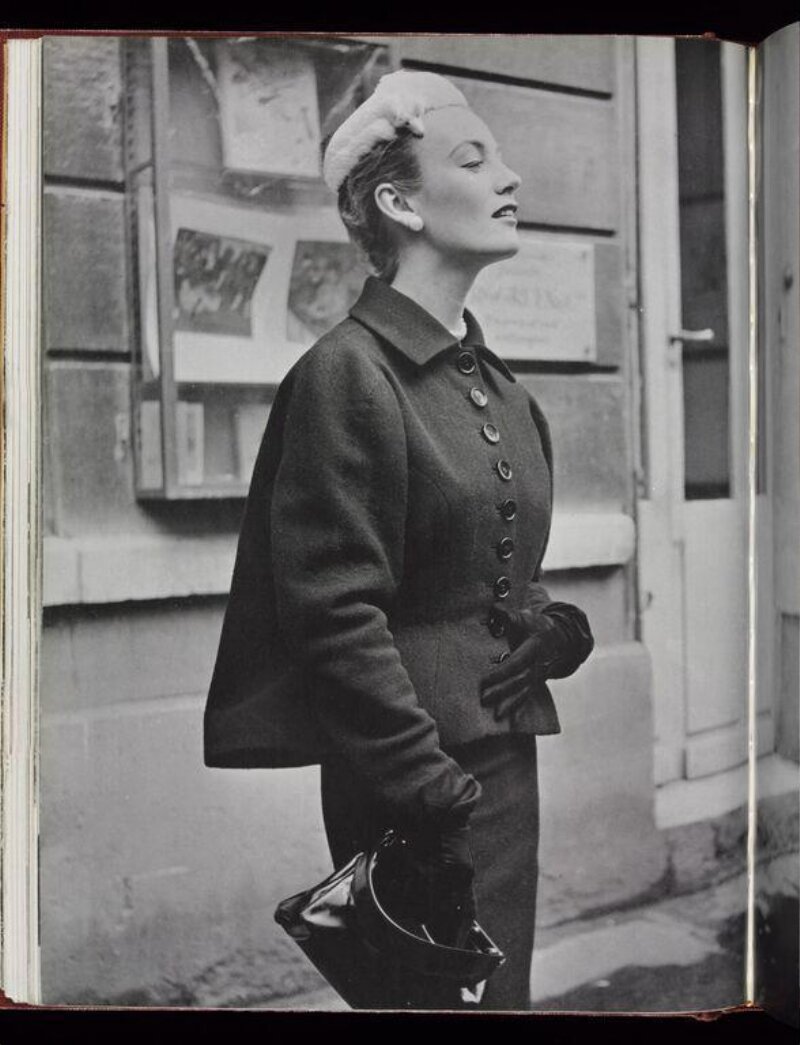
Le Soutien Intérieur (The Internal Support): The Officiel’s photographic plates and line drawings often hint at the hidden engineering: the built-in corsetry of a Dior Bar suit, the horsehair canvas (toile) interfacings, the precise placement of bone casings and weighted hems. This philosophy of autonomous structure—where the garment possesses its own perfected form, inviting the body to inhabit it—is critical. Our 2026 translation moves from rigid understructures to dynamic scaffolding. Imagine lightweight thermo-formed polymers replacing whalebone, creating flexible armatures within tailored jackets. Or, memory-foam-like padding strategically placed not to constrain, but to enhance and sculpt the natural silhouette, creating effortless posture and volume that is self-supporting.
Material Materiality: From Opulence to Intelligence
The Officiel documented an era of material opulence—duchesse satin, faille, grosgrain, and meticulous hand-embellishment. The materiality was tactile, heavy, and declarative. Our 2026 translation shifts the paradigm from opulent weight to intelligent sensuality.
Surface Narrative and Craft Hybridization: The hand-embroidered surfaces of Lesage or the intricate passementerie documented in the Officiel speak to a narrative of time and touch. We preserve this narrative but evolve its medium. Techniques like laser-cut laminates, micro-3D printing on silk georgette, and ultrasonic welding of precious metal foils can create textures that echo the dimensionality of historical beadwork or broderie anglaise, but with a contemporary, precision-engineered finish. The materiality becomes a hybrid: the hand of the artisan is present in the design and finishing, augmented by technology that allows for unprecedented detail and durability.
Weight and Movement: Historical couture fabrics possessed a gravitational dignity. The modern luxury consumer demands that dignity be coupled with ease. Our material selection for 2026 prioritizes high-density natural fibers blended with performance filaments—e.g., Mongolian cashmere woven with carbon nano-threads for strength without bulk, or organic silk taffeta treated with proprietary nanocoatings for stain resistance and enhanced chromatic depth. The goal is to create fabrics that move with liquid ease, hold architectural shape, and possess a functional resilience befitting a dynamic lifestyle.
Translation into 2026 High-End Luxury Silhouettes
The synthesis of these deconstructed principles yields a clear direction for the Natalie Fashion Atelier 2026 collection: Articulated Fluidity.
The Biomorphic Tailored Suit: Replacing the rigid 1940s silhouette, the 2026 suit is a study in articulated movement. Jackets, informed by bias principles, are cut as a single spiraling form from shoulder to hem, eliminating side seams where possible. Internal dynamic scaffolding at the shoulders and blades creates a powerful, natural line. Trousers employ a hybrid of bias and straight-grain panels to streamline the leg while allowing for full, unencumbered movement. The material is a lightweight, sculptural wool-ceramic blend that holds a press but flows.
The Volumetric Minimal Gown: Eveningwear sheds its layered petticoats. Volume is generated through parametric cutting and engineered fabric. A gown may appear as a simple column from one angle, revealing a cascading, self-structured godet or a floating peplum from another, achieved through the strategic use of fabrics with varying degrees of bias response and weight within a single pattern piece. Embroidery is replaced by textural modulation—heat-transferred velvet patterns on chiffon, or sections of laser-perforated leather laminated onto silk, creating a play of opacity and transparency, weight and air.
The Modular Cape-System: Interpreting the ceremonial cape or sortie de bal, this piece becomes a modular element of modern dressing. Using magnetic closures and strategic weight distribution, it can transform from a structured, short bolero to a flowing, floor-length cape. Its lining is technically detailed, featuring integrated, non-invasive wearable tech interfaces for climate control or lighting, embodying the couture spirit of total, personalized service.
Conclusion: The New Couture Archaeology
The Officiel de la couture provides not a template to copy, but a genetic code to splice. The 2026 Natalie Fashion Atelier client seeks the authority of historical technique combined with the liberation of modern innovation. By deconstructing the archival principles of interior architecture, material ceremony, and sculptural form, we arrive at a new luxury syntax: garments that are intellectually rigorous, emotionally resonant, and physically emancipating. This is couture archaeology in its most vital form—not preserving the artifact, but revivifying its spirit for a new world.