Moche Gold and the 2026 Silhouette: A Study in Structural Opulence
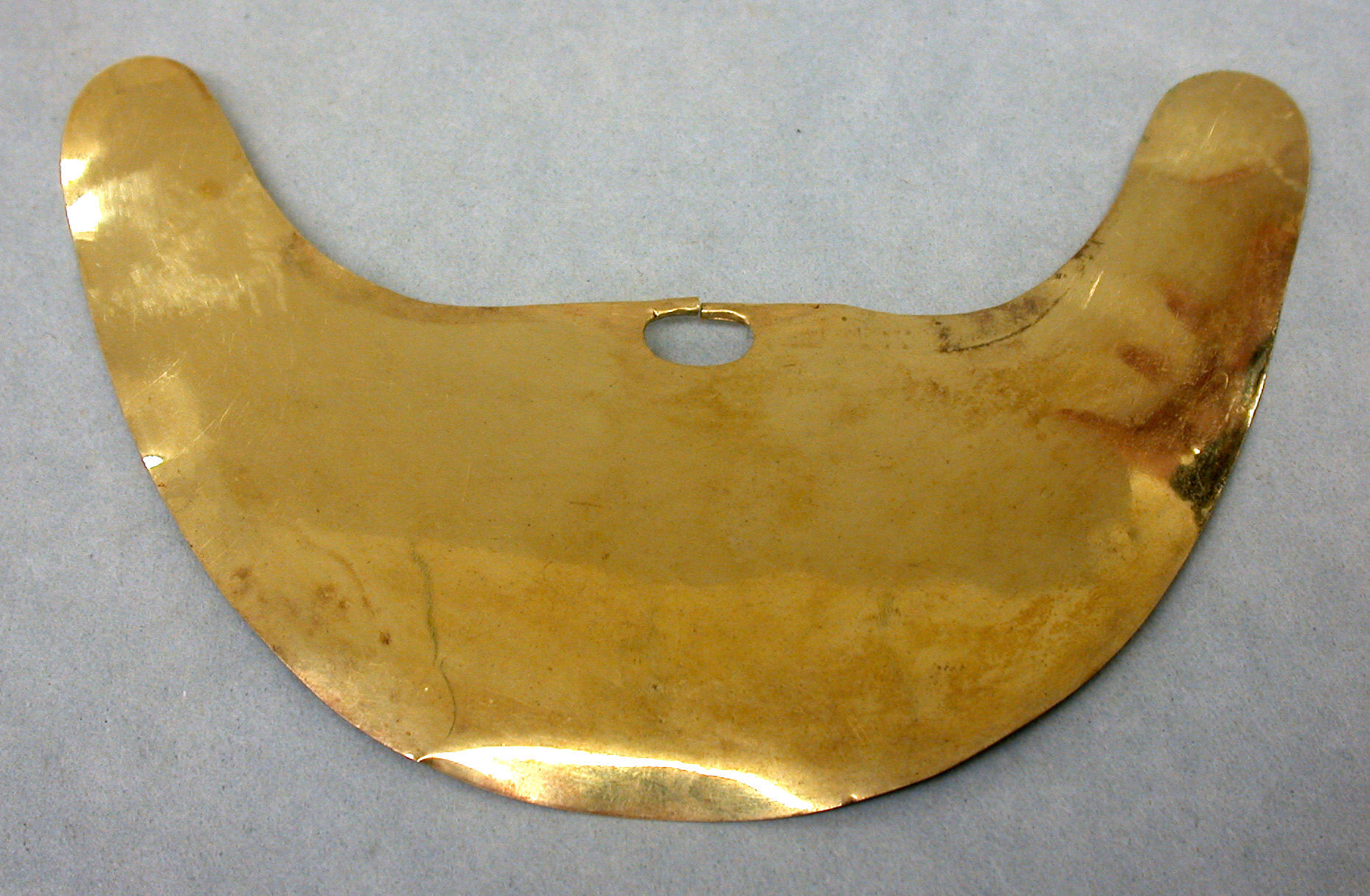
The Moche civilization, flourishing along the arid northern coast of Peru between 100 and 800 CE, produced a corpus of metallurgical work that remains unparalleled in its technical audacity and symbolic density. Among their most compelling artifacts is the gold nose ornament—a nariguera—designed to adorn the nasal septum of elite warriors and priestly rulers. These objects were not mere embellishments; they were instruments of power, calibrated to catch the harsh coastal light and project an aura of divine authority. For the 2026 collection at Natalie Fashion Atelier, this heritage piece serves as a profound architectural precedent, informing a new language of luxury that privileges structural tension, asymmetrical framing, and the deliberate interplay of opacity and brilliance.
The Technical Lexicon of Moche Goldwork
The Moche goldsmith operated within a sophisticated technological framework. Using techniques of lost-wax casting, repoussé, and gilding, they created ornaments that were both lightweight and volumetrically complex. The nose ornament, typically crescent-shaped or trapezoidal, was designed to project outward from the face, creating a negative space between the metal and the skin—a deliberate void that emphasized the wearer’s features while simultaneously commanding the visual field. This principle of projected volume is directly translatable to the 2026 silhouette. We are moving away from the flat, body-hugging forms of recent seasons toward a sculptural approach that extends the body’s architecture into the surrounding space.
The materiality of gold in Moche culture was not merely decorative. It was a solar medium, a substance that captured and redirected light. The surface treatments—hammered textures, incised geometric patterns, and the occasional inlay of turquoise or shell—created a changing visual surface that responded to the wearer’s movement. For our atelier, this informs a material strategy for 2026: the use of high-karat gold leaf applied to structured silk organza, creating a fabric that shifts from matte to luminous as the body moves. The effect is not one of uniform shine, but of controlled radiance, echoing the Moche’s mastery of light modulation.
Deconstructing the Classical Elegance: The Nose Ornament’s Formal Logic
To deconstruct the classical elegance of the Moche nose ornament is to understand its formal paradox. It is at once minimal in its base geometry—a simple crescent, a clean arc—yet maximal in its surface treatment. This duality is the essence of high-end couture. The 2026 silhouette borrows this principle: a garment’s foundation must be architecturally pure, a clear statement of line and proportion, while its surface becomes a field for intricate, labor-intensive embellishment. Consider a column gown in heavy duchesse satin, its silhouette an unbroken vertical line from shoulder to floor. The surface, however, is entirely encrusted with hand-stitched gold lamé scales, each one individually placed to catch the light like the hammered surface of a Moche nariguera. The result is a garment that reads as monolithic from a distance but reveals its complexity upon approach.
The nose ornament also introduces a critical concept of asymmetry and framing. Because it is worn on the nasal septum, it bisects the face, creating a vertical axis of focus. This is not a symmetrical adornment; it is a central interruption that redefines the viewer’s gaze. For 2026, this translates into silhouettes that interrupt the expected line. A jacket with a single, exaggerated shoulder extension that projects outward like a crescent moon. A skirt with a diagonal gold panel that cuts across the hip, creating a visual weight that pulls the eye along a specific trajectory. The elegance lies not in perfect balance, but in controlled imbalance—a principle the Moche understood intuitively.
Archive Resonance: The Mirror with Split-Leaf Motif
Our archive node—Mirror with Split-Leaf Motif—provides a crucial conceptual bridge. This artifact, a silver mirror inlaid with gold split-leaf palmettes, embodies the Moche’s fascination with dual materiality. One side is a polished silver surface, a cold, reflective plane that denies intimacy; the other is a gold-encrusted relief, a warm, tactile narrative of life and growth. This dichotomy informs the 2026 silhouette through the concept of material dialogue. A garment may present a smooth, impenetrable front—a silver-lamé bodice that reflects the environment—while the back reveals an explosion of gold embroidery, a hidden narrative of craftsmanship and opulence. The wearer becomes a living artifact, offering two distinct experiences to the viewer.
The split-leaf motif itself—a symmetrical but organic form—suggests a fractured geometry that is both classical and modern. For our silhouettes, this translates into cutwork and seam placement that bisect the garment’s surface, creating visual seams that are not structural but ornamental. A gown might feature a gold-threaded split running from the collarbone to the hem, a deliberate fissure that reveals a second layer of contrasting fabric beneath. This is not a functional opening; it is a decorative incision, a nod to the Moche’s mastery of surface division.
From Ornament to Silhouette: Structural Applications for 2026
The Moche nose ornament is, at its core, a structural intervention on the human form. It does not lie flat; it projects, it frames, it redefines. For the 2026 collection, this principle is applied to the shoulder line, the hip yoke, and the neckline. We are developing a series of gold-rigged structural elements—lightweight, wire-reinforced crescents that attach to the garment at key points, extending outward to create a new architectural silhouette. A bolero jacket, for example, features a gold crescent that arcs from the left shoulder blade to the right collarbone, framing the décolletage while leaving the arms free. The effect is both protective and revealing, echoing the Moche warrior’s use of the nariguera as a symbol of invincibility.
The materiality of gold is further explored through textile innovation. We are collaborating with a Lyon-based atelier to develop a gold-flecked jacquard that incorporates actual 24-karat gold thread into a base of black silk. The pattern is a digital reinterpretation of Moche geometric motifs—stepped diamonds, interlocking waves—rendered at a scale that reads as abstract texture rather than literal pattern. This fabric becomes the foundation for a series of structured daywear pieces: a tailored coat with a crescent-shaped collar, a pencil skirt with a gold-paneled front seam, a blouse with asymmetrical gold cuffs that echo the weight of a nariguera.
Conclusion: The Enduring Power of the Projected Form
The Moche nose ornament, in its original context, was a declaration of elevated status and cosmic alignment. For the 2026 collection at Natalie Fashion Atelier, it becomes a declaration of structural ambition. We are not merely borrowing a motif; we are absorbing a formal logic that privileges projection, asymmetry, and material dialogue. The gold is not a surface; it is a structural agent, a force that reshapes the silhouette and redefines the relationship between garment and body. In this, we honor the Moche’s legacy—not as a historical curiosity, but as a living technical resource for the future of haute couture.