Aesthetic Archaeology: Deconstructing Maternal Grace into 2026 Couture Silhouettes
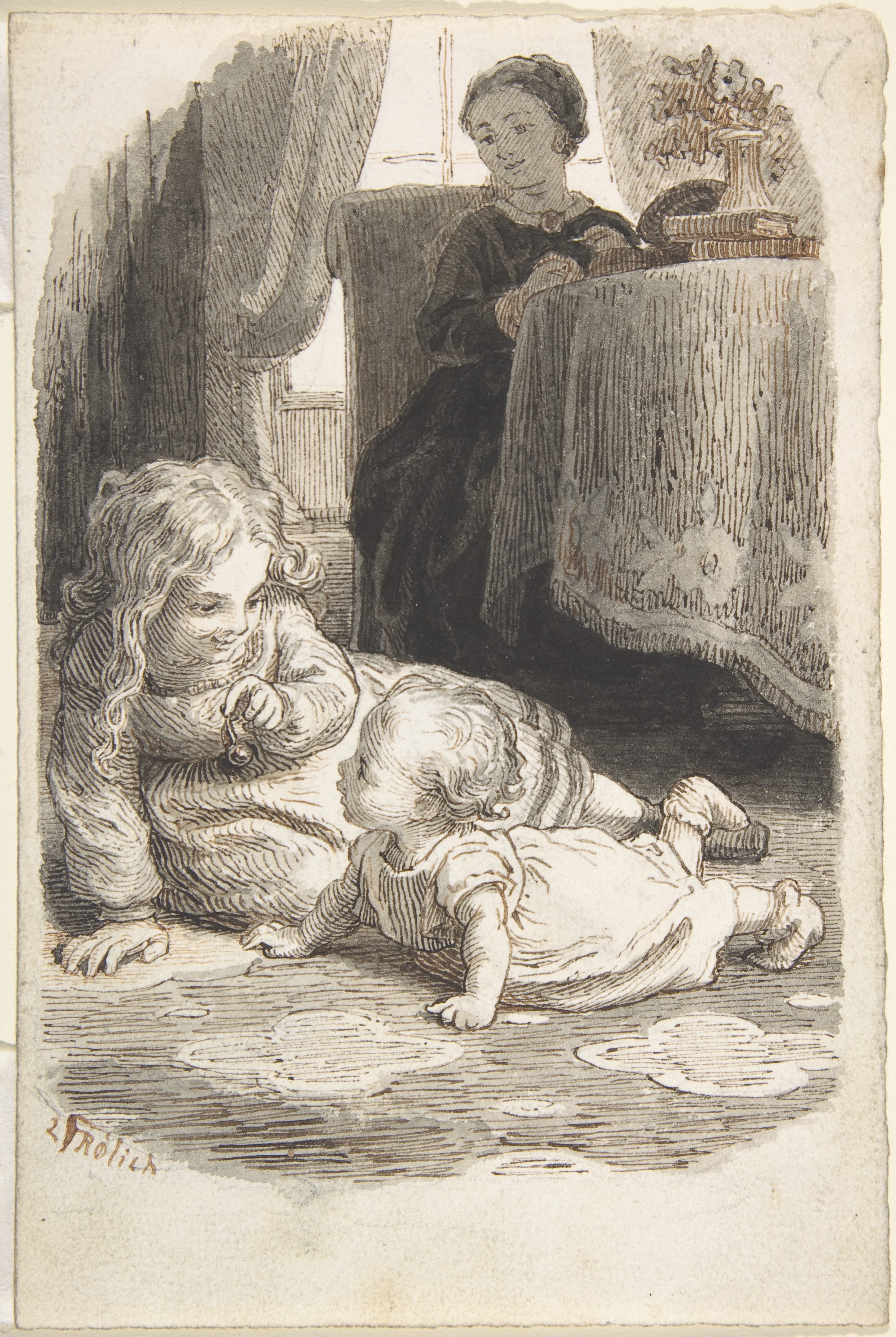
The artifact in question—a dual-sided study rendered in pen and black and brown ink, brush and gray wash, over graphite (recto); graphite (verso)—presents a profound opportunity for aesthetic archaeology. This is not merely a sketch of domestic life; it is a masterclass in the architecture of tenderness. The recto depicts a mother watching over two young children playing, a composition of protective geometry and fluid observation. The verso, a baby in a bassinet, offers a study in contained stillness. For Natalie Fashion Atelier, these images are not sentimental relics but structural blueprints for the 2026 haute couture season. The materiality of the medium—the ink’s permanence versus the wash’s ephemerality, the graphite’s tentative precision—directly informs a silhouette that balances sculptural authority with liquid grace.
Recto Analysis: The Architecture of Protective Embrace
The recto composition is defined by a triangular tension. The mother’s posture—leaning forward, arms extended but not touching—creates a negative space that is as active as the figures themselves. The black ink outlines her form with decisive strokes, suggesting a corseted structure, while the brown ink and gray wash soften the interior, implying draped fabric. This duality informs the 2026 silhouette: a structured bodice with a fluid, asymmetric overskirt. The mother’s gaze, rendered in graphite with a lightness that suggests movement, becomes a keyhole cutout at the shoulder or back—a window to the wearer’s own protective intent. The children’s scattered forms, indicated by rapid ink dashes, translate into geometric appliqués that seem to float on the garment, anchored only by a single seam.
The gray wash, applied with a brush, creates a gradient of opacity that mimics the effect of layered tulle or organza. In 2026, this translates to a technique of tonal draping: a single piece of silk charmeuse is hand-painted with a gradient from deep charcoal to pale silver, echoing the wash’s atmospheric depth. The graphite underdrawing—barely visible yet structurally essential—becomes a boning system of fine, flexible steel, visible only when the wearer moves. This is couture as cartography: the garment maps the invisible architecture of care.
Verso Analysis: The Poetics of Contained Stillness
The verso, a graphite study of a baby in a bassinet, is a study in restrained volume. The bassinet’s curved form, drawn with a single continuous line, suggests a cocoon silhouette for the 2026 collection. The baby’s form is implied rather than detailed—a series of soft graphite smudges within a rigid oval. This contrast between the hard outer shell and the soft inner core is the collection’s foundational paradox. The bassinet becomes a structured cape that envelops the shoulders, while the baby’s amorphous shape informs a free-floating panel at the hip, cut from double-faced cashmere. The graphite’s matte finish inspires a texture of sueded silk, a fabric that absorbs light rather than reflecting it, creating a silhouette that is present yet recessive.
The verso’s economy of line—the absence of ink or wash—speaks to a minimalist construction. For 2026, this manifests as a zero-waste pattern cut from a single piece of fabric, with the garment’s seams acting as the only decorative element. The bassinet’s handle, a curved graphite stroke, becomes a structural strap that arches over the shoulder, echoing the mother’s protective arm from the recto. This cross-referencing between the two sides of the artifact creates a dialectic of movement and stillness that defines the entire collection.
Materiality as Methodology: From Wash to Silhouette
The specific materiality of the artifact—pen and black and brown ink, brush and gray wash, over graphite—is not incidental but instructional. The black ink represents architectural permanence: the seams, the darts, the boning that gives a garment its shape. The brown ink, warmer and less defined, suggests organic draping: the way fabric falls over the body in motion. The gray wash is atmosphere: the space between the body and the cloth, achieved through multiple layers of tulle or hand-pleated organza. The graphite is potentiality: the faint lines of a sketch that might become a seam or might remain invisible, a hidden structure that only the wearer knows.
This hierarchy of materials informs a 2026 silhouette that is layered in meaning. A jacket might have a black ink lapel—sharp, structured, almost graphic—that transitions into a brown ink body—soft, draped, asymmetrical. The gray wash appears as a sheer overlay that clouds the silhouette, creating a moiré effect when the wearer moves. The graphite is the inner lining, a hidden sketch of the garment’s construction, visible only when the jacket is removed. This is couture as palimpsest: each layer reveals a different phase of the creative process.
2026 Silhouette Synthesis: The Maternal Code
The 2026 collection from Natalie Fashion Atelier, titled “Le Regard” (The Gaze), synthesizes these archaeological findings into a coherent silhouette language. The primary form is the “Protective Triangle”: a structured bodice with a V-shaped neckline that extends into a draped, asymmetrical hem, echoing the mother’s leaning posture. The secondary form is the “Cocoon Cape”: a cape that is fitted at the shoulders and flares into a rounded back, inspired by the bassinet’s curve. The tertiary form is the “Floating Panel”: a piece of fabric that is attached at only one point, moving independently of the body, representing the children’s scattered play.
The color palette is drawn directly from the artifact: ink black, sepia brown, charcoal gray, and graphite silver. The fabrics are chosen for their ability to mimic the medium’s texture: double-faced wool for the black ink, silk crepe for the brown ink, tulle and organza for the gray wash, and sueded silk for the graphite. The construction techniques are equally archaeological: hand-painted gradients, zero-waste pattern cutting, and visible boning that references the underdrawing.
This is not nostalgia. It is aesthetic archaeology in its purest form: the excavation of a historical masterpiece’s structural logic and its translation into a contemporary silhouette. The mother’s gaze, the baby’s stillness, the children’s motion—these are not themes but tectonic forces that shape the garment from within. The 2026 client is not wearing a reference to a drawing; she is wearing the drawing’s underlying architecture, a structure of care that is both timeless and utterly new.