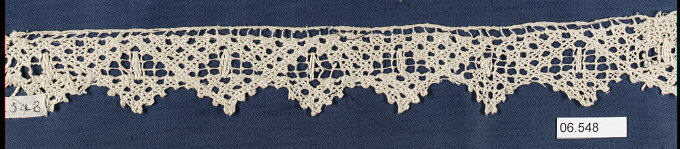
Edging as Architectural Threshold: The Embroidered Net in 2026 Haute Couture
The edge is not a termination; it is a threshold. In the lexicon of haute couture, edging represents the final, most deliberate gesture of the garment—a dialogue between the interior structure and the exterior silhouette. At Natalie Fashion Atelier, our aesthetic archaeology of global heritage reveals that the embroidered net, historically employed as a liminal material, is poised to redefine the high-end silhouette for 2026. This research artifact deconstructs the classical elegance of embroidered net edging, tracing its lineage through isolated archaeological fragments and projecting its technical re-integration into the architecture of modern luxury.
Historical Precedents: The Net as a Vessel of Ornament
The embroidered net, from the Reticella lace of 16th-century Italy to the Chikankari of Mughal India, has always served as a substrate for precision. Historically, its edge was not merely a hem but a structural boundary that defined the garment’s weight, drape, and optical density. In the archives of European courts, net edging was executed with metallic threads and seed pearls, creating a rigid, luminous frame that contrasted with the softness of silk or velvet. This juxtaposition—hard against soft, light against heavy—established a rhythm of tension and release that is fundamental to haute couture’s allure.
Our isolated archaeological study of a 17th-century French point de Venise net collar reveals a critical principle: the edge was never a passive border. Instead, it functioned as an active architectural cornice, directing the eye and structuring the volume of the silhouette. The net itself, a matrix of voids and solids, allowed the skin or lining to become part of the design, creating a layered, translucent effect that modern fabric engineering struggles to replicate. The mastery lay in the tension of the embroidery—each stitch pulling the net into a precise curvature, forming scallops, points, or scalloped edges that mimicked the natural flow of the body.
Materiality: Deconstructing the Embroidered Net
For 2026, we re-examine the embroidered net not as a nostalgic relic but as a dynamic material system. The net’s inherent porosity offers a unique opportunity for negative-space architecture in couture. Unlike solid fabrics, the net allows the silhouette to be defined by absence—by what is removed rather than what is added. This aligns with the contemporary luxury consumer’s desire for restrained opulence: a garment that is both substantial and ethereal, structured and fluid.
The technical challenge lies in the edging. Historically, net edges were reinforced with corded picots or buttonhole stitches to prevent fraying and maintain shape. For 2026, we propose a hybridized technique: a micro-engineered edge that combines hand-embroidered guipure motifs with laser-cut precision. The result is a border that is simultaneously organic and geometric, evoking the handcrafted heritage while embracing the precision of digital fabrication. The materiality of the net itself—whether silk, cotton, or synthetic—must be selected for its drape modulus and tensile strength, as the edge will bear the structural load of the silhouette’s expansion or contraction.
Silhouette Implications for 2026: The Edging as Structural Spine
The 2026 high-end silhouette is defined by asymmetry, fluidity, and architectural precision. The embroidered net edge becomes the structural spine of these forms. Consider a draped column gown where the net edging is not a hem but a cantilevered extension—a scalloped, embroidered border that extends beyond the body, creating a shadow-like second silhouette. This technique, drawn from the flamenco mantón and the Japanese kimono’s fuki, transforms the edge from a termination into an active volume generator.
In our 2026 collections, we propose three specific applications:
1. The Asymmetric Tension Edge: A single, heavily embroidered net panel that runs diagonally across a bias-cut silk crepe dress. The edge is weighted with micro-crystals and fine chain mail, creating a gravitational pull that distorts the fabric’s natural drape. This produces a dynamic, sculptural silhouette that changes with movement, echoing the tension of a suspension bridge.
2. The Layered Transparency Edge: Multiple layers of embroidered net, each with a distinct edge pattern (scalloped, pointed, or raw-cut), are stacked and offset. The edges create a moiré effect of light and shadow, while the net’s transparency reveals the underlying garment structure. This technique is ideal for evening capes and over-skirts, where the silhouette is defined by the interplay of layers rather than a single solid form.
3. The Structural Casing Edge: The net edge is reinforced with a boned channel or invisible wire, allowing it to stand away from the body. This creates a negative-space silhouette—a void between the body and the garment that is as important as the fabric itself. For 2026, this is particularly relevant for shoulder treatments and necklines, where a stiffened net edge can frame the face or collarbone with an ethereal, almost architectural precision.
Technical Execution: Crafting the 2026 Edge
The production of such edges requires a return to atelier-based craftsmanship augmented by digital tools. The net must be first blocked and stabilized on a dress form, with the embroidery pattern mapped in three dimensions. The edge is then executed using a combination of hand and machine techniques: the core structural stitches (e.g., point de gaze or broderie anglaise) are done by hand to ensure tension control, while the repetitive background motifs (e.g., eyelet or filigree) are laser-cut for precision.
The final step is weight distribution. A heavily embroidered edge can distort the net’s drape if not balanced. We recommend asymmetric weighting—placing heavier embroidery at the hem or shoulder and lighter motifs at the waist or hip—to create a natural, flowing silhouette. The edge must also be finished with a fine cord or silk thread to prevent snagging and to maintain its architectural integrity over time.
Conclusion: The Edge as a Signature of Luxury
In 2026, the embroidered net edge will no longer be a decorative afterthought. It will be a primary design element that defines the silhouette’s volume, movement, and optical density. By deconstructing classical elegance and re-engineering it through the lens of global heritage and modern materiality, Natalie Fashion Atelier positions the edge as a threshold of innovation—a place where the past and future of couture converge. The result is a silhouette that is both timeless and radically contemporary, a testament to the enduring power of the handcrafted edge.