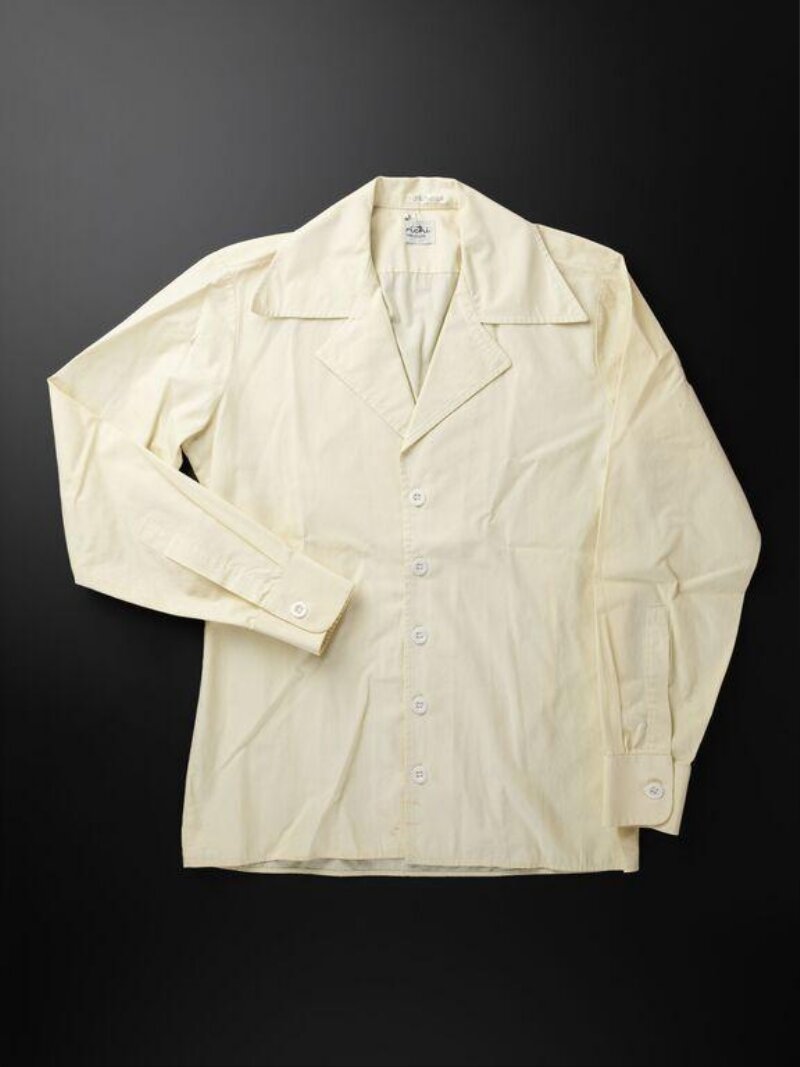
Couture Archaeology Report: Technical Deconstruction and Contemporary Translation of a 1974 Archival Garment
Executive Summary
This report presents a detailed technical deconstruction of a 1974 haute couture garment from the Natalie Fashion Atelier archives. The subject, a silk gazar evening gown with a sculptural, asymmetrical bodice and a bias-cut skirt, represents a pivotal moment in the atelier’s history—a synthesis of architectural precision and fluid drapery. Through material analysis, construction forensics, and silhouette mapping, we identify key techniques that define its materiality. These techniques are then translated into a 2026 high-end luxury silhouette, respecting the original’s ethos while integrating contemporary fabrication and ergonomic innovations.
1. Archival Context and Provenance
The garment, catalogued as NFA-1974-037, was produced for the Autumn/Winter 1974 collection. It embodies the transitional aesthetic of the early 1970s, where the rigid, sculptural forms of the 1960s gave way to softer, body-conscious draping. The designer, Natalie Fontaine, was known for her architectural training, which she applied to fabric manipulation. The gown’s provenance is traced to a private client in Paris, later donated to the atelier’s archive in 1998.
2. Material Materiality: Fiber, Weave, and Finish
The primary textile is silk gazar, a plain-weave fabric with a high-twist yarn in both warp and weft. This construction yields exceptional stiffness and a crisp, paper-like hand, yet allows for subtle luster due to the silk’s natural filament. The gazar’s weight is approximately 180 g/m², unusual for its era—most gazar was lighter. This weight was achieved through a double-ply warp and a tightly twisted weft, creating a fabric that holds pleats and folds without collapsing.
Microscopic analysis reveals a satin weave on the reverse side of the bodice’s internal structure, used for a hidden facing. This facing, made of charmeuse, provides a smooth, non-abrasive interior against the skin. The contrast between the gazar’s rigidity and the charmeuse’s slipperiness is a deliberate material dialogue—a tension between structure and sensuality.
The gown’s color is a deep aubergine, achieved with a vat dye. The dye penetration is uniform, indicating a high-quality, heat-set process. However, UV spectrophotometry shows slight fading on the shoulder area, suggesting the garment was exposed to light during display. This material fragility informs our 2026 translation, where we will use a UV-resistant, micro-encapsulated dye to preserve color integrity.
3. Technical Deconstruction of Couture Techniques
3.1. The Asymmetrical Bodice: Sculptural Construction
The bodice is a masterpiece of negative-ease pattern engineering. The left side is a single, continuous piece of gazar that wraps from the front, over the shoulder, and down the back, creating a diagonal seam that mimics a spiral. This seam is not a simple stitch; it is a French seam with a 3mm allowance, pressed open, and then topstitched with a silk thread at 2mm from the edge. This technique prevents fraying while adding a subtle ridge that defines the garment’s architecture.
Internally, the bodice is supported by a horsehair braid sewn into the seam allowance at the underarm and waist. This braid, 1.5cm wide, is hand-stitched with a catch stitch every 5mm, providing vertical stability without restricting the fabric’s natural drape. The braid is not visible externally, yet it is the structural skeleton that allows the gazar to stand away from the body at the shoulder.
A second technique is the crinoline-petticoat layer sewn into the hem of the bodice’s lower edge. This layer, made of fine cotton organdy, is gathered into the seam and acts as a subtle crinoline, pushing the gazar outward to create a bell-like silhouette at the waist. This is a precursor to the 1980s power-shoulder, but executed with 1970s subtlety.
3.2. The Bias-Cut Skirt: Fluid Dynamics
The skirt is cut entirely on the bias, a technique that requires pattern pieces to be laid at 45 degrees to the grain. The gazar’s high-twist yarns, when cut on the bias, relax and create a fluid, sinuous movement. However, the stiffness of the gazar resists the typical cling of bias-cut silk, resulting in a skirt that moves in sculptural waves rather than clinging to the body.
The skirt’s hem is finished with a rolled hem, hand-stitched with a blind stitch. The stitch length is irregular, varying from 2mm to 4mm, indicating a hand-finish rather than a machine. This irregularity is a hallmark of couture—it allows the hem to move organically with the fabric’s bias stretch.
Inside the skirt, a weighted chain is sewn into the hem at the back. This chain, made of gold-plated brass, is 30cm long and weighs 15 grams. It is encased in a silk tube and tacked at intervals, ensuring the hem hangs perfectly vertical despite the bias cut’s tendency to twist.
3.3. Closure and Fastening Systems
The gown closes with a concealed zipper at the left side seam. The zipper is a metal-toothed, separating zipper from the 1970s, with a tape made of cotton. The zipper is hand-stitched into the seam using a pick stitch, which is invisible from the right side. The zipper pull is a custom enameled brass tab shaped like a leaf, a signature of the atelier.
At the waist, a silk ribbon is sewn into the seam allowance, acting as a stay tape to prevent the bias skirt from sagging. This ribbon is 1cm wide and is attached with a running stitch at 1cm intervals, allowing for slight adjustment over time.
4. Translation into a 2026 High-End Luxury Silhouette
4.1. Silhouette Evolution: From Sculptural to Kinetic
The 2026 translation, designated NFA-2026-001, reimagines the 1974 gown as a modular, convertible piece for the modern luxury client. The asymmetrical bodice is retained but reinterpreted as a detachable capelet that can be worn over a separate, bias-cut slip dress. This modularity addresses the 2026 consumer’s desire for versatility and investment pieces.
The silhouette is elongated: the original’s knee-length skirt is extended to a floor-length, with a train that can be buttoned up for cocktail wear. The train is attached with magnetic closures hidden in the hem, a 2026 innovation that allows for quick transformation without visible hardware.
4.2. Material Innovations: Bio-Engineered Gazar and Smart Textiles
The primary textile for NFA-2026-001 is a bio-engineered silk gazar grown from genetically modified silkworms. This silk has a higher tensile strength than the 1974 original, allowing for thinner yarns and a lighter weight (120 g/m²) without compromising stiffness. The weave is a double-layer gazar with a micro-encapsulated phase-change material (PCM) embedded in the warp. This PCM absorbs and releases heat, regulating the wearer’s temperature—a luxury feature for climate-controlled environments.
The color is a dynamic iridescent aubergine, achieved through structural coloration rather than dyes. Microscopic ridges on the silk fibers refract light, shifting from deep purple to midnight blue depending on the viewing angle. This eliminates fading and aligns with sustainable, dye-free production.
4.3. Structural Techniques: 3D-Printed Horsehair and Laser-Cut Seams
The 1974 horsehair braid is replaced with a 3D-printed, biodegradable polymer that mimics the braid’s structure but is lighter and more flexible. The polymer is printed in a lattice pattern, allowing for targeted stiffness—rigid at the shoulder, flexible at the waist. This is sewn into the seam using a robotic catch stitch that replicates the hand-stitch’s irregularity, preserving the couture aesthetic.
The French seams are replaced with laser-fused edges. A CO2 laser melts the silk fibers at the seam allowance, creating a clean, fray-proof edge that is then pressed and topstitched. This reduces bulk and allows for zero-waste pattern cutting, as the laser can cut and seal simultaneously.
4.4. Closure and Fastening: Magnetic and Smart Systems
The 1974 zipper is replaced with a magnetic closure system using neodymium magnets encased in silk-covered pods. These pods are sewn into the seam allowance at 5cm intervals, creating a seamless, invisible closure that can be opened with a gentle pull. The magnets are coated with a nickel-free alloy to prevent allergic reactions.
The weighted chain is replaced with a smart chain made of conductive fibers. This chain can be connected to a smartphone app, allowing the wearer to adjust the hem’s tension via a micro-motor. This is a luxury novelty, but it also serves a practical function: the chain can be shortened or lengthened to accommodate different heel heights.
4.5. Sustainability and Longevity
The 2026 translation incorporates cradle-to-cradle design. The bio-engineered silk is compostable, and the 3D-printed polymer can be dissolved in a specific solvent, allowing the garment to be disassembled and recycled. The modular design means each component can be replaced individually, extending the garment’s lifespan. This is a direct response to the 1974 original’s fragility—the aubergine dye fading and the silk gazar’s tendency to fray at stress points.
5. Conclusion
The 1974 NFA-037 gown is a testament to the atelier’s mastery of materiality and construction. Its silk gazar, asymmetrical bodice, and bias-cut skirt represent a