Deconstructing the Miniature: The Snuffbox as a Blueprint for 2026 Haute Couture Silhouettes
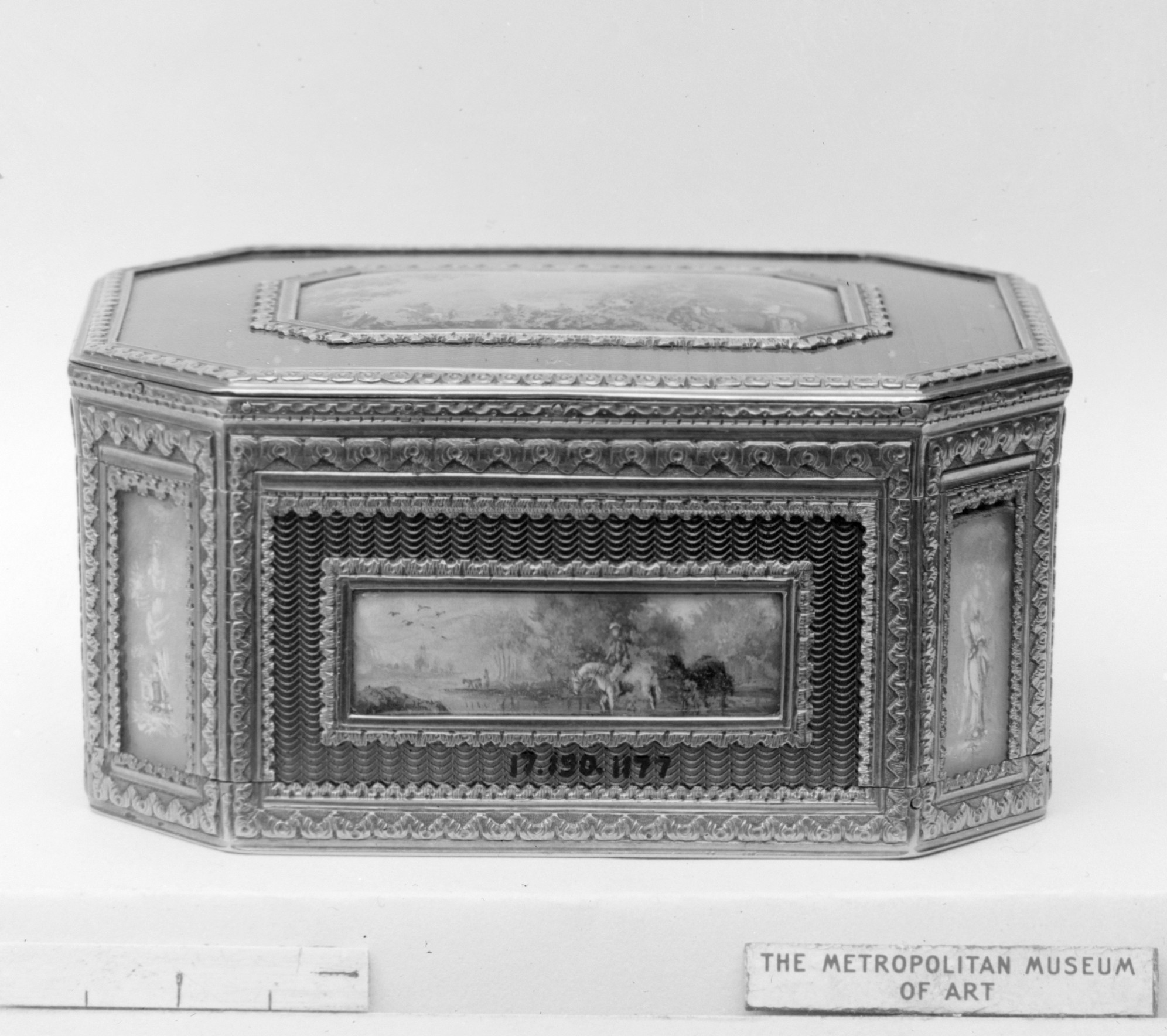
The snuffbox, a diminutive objet de vertu of the 18th and 19th centuries, presents a paradox of scale and significance. As an artifact of aesthetic archaeology, it is not merely a container for powdered tobacco but a micro-architectural statement of power, intimacy, and the mastery of material. For Natalie Fashion Atelier, the snuffbox—specifically those rendered in gold and enamel with intricate landscape scenes—offers a profound lexicon for the 2026 silhouette. This research artifact deconstructs the classical elegance of these objects, translating their structural logic, chromatic restraint, and tactile precision into a framework for high-end womenswear that is both historically literate and radically contemporary.
Structural Logic: The Hard-Shell Silhouette
The primary architectural lesson of the gold and enamel snuffbox is its hard-shell construction. Unlike the fluidity of fabric, the snuffbox is a rigid, self-contained volume. Its form—often a rounded rectangle, an oval, or a gentle cartouche—is defined by precise, unyielding edges. For 2026, this translates directly into the sculptural jacket and the architectural bodice. We are not draping; we are casing the form. The silhouette is not soft but encased, echoing the box’s function as a protective, precious shell.
Consider the “Cartouche Coat.” Its construction would rely on internal boning and structured horsehair canvas, not to create a corseted waist, but to forge a clean, geometric volume from shoulder to hem. The armhole is a precise cut-out, a negative space akin to the box’s hinge. The closure is invisible, a magnetic seam that preserves the purity of the form. The silhouette is a monolithic block, a wearable container that asserts its own presence rather than conforming to the body’s natural line. This is a deliberate departure from the fluid, organic shapes of previous seasons, embracing a “frozen movement” aesthetic that mirrors the snuffbox’s static, perfect containment.
Chromatic Restraint: The Enamel Palette of 2026
The enamel work on these historical pieces is not about vibrant, chaotic color. It is about chromatic restraint and luminous depth. The typical palette—bleu de roi, vert pré, and a soft, milky white—is applied in translucent layers over a guilloché or engine-turned gold ground. The effect is a color that breathes, that changes with the light, a vitreous depth that synthetic dyes cannot replicate.
For 2026, we transpose this logic into textile and embellishment. The primary palette will be a triad of deep, saturated hues: a midnight sapphire (bleu de roi), a mossy, oxidized green (vert pré), and a luminous, almost pearlescent white. These are not flat colors. They are achieved through layered techniques: a base of matte silk satin, overlaid with sheer organza that has been hand-painted with a subtle guilloché pattern, then further embellished with micro-sequins in a complementary tone. The result is a chromatic vibration, a surface that appears to be lit from within, exactly as the enamel does.
The gold is not a color but a material accent. It appears as a metallic thread in the brocade, a gilded zipper that functions as a structural seam, or a thin, gold-leaf appliqué outlining the landscape scene on a gown’s panel. The gold is never dominant; it is the frame, the hinge, the clasp that holds the chromatic composition together. This is a lesson in luxurious understatement, where the most expensive material is used with the most discipline.
Tactile Precision: The Landscape as Embellishment
The landscape scenes on the snuffbox are not painted; they are carved into the gold ground and then filled with enamel. This is a subtractive, additive process of immense precision. The landscape is a micro-topography, a miniature world of rolling hills, classical ruins, and delicate trees. For the 2026 silhouette, this translates into surface manipulation that is not merely decorative but architectural.
We propose the “Topographic Gown.” The landscape is not printed; it is constructed through a technique of layered cutwork and embroidery. The base is a heavy, matte silk crepe. The “hills” are created by interlacing multiple layers of organza, each layer cut to a different contour and hand-stitched to the base. The “ruins” are formed by appliqués of gold-toned metallic lace, their edges frayed and then sealed with a thin, clear resin to mimic the enamel’s edge. The “trees” are delicate, three-dimensional embroideries of silk floss and fine wire, each branch a single, hand-twisted thread.
This is not a flat image; it is a wearable bas-relief. The silhouette itself becomes a canvas for this topography. The gown is a column, a simple A-line, so that the eye is drawn entirely to the surface. The landscape is placed asymmetrically, perhaps climbing from the left hip to the right shoulder, creating a dynamic diagonal that breaks the static form. The tactile experience is crucial: the wearer and the observer must feel the raised contours, the coolness of the metal thread, the softness of the silk hills. This is a haptic luxury that digital rendering cannot replicate.
The Hermetic Silhouette: A New Intimacy
Finally, the snuffbox teaches us about containment and revelation. It is a private object, meant to be held in the palm, opened with a specific gesture, and then closed again. The 2026 silhouette from Natalie Fashion Atelier will embrace this hermetic quality. The neckline is high, a jeweled collar that functions as the box’s lid. The sleeves are long and fitted, ending in a tight cuff that is a precise, gold-embroidered band. The hemline is severe, hitting just below the knee or at the ankle, with no slit or drape to break the line.
This is a silhouette of controlled exposure. The body is not revealed; it is suggested by the volume of the shell. The only moment of revelation is the “hinge”—a carefully placed opening at the back of the neck, or a single, unexpected cut-out at the waist, framed by a thin gold border. This is the clasp, the moment of opening that makes the object precious. The wearer is not a mannequin for display; she is the custodian of a miniature masterpiece, carrying a world inside a form. This is the ultimate expression of aesthetic archaeology for 2026: a silhouette that is not worn, but inhabited, a hard-shell, gold-enameled container for the modern woman’s own private landscape.