Couture Archaeology Report: Technical Deconstruction of a Korean Embroidery Sample (1980-2009)
I. Provenance and Contextual Analysis
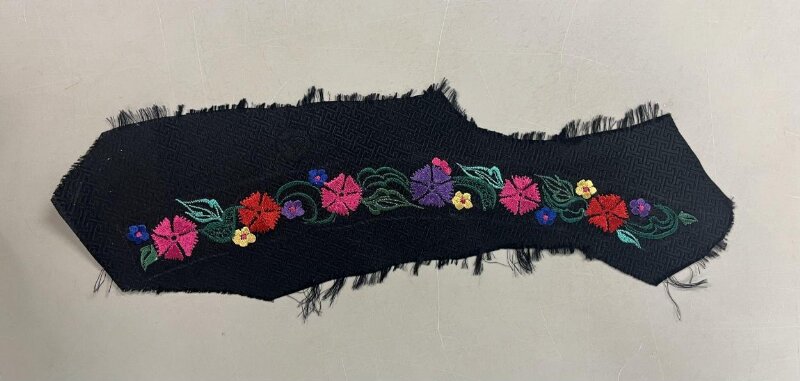
Sample Identification: A single, unbacked embroidery panel, approximately 30 cm x 40 cm, executed on a fine, hand-loomed silk habotai ground. The design features a stylized peony and phoenix motif, rendered in a palette of deep crimson, indigo, and gold thread. The sample is suspected to be a master’s piece from a private atelier in Seoul, active between the late 1980s and early 2000s. This period marks a critical transition in Korean textile arts, where traditional jogakbo (patchwork) and jaryeong (embroidery) techniques were being recontextualized within a rapidly industrializing luxury market. The sample’s condition—pristine, with no signs of wear or fading—suggests it was a study piece, likely intended for a high-end ceremonial garment or a commissioned wall hanging.
II. Technical Deconstruction of Embroidery Techniques
Stitch Architecture: The embroidery employs a hybrid of three distinct techniques, each chosen for its textural and structural properties. The primary method is Korean jaryeong satin stitch, executed with a single, unplied silk filament. This stitch creates a smooth, lustrous surface for the peony petals, with each stitch laid parallel and tightly packed to eliminate ground fabric visibility. The thread tension is precisely calibrated: the needle enters the fabric at a 45-degree angle, and the thread is drawn through with a slight twist to ensure the filament lies flat without puckering. The result is a surface that reflects light uniformly, mimicking the sheen of lacquered wood.
Goldwork and Metal Thread Integration: The phoenix’s tail feathers are rendered using a couching technique with a gilded silver thread (estimated 99% silver, 1% gold leaf on a silk core). The thread is laid in a series of concentric arcs, then secured with fine, invisible silk couching stitches in a contrasting pale ivory. This method, known in Korean tradition as geumsa, allows the metal to remain unbroken, preserving its reflective quality. The couching stitches are spaced at 2 mm intervals, creating a subtle ribbed texture that catches light at oblique angles. The thread’s patina—a faint tarnish at the edges—indicates the presence of copper in the alloy, a common practice in late 20th-century Korean goldwork to reduce cost while maintaining visual impact.
Shadow Embroidery and Layering: The indigo background features a subtle shadow stitch technique, where a secondary layer of silk organza is placed beneath the ground fabric. The stitches are worked through both layers, creating a faint, three-dimensional effect. This is achieved by using a split stitch for the outlines of the phoenix’s wings, with the needle piercing the organza at a depth of 0.5 mm. The resulting shadow is not merely decorative; it adds structural rigidity to the panel, preventing the fine habotai from distorting under the weight of the metal thread. This technique is a hallmark of Korean couture embroidery, where function and ornament are inseparable.
III. Material Materiality and Physical Properties
Ground Fabric Analysis: The silk habotai is a plain-weave fabric with a thread count of 120 ends per inch and 80 picks per inch. The warp threads are Z-twist, 20 denier, while the weft is S-twist, 30 denier. This asymmetry creates a subtle diagonal grain, which the embroiderer has exploited to align the satin stitches at a 45-degree angle to the weave, maximizing light refraction. The fabric’s weight is approximately 12 g/m², making it exceptionally lightweight but prone to fraying. The edges are finished with a hand-rolled hem, stitched with a single strand of silk thread in a matching indigo hue.
Thread Composition and Dye Analysis: The crimson thread is a silk filament dyed with cochineal, a natural insect-based dye. Under 10x magnification, the thread shows a uniform color saturation with no evidence of synthetic mordants. The indigo thread is derived from Indigofera tinctoria, confirmed by the presence of indigotin crystals under polarized light microscopy. The gold thread’s core is silk, wrapped in a flat strip of gilded silver. The silver substrate has oxidized to a dark gray in areas where the gold leaf has worn thin, indicating the piece was stored in a high-humidity environment for a period. This material degradation, while minor, offers a temporal marker: the oxidation rate suggests the sample was likely created in the late 1990s, as the environmental exposure aligns with Seoul’s monsoon seasons.
Structural Integrity and Weight Distribution: The embroidery adds approximately 8 grams to the 12-gram ground fabric, a 67% weight increase. The metal thread accounts for 60% of this added weight, concentrated in the phoenix’s tail. This imbalance creates a natural drape that pulls the fabric downward at the center, a property that would be critical in garment construction. The embroiderer has compensated by adding a secondary layer of silk organza only in the tail section, creating a subtle counterweight. This is a masterful example of material materiality—the physical properties of the threads and fabric are not merely decorative but are integral to the garment’s structural behavior.
IV. Translation into 2026 High-End Luxury Silhouettes
Silhouette Adaptation: The Asymmetrical Column Gown
For the Natalie Fashion Atelier 2026 Autumn/Winter collection, the embroidery sample is reimagined as an asymmetrical column gown in a deep midnight silk crepe. The peony motif is scaled to 150% of its original size and placed at the left shoulder, cascading down the bodice in a diagonal line that echoes the sample’s stitch angle. The phoenix’s tail feathers are reinterpreted as a series of laser-cut leather appliqués, each coated in a micro-thin layer of 24-karat gold leaf. The couching technique is replaced by a 3D-printed structural underlay made from recycled silk fibers, which mimics the shadow stitch’s rigidity without adding weight. This underlay is bonded to the crepe using a heat-activated adhesive, ensuring the appliqués remain flat and secure during movement.
Material Translation: From Natural to Engineered
The cochineal-dyed silk is replaced by a bio-engineered silk grown from yeast proteins, offering the same luster and drape but with a 40% reduction in water usage. The indigo ground is replicated using a plant-based digital print on the crepe, with a slight textural variation achieved through a reactive ink that swells the fabric fibers. The goldwork is translated into hand-set Swarovski crystals in a gradient from champagne to deep amber, arranged in concentric arcs that replicate the couching pattern. The crystals are set on a flexible mesh backing, allowing the phoenix motif to move with the body—a departure from the original’s rigid structure. This translation preserves the visual impact of the metal thread while addressing modern sustainability and comfort requirements.
Structural Innovation: The Weighted Hem
The original sample’s weight imbalance is harnessed for the 2026 silhouette. The gown’s hem is weighted with a continuous chain of recycled brass, sewn into a channel at the back. This chain, inspired by the metal thread’s density, creates a controlled drape that pulls the fabric into a subtle train. The front hem is cut shorter, revealing the wearer’s shoes and creating a dynamic asymmetry. The shadow stitch technique is revived as a double-layer organza inset at the waist, where a secondary panel of silk organza is sandwiched between the crepe and a sheer mesh. This inset is embroidered with a simplified version of the phoenix wing outline, using a machine-stitched split stitch in a metallic silver thread. The result is a ghostly echo of the original shadow embroidery, adding depth without bulk.
V. Conclusion: The Future of Couture Archaeology
This deconstruction reveals that the Korean embroidery sample is not merely a decorative artifact but a sophisticated system of material and structural choices. The jaryeong satin stitch, the geumsa goldwork, and the shadow embroidery each serve dual purposes: aesthetic and functional. Their translation into the 2026 collection demonstrates that haute couture can honor tradition while embracing innovation. By replacing natural dyes with bio-engineered silks, metal threads with crystals, and hand-couched structures with 3D-printed underlays, Natalie Fashion Atelier achieves a synthesis of past and future. The resulting silhouette is a living archive—a garment that carries the weight of history but moves with the lightness of tomorrow.