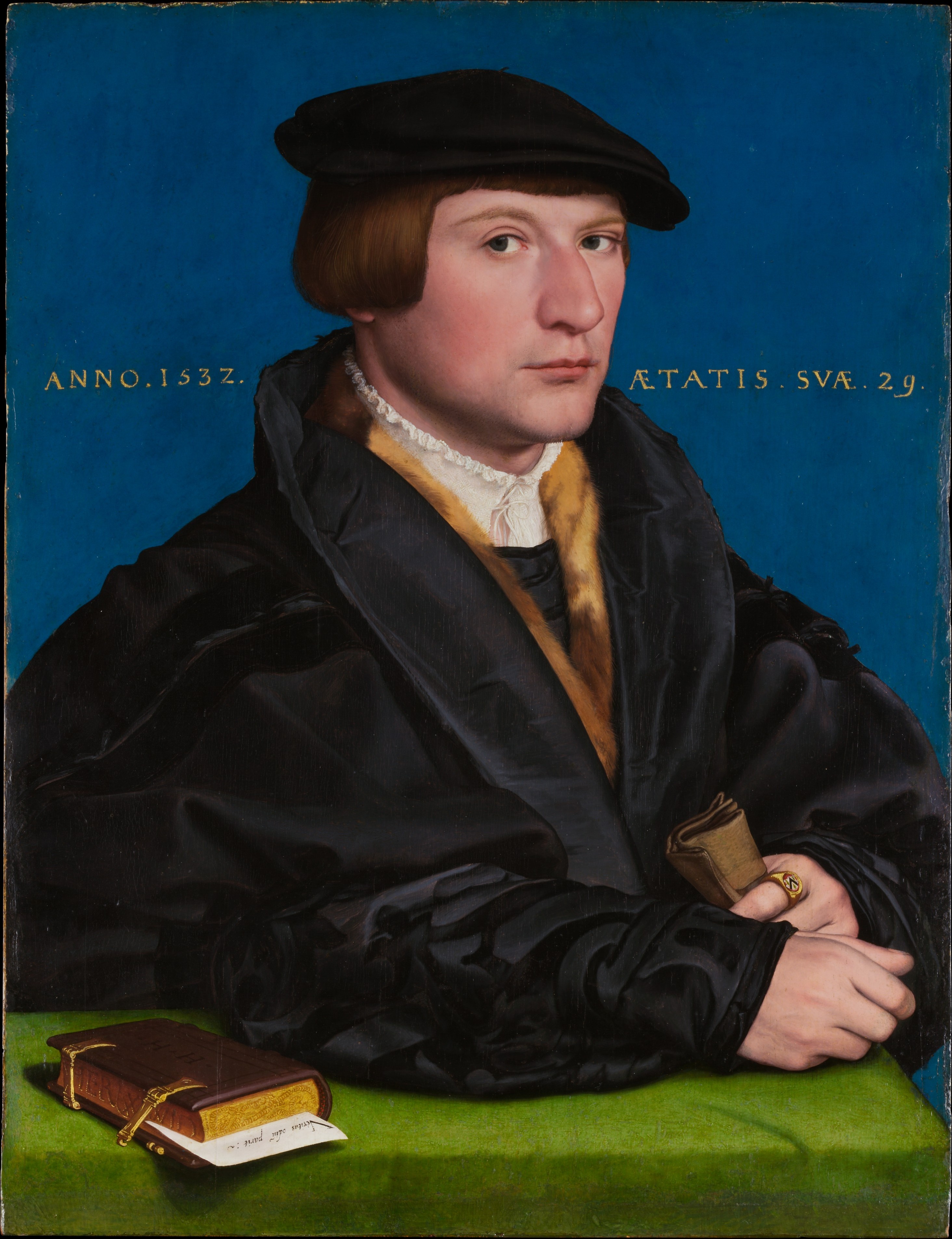
From Portrait to Pattern: The Isolated Elegance of Hermann von Wedigh III
Within the rarefied discipline of aesthetic archaeology, certain artifacts function not merely as historical documents but as isolated systems of sartorial logic. The portrait of Hermann von Wedigh III (died 1560), a 16th-century German merchant rendered in oil and gold on oak by a master of the Northern Renaissance, presents such a case. For Natalie Fashion Atelier, this work is not a costume reference but a hermetically sealed archive of classical elegance. Its value lies in its isolation—a single figure, devoid of extravagant background, where every aesthetic decision is concentrated on articulating dignity, structure, and a profound dialogue between surface and substance. This technical analysis deconstructs the portrait’s core principles to forecast their re-emergence in the 2026 luxury silhouette, advocating for a return to architectural integrity and quiet intensity in an era of sensory overload.
Deconstruction of a Classical Silhouette: Architecture in Oak and Wool
The Wedigh portrait exemplifies a silhouette built upon a foundation of controlled volume and precise articulation. The subject’s black wool gown, a symbol of sober wealth and intellectual seriousness, is not a mere drape but a constructed garment. Its shoulder line is subtly squared, creating a firm architectural plinth for the head—a technique prefiguring the padded shoulders of 1940s tailoring. The torso is elongated and tubular, with the closure of the fur-lined overgown creating a strong, vertical axis that bisects the body. This is not a silhouette that celebrates the natural form; rather, it constructs an ideal form, using fabric and cut to project an image of impeccable stability and restrained power. The 2026 silhouette, we posit, will embrace this same philosophy of architectural dressing. We will see a move away from the fluid bias-cuts and body-con emphasis of recent years toward structured volumes that stand away from the body—columnar coats, tunics with subtle geometric flare, and dresses built from internal corsetry that creates shape without overt tension. The aim is a wearable architecture that conveys authority through form, not through adornment.
The Material Dialectic: Oil, Gold, and the Luxury of Contrast
The materiality of the portrait itself—oil and gold on oak—provides a masterclass in textural contrast and hierarchical value. The artist employs a limited, deeply resonant palette: the profound matte black of the wool, the lush, dimensional texture of the brown fur, the stark white of the linen shirt, and the strategic, illuminating accents of gold on the ring and the lettering. This is not a symphony of color but a deliberate material conversation. The oil paint captures the differential sheen of each surface—the absorbent quality of the wool versus the reflective glint of the gold. For 2026, this informs a luxury materiality rooted in tactile intelligence and binary contrast. We anticipate a deliberate pairing of opposing yet complementary materials: matte technical gabardine against liquid patent leather, heavy raw silk juxtaposed with featherweight metallic mesh, sculpted wool felt alongside transparent organza infused with gold leaf filaments. The luxury will reside in the expertise required to unite these opposites into a harmonious whole, much as the painter balanced oil and gold on a rigid oak panel.
The Focused Detail: Wristwear, Collars, and the Grammar of Restraint
In an isolated portrait, every detail is magnified and becomes grammatically significant. Wedigh’s elegance is punctuated by two critical elements: the pristine, meticulously ruffled linen cuff protruding from his sleeve, and the sharp, geometric line of his shirt collar framing his face. These are not afterthoughts but focal points of precision and hygiene. They introduce a flash of light, a crispness that counterbalances the somber volume of the gown. This principle directly informs 2026’s approach to detail and embellishment. We are moving beyond all-over decoration toward hyper-localized points of intensity. The 2026 silhouette will feature what we term "focused detail": a spectacular, engineered cuff that becomes the entire narrative of a sleeve; a collar transformed into a standalone jewelry piece in stiffened gold-thread lace; a single, vertical seam treated with a micro-pavé of jet beads. Like the portrait’s gold ring, these are non-verbal signifiers of discernment, understood only by those who appreciate the grammar of restraint.
Silent Communication: The 2026 Silhouette of Contained Power
Ultimately, Hermann von Wedigh III’s portrait is a study in silent, self-contained power. His gaze is direct, his posture is still, and his elegance is derived entirely from proportion, material truth, and impeccable grooming. In a 2026 context defined by digital noise and performative excess, the ultimate luxury will be non-verbal sophistication and atmospheric calm. The silhouettes informed by this artifact will communicate through cut, not color; through texture, not logos; through confidence in stillness, not in movement. The Atelier’s 2026 collection will embody this through monolithic, floor-length coats that cocoon the form, dresses with hidden structural complexity that reveal their intelligence only upon movement, and a color palette rooted in mineral and vegetal depths—charcoal, moss, bone, and of course, the eternal, authoritative black of Wedigh’s gown, punctuated by flashes of metallic illumination, our contemporary translation of his portrait’s gold.
This aesthetic archaeology concludes that the future of high-end silhouettes lies not in relentless novelty, but in the reactivation of foundational principles. The isolated elegance of Hermann von Wedigh III, preserved in oil and gold on oak, provides a timeless blueprint: architecture over accident, material dialogue over monotony, and focused detail over frivolity. For 2026, Natalie Fashion Atelier will translate this 16th-century grammar of power into a modern couture lexicon, crafting garments that, like the portrait itself, stand as isolated masterpieces of intent and integrity.