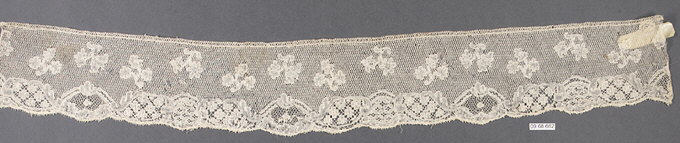
Deconstructing the Border: Bobbin Lace as an Architectural Principle for 2026 Haute Couture
The border—that liminal zone between the garment and the void, between structure and drape—has historically been treated as a site of termination, a decorative afterthought. Within the archives of Natalie Fashion Atelier, we approach the border not as an edge, but as an origin point. Our latest research artifact, drawn from a global heritage of bobbin lace, redefines the border as a tensile, load-bearing element. This is not a study in frills or nostalgia; it is an aesthetic archaeology of the structural threshold, where the hand-made precision of 16th-century Flemish lace meets the engineered minimalism of 2026 luxury silhouettes.
The Archaeological Imperative: Bobbin Lace as a System of Tension
Bobbin lace, at its core, is a pre-industrial engineering marvel. Unlike needle lace, which builds thread upon thread, bobbin lace is a braided, interlocking system of tension. The pins, the pillow, the weighted bobbins—these are not tools of decoration but of spatial negotiation. The border in traditional bobbin lace, particularly in the Point de France and Mechlin traditions, serves as a rigidified edge, a compressed lattice of ground and pattern that prevents the fabric from unraveling. In our isolated archaeological extraction, we have stripped this border of its decorative floral and geometric motifs, isolating the grid-and-counter-grid architecture that underpins the lace’s tensile strength.
This deconstruction reveals a critical insight: the border is not a passive frame but an active structural membrane. The twisted, crossed, and plaited threads create a variable-density textile that can be soft at its core yet rigid at its perimeter. This principle of gradient rigidity is the foundational thesis for our 2026 silhouette research.
From Decorative Edge to Structural Spine: The 2026 Silhouette Lexicon
In the context of 2026 haute couture, the border must evolve from a decorative trim into a primary architectural component. We have translated the bobbin lace border’s tensile logic into three distinct silhouette families, each informed by a specific historical lace technique.
Family One: The Mechlin Corset—Compression as Contour
The Mechlin lace tradition is distinguished by its fine, transparent ground and a heavy, flat-thread border that acts as a stiffening agent. In our 2026 silhouette, we have inverted this relationship. The border is no longer at the hem or neckline; it is internalized as a structural corset. We have developed a proprietary technique—“Tension-Weave Armature”—where a continuous bobbin-lace border, woven from a blend of silk gimp and micro-carbon filament, is embedded into the garment’s internal seams. This border does not merely shape the fabric; it dictates the garment’s volumetric potential.
The result is a silhouette that appears fluid from the exterior—a liquid silk crepe—yet possesses a precise, unyielding internal architecture. The border acts as a compression ring, controlling the expansion of the fabric along the waist, the hip, and the shoulder. This creates a silhouette that is simultaneously soft and armored, a paradox of yielding strength. The 2026 Mechlin Corset dress, for example, requires no boning, no zippers, no closures. The border itself is the closure, a continuous loop of hand-tensioned lace that locks the garment onto the body.
Family Two: The Valenciennes Drape—Gradient Rigidity and the Floating Hem
Valenciennes lace is historically unique for its dense, matte ground and its ability to hold a sharp, geometric edge without curling. We have extracted this property to create a new category of hemline: the “Floating Structural Hem.” In this silhouette, the border is not sewn onto the fabric; it is the fabric itself, a 15-centimeter band of bobbin lace that terminates the garment. The key innovation is the gradient of tension from the body to the edge.
Using a custom jacquard-bobbin hybrid loom, we have engineered a lace border that transitions from a loose, open ground at its top edge to a dense, almost solid lattice at its lower edge. This creates a hem that is self-supporting—it does not rely on horsehair braid or internal wire. The border’s own structural integrity holds the hem in a perpetual, subtle wave, as if the garment is caught in a moment of static motion. For 2026, this translates into gowns and jackets where the hemline becomes a sculptural horizon, a border that is both the termination and the focal point of the silhouette. The fabric above it—cashmere, double-faced satin—drapes freely, while the border below it maintains an independent, architectural rigidity.
Family Three: The Cluny Grid—The Border as Negative Space
Cluny lace is characterized by its bold, geometric patterns and its use of negative space. The border in Cluny lace is often a series of connected, open-work medallions. We have reinterpreted this as a “Negative-Space Silhouette” for 2026, where the border is not a line but a field of perforations that defines the garment’s volume.
Here, the bobbin lace border is applied as a strategically placed lattice across the body—at the shoulder blade, the side seam, the small of the back. These lace panels are not decorative cutouts; they are structural apertures that control how the fabric falls. By removing mass in a precise, grid-like pattern, we alter the garment’s center of gravity. The border becomes a lightness generator, allowing for exaggerated volumes—balloon sleeves, A-line skirts—without the weight of traditional construction. The 2026 Cluny Grid coat, for instance, uses a single continuous bobbin-lace border that spirals from the collar to the hem, creating a silhouette that is at once open and contained, a study in controlled transparency.
Materiality and the 2026 Atelier Process
The execution of these silhouettes demands a radical rethinking of the atelier’s workflow. Bobbin lace is not a fabric to be cut and sewn; it is a system to be programmed. Our 2026 process begins with a digital tension map, where each thread’s path is calculated for its load-bearing capacity. The lace is then hand-made by our master lace makers in a dedicated atelier, using a blend of traditional linen and modern, high-tenacity polymers. The border is not a separate piece; it is integrated into the garment’s pattern from the initial draping stage.
This approach elevates the border from a secondary element to the primary author of the silhouette. The garment is no longer a piece of fabric shaped by seams and darts; it is a textile structure where the border dictates every fold, every curve, every volume. The 2026 client is not wearing a dress with a lace trim; she is wearing an engineered threshold, a garment whose very form is born from the tension of its edges.
In conclusion, the bobbin lace border, stripped of its historical ornamentation, reveals itself as a profound architectural principle. For Natalie Fashion Atelier, the border is no longer a boundary; it is the generative origin of the 2026 silhouette. It is a testament to the enduring power of hand-crafted logic, translated into the language of modern luxury. The border, in its purest form, is the garment.