Sacred Geometry and the Draped Silhouette: An Aesthetic Archaeology of the Virgin and Child
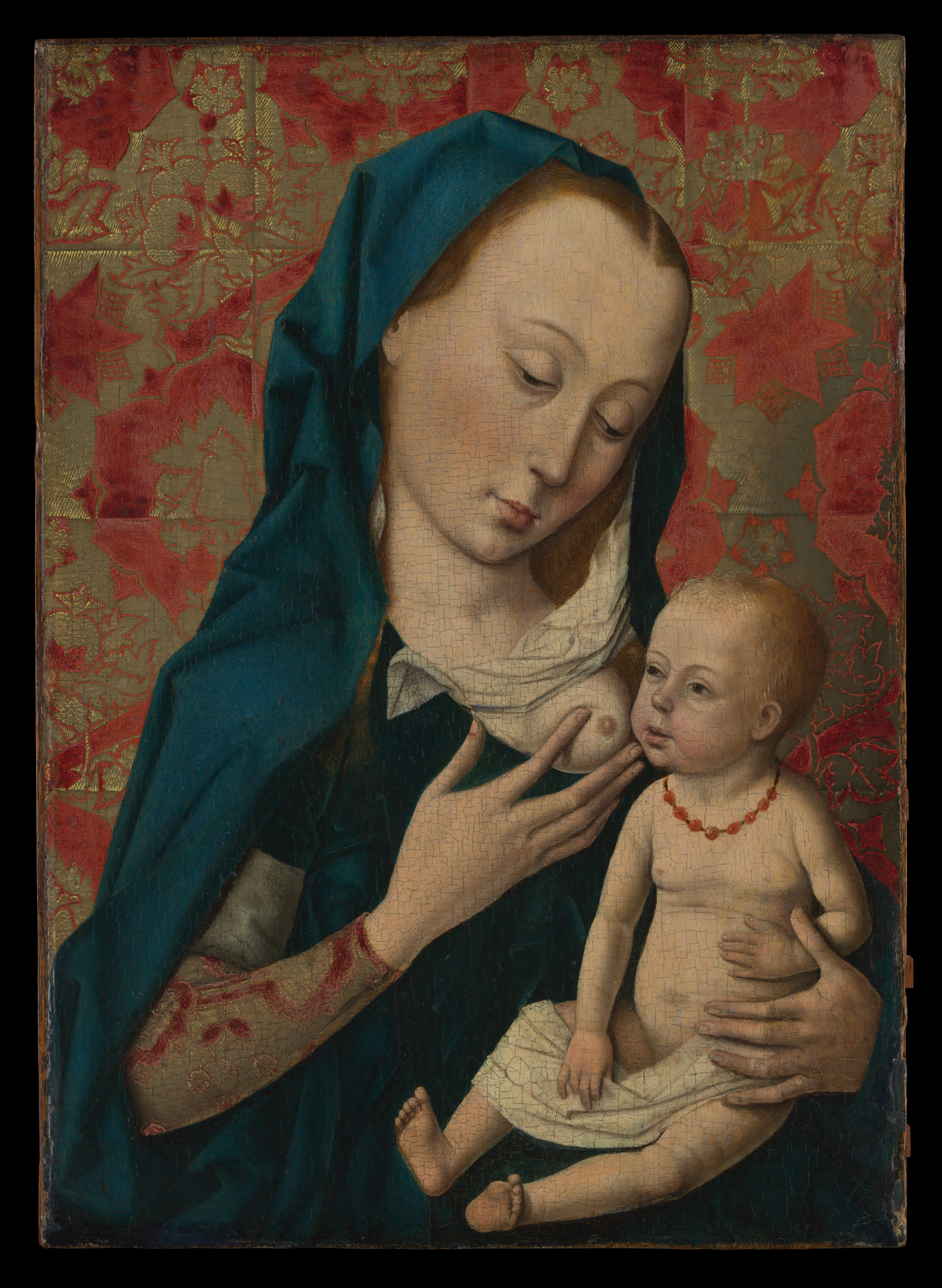
The classical representation of the Virgin and Child, rendered in oil on wood, constitutes a profound repository of aesthetic principles that transcend its devotional origins. Within the archive of Natalie Fashion Atelier, this isolated artifact is examined not for its religious iconography, but as a masterclass in the manipulation of mass, the orchestration of light, and the articulation of hierarchical form. The oil medium, with its capacity for infinite gradation and translucent layering, becomes a metaphor for the haute couture process itself—a slow, deliberate construction of surface and depth. For the 2026 luxury silhouette, this heritage object offers a lexicon of structural elegance that redefines contemporary notions of volume, containment, and the sculptural body.
The Oil-on-Wood Logic of Layered Materiality
The technical specificity of oil paint on a wooden panel introduces a critical dialogue between rigidity and fluidity. The wood provides an unyielding substrate, while the oil medium allows for a fluid, almost liquid application of pigment. This binary is directly translatable to couture construction: a structured foundation—the corps à corps of a tailored bodice or a reinforced corset—supports the fluid, painterly draping of silk, cashmere, or organza. The 2026 silhouette thus begins with a rigid interior architecture, a hidden framework that controls the fall of the outer fabric, much as the wood panel controls the flow of the oil. This is not a return to historical corsetry, but a refined, ergonomic engineering that uses micro-boning and laser-cut thermoplastic interlinings to create a seamless transition from support to surface.
Deconstructing the Hieratic Fold: From Mantle to Modern Drape
The Virgin’s mantle, as depicted in these classical works, is not a simple garment but a complex system of folds that articulate the body beneath while simultaneously creating a secondary, abstract geometry. The hieratic fold—a deep, static crease that suggests weight and permanence—is reinterpreted for 2026 as a deliberate, asymmetrical volume. By analyzing the oil-on-wood technique, we observe how the painter used impasto to build the physicality of the fold, and glaze to soften its edges. In couture, this translates to a technique of sculptural pleating where the fabric is treated with a resin or heat-set finish to hold a permanent, voluminous fold, then overlaid with a sheer, un-bonded layer that mimics the translucent glaze. The result is a silhouette that appears both monumental and ethereal, a paradox central to the aesthetic archaeology of the artifact.
The Child as Proportional Anchor: Asymmetry and the New Silhouette
In the Virgin and Child composition, the infant is not merely an accessory but a proportional counterweight. The figure of the Child often sits off-center, creating a dynamic imbalance that the Virgin’s drapery must resolve. This principle of asymmetric equilibrium is foundational for the 2026 luxury silhouette. The collection will feature a series of gowns and tailored separates where a single, exaggerated volume—a puff sleeve, a cascading train, or a sculpted shoulder—acts as the “child,” demanding a counterbalancing line from the rest of the garment. The oil-on-wood technique teaches us that this balance is not achieved through symmetry, but through a careful calibration of visual weight. A heavy, matte wool on one side of the body is offset by a lighter, reflective silk on the other, creating a chromatic and textural dialogue that echoes the chiaroscuro of the original painting.
Color as Structure: The Chromatic Architecture of the Oil Panel
The palette of the Virgin and Child—ultramarine, vermilion, gold leaf, and deep umber—is not decorative but structural. In oil-on-wood painting, color defines form. The cangiantismo technique, where the color shifts from light to dark across a single fold, is directly applied to the 2026 silhouette through the use of gradient dyeing and iridescent threadwork. A gown’s bodice may be constructed from a single panel of silk that has been hand-dipped to transition from a deep midnight blue at the waist to a pale, luminous azure at the shoulder. This chromatic gradient creates the illusion of a fold without any physical manipulation of the fabric, a pure, painterly effect. Furthermore, the use of gold leaf in the artifact’s halo and trim is translated into metallic embroidery and gold-plated chain mail used as a structural element, not merely an embellishment. The metal becomes a line of force, defining the silhouette’s edge and guiding the eye.
The Isolated Artifact as a Blueprint for Slow Couture
The isolated aesthetic archaeology of this single artifact—the Virgin and Child removed from its altarpiece, its historical context, its devotional function—allows for a pure, formal analysis. This isolation mirrors the haute couture process, where a single garment is created as a unique, autonomous object. For 2026, the lesson is one of deliberate, almost ritualistic construction. The oil-on-wood technique required months of layering, drying, and glazing. Similarly, the couture silhouette will be built through a series of slow, manual interventions: hand-stitched seams that allow for future adjustment, hand-painted textile panels, and hand-molded structural elements. The 2026 client is not purchasing a dress; she is acquiring a wearable artifact, a contemporary reliquary of form and technique. The silhouette becomes a vessel for the same kind of concentrated, almost sacred attention that the original painter devoted to his panel.
Conclusion: The Silhouette as a Painted Surface
The Virgin and Child, as rendered in oil on wood, provides a complete technical and aesthetic vocabulary for the 2026 luxury silhouette. The rigid panel informs the internal architecture; the layered oil informs the draped surface; the asymmetric composition informs the proportional balance; and the chromatic structure informs the textile palette. The resulting silhouette is not a historical pastiche but a translation of a painterly logic into a three-dimensional, wearable form. It is a silhouette that demands to be seen in profile, in motion, and in light, revealing the layers, the folds, and the hidden structures that give it life. For Natalie Fashion Atelier, this artifact is not a relic but a living blueprint, a testament to the enduring power of classical elegance when deconstructed and reimagined through the lens of contemporary couture technique.