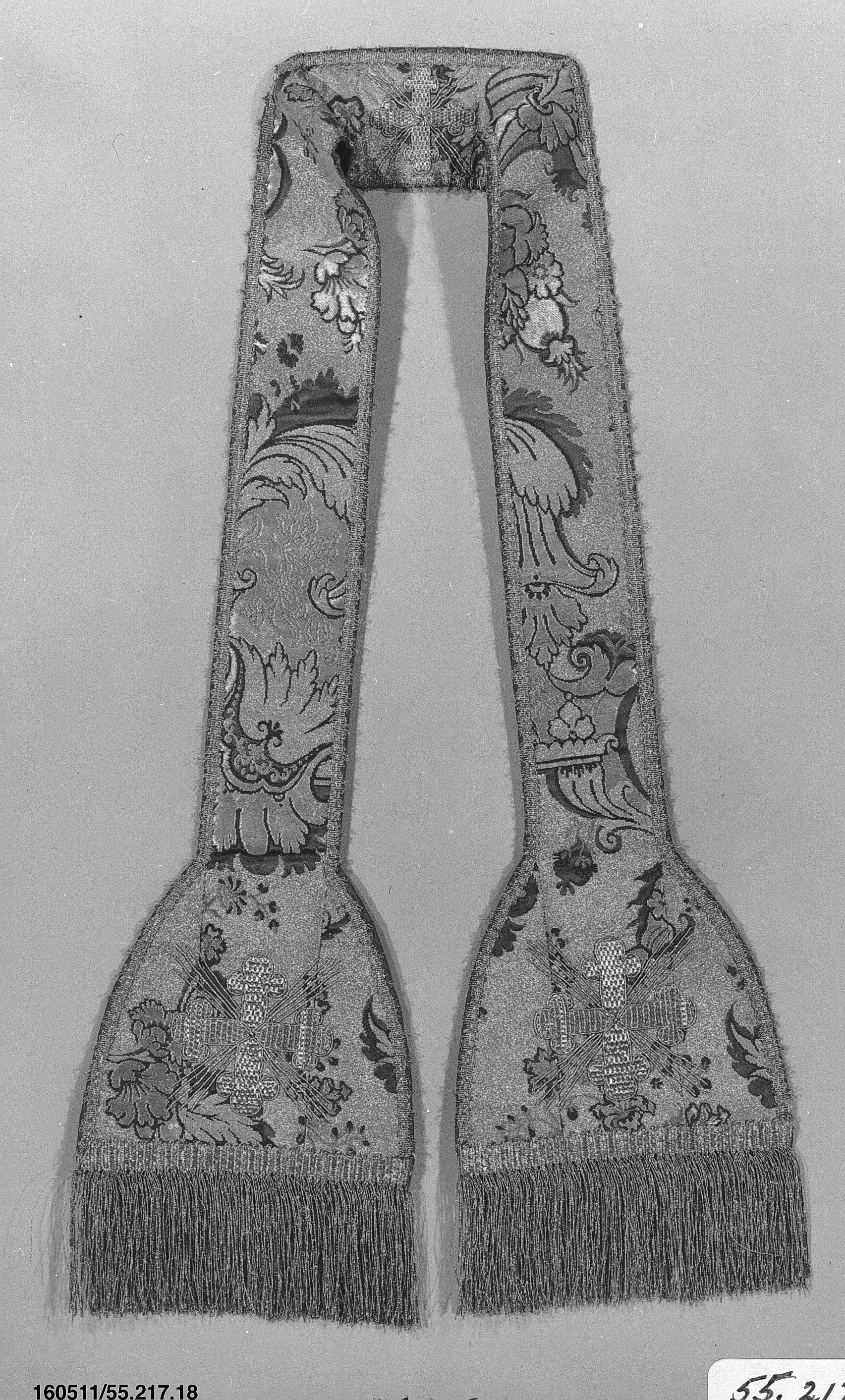
Deconstructing the Maniple: Aesthetic Archaeology of Silk and Metal Thread for 2026 Silhouettes
The maniple, a liturgical vestment of ancient Roman origin, has long been relegated to the periphery of ecclesiastical vesture, its form a narrow, embroidered band worn over the left forearm. Yet, within the archives of Natalie Fashion Atelier, this seemingly minor artifact is recognized as a profound repository of aesthetic archaeology. Its isolation from its ceremonial context reveals a masterclass in the tension between rigid structure and fluid movement—a dialectic that is paramount for the 2026 luxury silhouette. This research paper deconstructs the classical elegance of the maniple, focusing on its core materiality of silk and metal thread, and extrapolates a series of technical principles that will inform our forthcoming haute couture collection.
The Maniple as a Micro-Architecture of Prestige
Historically, the maniple was not merely a decorative accessory but a functional symbol of rank and liturgical duty. Its form—a strip of silk, often measuring 80 to 100 centimeters in length and 8 to 12 centimeters in width—was designed to be both conspicuous and subservient to the larger chasuble. The materiality of silk provided a luminous, fluid ground, while the metal thread (typically gold or silver wrapped around a silk core) was couched onto the surface to create dense, raised patterns. This technique, known as opus anglicanum or or nué in its most refined forms, produced a surface that was simultaneously flat and sculptural. The metal thread did not merely decorate; it created a structural lattice that controlled the drape of the silk, introducing a deliberate stiffness that countered the fabric’s natural softness.
For the 2026 silhouette, this micro-architecture offers a critical lesson. The traditional maniple demonstrates how a controlled rigidity can be introduced to a fluid base without compromising movement. In our design lexicon, this translates to the strategic placement of metal-thread embroidery as a form of internal tailoring. Rather than using boning or heavy interfacing, we will employ dense, couched metal threads along key structural lines—the shoulder yoke, the side seam, the hem of a bias-cut gown—to create a second skin of tension. This technique allows the silk to fall in controlled, architectural folds, echoing the maniple’s own interplay of softness and strength.
Materiality in Dialogue: Silk’s Luminosity and Metal’s Weight
The genius of the maniple lies in the dialectical relationship between its two primary materials. Silk, particularly the satin duchesse or taffetas used in historical examples, possesses a high refractive index, capturing and scattering light to create a surface of living depth. The metal thread, by contrast, is a specular reflector, offering a mirror-like finish that disrupts the silk’s diffused glow. When these materials are combined in the maniple, they produce a visual rhythm of alternating matte and sheen, opacity and brilliance.
For 2026, we will exploit this material dialogue to define silhouette through light manipulation. Consider a floor-length column gown in silk charmeuse. The body of the garment will be cut on the bias to maximize fluidity. However, along the spine and the outer edges of the sleeves, we will apply a metal-thread lattice in a pattern derived from the maniple’s geometric motifs (e.g., chevrons, interlocking circles). This lattice will not be purely decorative; it will function as a tensioning system. The weight of the metal thread will pull the silk downward, creating a subtle, controlled sag that defines the silhouette’s line. Simultaneously, the reflective metal will catch ambient light, creating a luminous contour that visually separates the body from the fabric, a technique reminiscent of the maniple’s own isolation against the chasuble.
Structural Transcription: From Liturgical Band to Modern Silhouette
The maniple’s form—a narrow band—is inherently restrictive, yet its historical wearers moved with grace. This paradox is key to its translation into 2026 high-end silhouettes. The band itself becomes a generative pattern for the entire garment. We will deconstruct the maniple not as an accessory but as a modular unit of construction.
Specifically, the 2026 collection will feature a series of “maniple panels”—narrow, embroidered strips of silk and metal thread that are inserted into the seams of a garment. These panels serve multiple structural functions:
1. Seam Reinforcement and Drape Control: By inserting a maniple panel into a princess seam, we introduce a vertical line of stiffness that prevents the silk from collapsing inward. This is particularly effective for creating a flared A-line silhouette from a lightweight silk base. The metal thread’s weight ensures the panel hangs true, while the silk between the panels retains its fluidity, creating a striped effect of controlled volume.
2. Asymmetrical Tension: The maniple’s historical placement on the left arm suggests a deliberate asymmetry. In our 2026 designs, a single, wide maniple panel will be integrated into the left side of a bias-cut dress, running from the shoulder to the hem. This creates a diagonal tension line that pulls the fabric across the body, resulting in a sculptural twist that defines the waist and hip without the need for darts or seams. The metal thread’s rigidity ensures the twist holds its form, while the silk’s drape softens the effect.
3. Hem Architecture: The maniple’s ends were often finished with a fringe or a weighted tassel, a detail that controlled the band’s movement. For 2026, we will translate this into a hemline technique. A narrow band of metal-thread embroidery will be applied along the hem of a silk gown, with the thread extending slightly beyond the fabric to create a micro-fringe. This adds weight to the hem, ensuring it falls in a clean, unbroken line, while the metal’s reflective quality creates a luminous edge that defines the silhouette’s terminus.
2026 Silhouette Typologies Informed by the Maniple
From this archaeological analysis, three distinct 2026 silhouette typologies emerge:
Typology I: The Architectural Column
A floor-length gown in silk gazar, a fabric known for its crispness, is further structured by vertical maniple panels of gold metal thread couched in a herringbone pattern. The panels are placed at the center front, center back, and side seams. The result is a silhouette that is rigidly columnar yet fluid in its interstitial spaces, echoing the maniple’s own balance of control and freedom. The metal thread creates a visual corsetry without physical constriction.
Typology II: The Asymmetrical Drape
A one-shoulder silhouette in silk crêpe de chine features a single, wide maniple panel of silver metal thread that begins at the left shoulder, crosses the bust, and terminates at the right hip. The panel is embroidered in a scale-like pattern, with each scale’s metal thread oriented to catch light from a specific angle. This creates a dynamic, shifting silhouette that appears to change shape as the wearer moves, a direct reference to the maniple’s own movement during liturgical gestures.
Typology III: The Deconstructed Tunic
A short, boxy tunic in silk organza is constructed entirely from maniple-like bands. Each band is a narrow strip of silk embroidered with copper metal thread in a repeating geometric motif. The bands are joined edge-to-edge with visible seams, creating a lattice-like garment that is both transparent and structured. The silhouette is cubist and fragmentary, a deliberate deconstruction of the maniple’s own form. The metal thread’s weight ensures the bands hang in a rigid, architectural grid, while the silk’s transparency allows the body to be seen through the structure.
Conclusion: The Maniple as a Blueprint for 2026 Luxury
The maniple, in its isolated aesthetic archaeology, is not a relic but a technical manifesto. Its combination of silk and metal thread offers a material language for the 2026 haute couture silhouette—one that prioritizes controlled tension, luminous contour, and modular construction. By deconstructing this classical elegance, Natalie Fashion Atelier will produce garments that are not merely worn but inhabited, where every line of metal thread is a deliberate act of architectural precision. The maniple’s legacy is not in its past but in the structural poetry it bequeaths to the future of luxury form.