Couture Archaeology Report: Velvet in the Second Renaissance
Subject: Technical Deconstruction of 15th-Century Italian Velvet
Report Code: NFA-ARCH-ITVEL-001 Prepared For: Natalie Fashion Atelier Creative Directorate Date: October 26, 2023 Senior Textile Historian: [Your Name/Position]
1. Historical Materiality & Technical Genesis
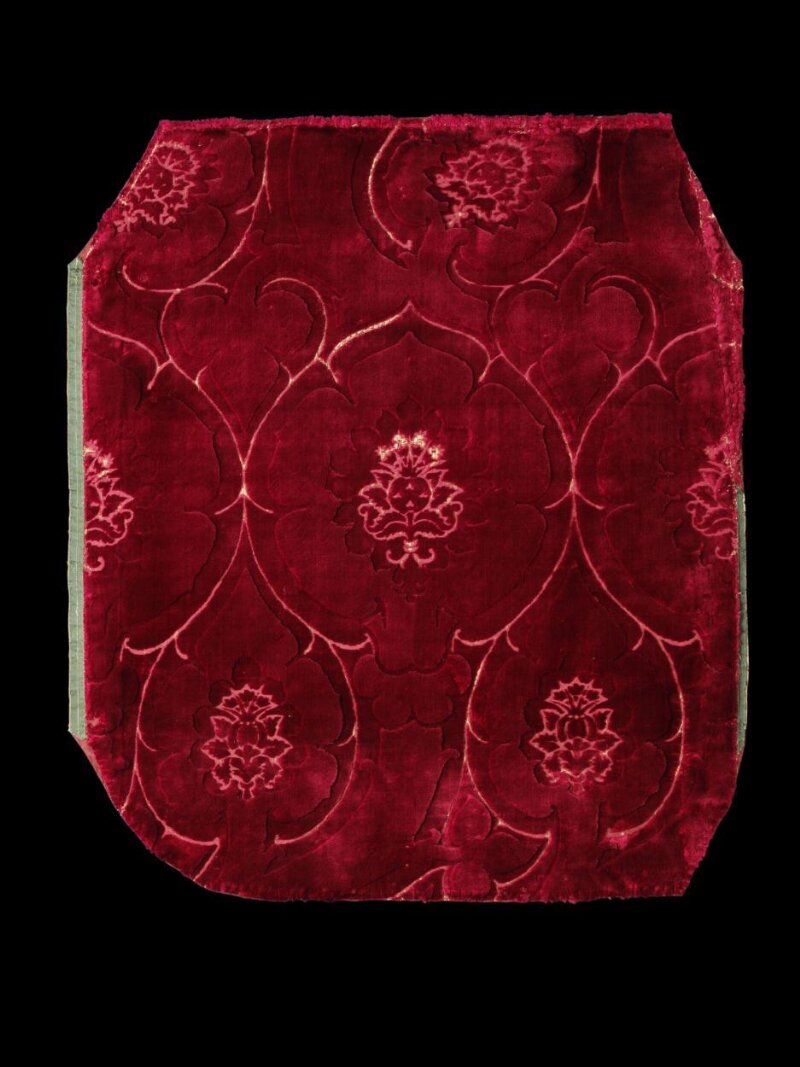
The supremacy of Italian velvet in the second half of the Quattrocento was not merely aesthetic but a triumph of material science and mercantile ambition. This period saw the evolution from simple pile fabrics to complex compound velvets, where the foundational weave (often a silk satin or twill) was interlaced with additional warp threads that formed the pile. The true technical marvel lay in the drawloom, a sophisticated apparatus requiring a master weaver and a drawboy. This loom utilized a system of cords (lashes) to selectively raise specific pile warp threads, allowing for the creation of intricate, non-repeating patterns. The pile could be of uniform height (velluto pieno) or, more luxuriously, of varying heights (velluto alto e basso or ciambellato), creating a sculptural, light-catching relief.
Materiality was intrinsically linked to status. The finest velvets employed high-twist silk warp for the foundation, ensuring structural integrity, and a softer, lower-twist silk for the pile, yielding a dense, resilient nap. The most opulent examples integrated metallic threads (flat strips of silver or silver-gilt wound around a silk core) as either ground or pattern wefts. This combination produced fabrics of immense weight, drape, and acoustic presence—a literal and figurative weight of authority. The celebrated velvet-on-velvet technique, or voided velvet, created pattern by contrasting areas of cut pile against uncut loops or a different colored pile, a testament to unparalleled technical control.
2. Structural Deconstruction: The Three Pillars of Antique Velvet
For contemporary translation, we must deconstruct the historical artifact into its core technical pillars:
Pillar I: The Dimensional Pile. This is not a uniform surface. The sculptural interplay of cut and uncut loops creates a micro-topography that interacts dynamically with light. The pressure of wear and time further molds this pile, creating a patina unique to the garment and the body—an early notion of bespoke material aging.
Pillar II: The Weighted Drape. The density of silk and the complexity of the weave resulted in a fabric with significant mass and a gravitational, architectural drape. It did not cling but described space, creating volume and silhouette through its own inherent weight and stiffness, structured further by period tailoring and undergarments.
Pillar III: The Chromatic Depth. Period dyes (kermes for scarlet, woad for blue) yielded rich but often subdued hues. The true chromatic genius was in the pile's light absorption and reflection. Light penetrates the forest of vertical fibers, is absorbed, and re-emerges as a deepened, luminous color. This creates a visual depth impossible on a flat woven surface, with hues shifting from jewel-tone to near-black in shadow.
3. Translation Protocol for 2026 High-End Luxury Silhouettes
The translation for 2026 must avoid pastiche. It requires extracting the principles of the 15th-century artifact and re-engineering them through a modern lens of technology, sustainability, and contemporary bodily autonomy.
4. Proposed 2026 Applications: Silhouette & Material Innovation
Silhouette Translation A: The Architectural Volume. Moving away from historical replication, we propose harnessing the weighted drape principle to create self-supporting silhouettes. Imagine a single-seam "column" gown or a tailored coat where the fabric's own density creates a minimalist, powerful shape. Seaming would be minimized to celebrate the material's intrinsic behavior. Internal structure, if needed, would use biodegradable memory polymers instead of horsehair, creating a flexible, modern architecture.
Silhouette Translation B: The Draped Fluidité. Here, we invert the principle by engineering a modern, lightweight velvet with a high silk or sustainable luxury fiber content (e.g., refined hemp-silk blends, peace silk) woven with a micro-spacing in the pile warp. This yields a velvet with phenomenal fluidity and movement, perfect for bias-cut gowns, wrap trousers, and cascading cowl necks. The dimensional pile will animate the moving form with a play of light, achieving sensuality without reliance on the body-con.
Material Innovation: The Technical Patina. Our most significant proposal is the development of a "programmable" velvet. Using advanced, precision laser-finishing, we can recreate the alto e basso relief with digital accuracy, but go further. We can design pile patterns that respond to wear: areas destined for natural creasing (elbows, lapels) are woven with a slightly different pile resilience to age gracefully into a personal map of the wearer's life. Furthermore, we can integrate non-metallic luminous yarns (e.g., advanced refracting polymers) to mimic the historic gleam of gold thread without the weight, achieving a daytime subtlety and an ethereal luminescence in low light.
5. Conclusion & Strategic Recommendation
The 15th-century Italian velvet was a composite artifact of technology, material wealth, and symbolic power. For Natalie Fashion Atelier's 2026 vision, we must re-compose these elements. The goal is not to reproduce the fabric, but to reproduce the experience it offered: awe through material depth, status through technical mastery, and beauty through intelligent interaction with light and form.
Recommendation: Initiate Phase 1: Material Development. Partner with specialized Italian mills (e.g., Ratti, Taroni) and a technical textile institute to prototype three swatch lines based on our pillars: 1) The High-Density Architectural Velvet, 2) The Fluid Micro-Velvet, and 3) The Programmable Laser-Finished Velvet. This material-led approach will authentically drive the silhouette development for our 2026 haute couture and premier luxury ready-to-wear collections, establishing a new lexicon of opulence rooted in historical intelligence and future-forward execution.