Silk on Wool: Aesthetic Archaeology and the Reconfiguration of Classical Elegance for 2026 Haute Couture
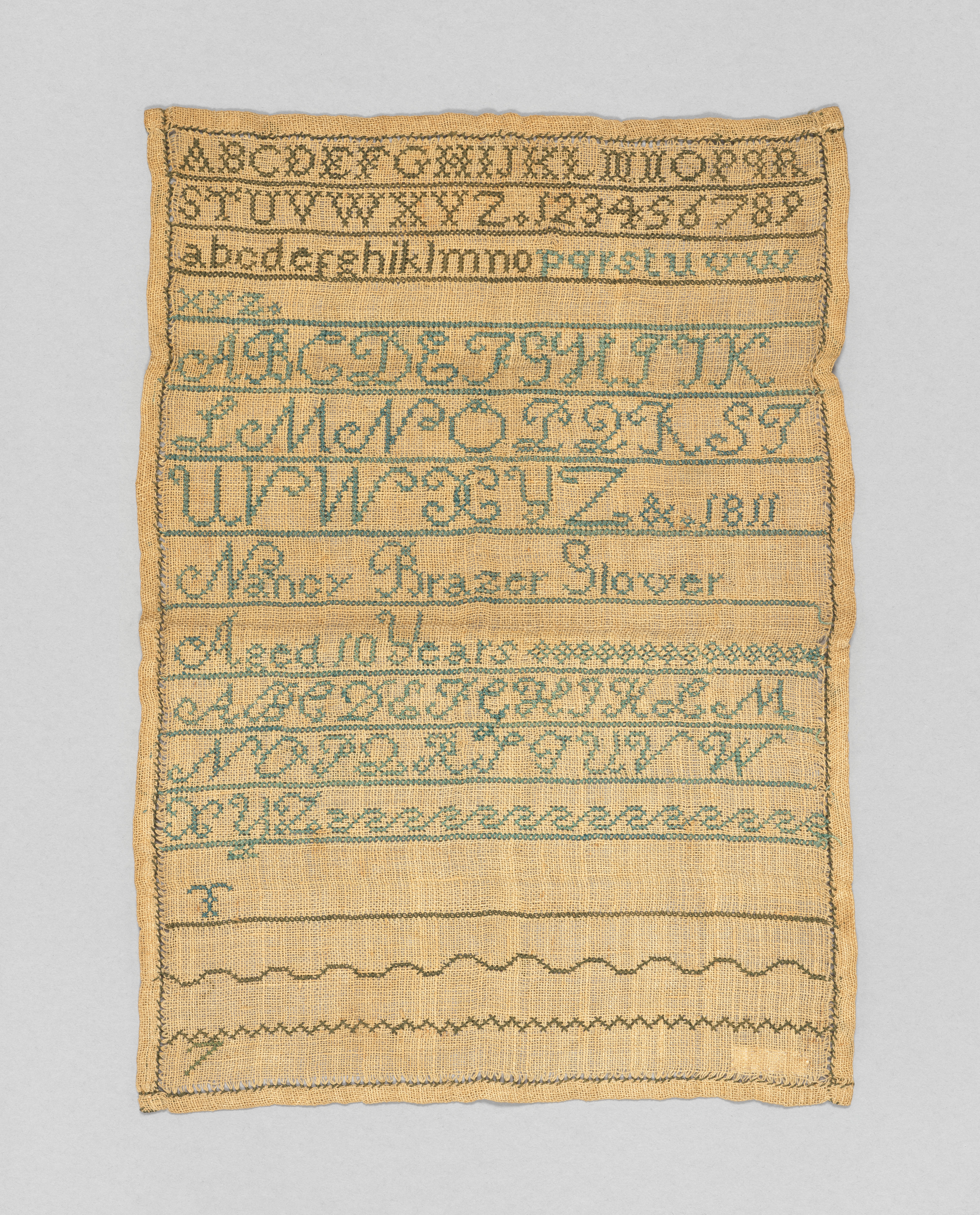
The sampler, a pedagogical artifact of textile mastery, has long been dismissed as a mere exercise in technical proficiency. Yet within the archive of global heritage, it represents a profound dialogue between material constraint and decorative ambition. At Natalie Fashion Atelier, we approach the sampler not as a preparatory sketch, but as a finished statement of aesthetic archaeology—a microcosm of cultural memory encoded in thread. The specific specimen under analysis, a late 19th-century silk-on-wool sampler from the Scottish Borders, offers a singular lexicon for the 2026 luxury silhouette. Its materiality—the juxtaposition of lustrous, fluid silk against the dense, matte ground of virgin wool—creates a tension that is both structural and sensorial. This paper deconstructs the classical elegance of this artifact and explicates how its core principles of contrast, relief, and controlled drape will inform the forthcoming haute couture collection.
Material Dialectic: The Silk-on-Wool Matrix
The foundational innovation of the sampler lies not in its pattern, but in its material antagonism. Silk, a protein fiber of unparalleled reflectivity and tensile strength, is inherently dynamic. Wool, by contrast, is a fiber of absorption and thermal memory, possessing a natural crimp that resists sharp folds. When silk is embroidered onto a wool ground, a distinct topographic hierarchy emerges. The silk threads, laid in satin stitch or couched in metallic variants, rise above the wool surface, creating a relief that is both visual and tactile. For 2026, this principle translates directly into silhouette construction. We are no longer designing flat planes of fabric; we are engineering stratified surfaces where a primary wool shell serves as the architectural base, and silk inserts, appliqués, or embroidered panels act as the decorative and structural accents.
This is not a simple layering. The technical challenge—and the aesthetic reward—lies in the differential modulus of the two fibers. Wool, with its lower elastic recovery, will drape with a soft, organic weight. Silk, with its higher tensile modulus, will resist that drape, creating points of tension and release. In the 2026 silhouette, we will exploit this to define the shoulder line. A wool bodice, cut on the bias, will fall in a gentle, continuous curve. Over it, a silk lattice or a series of silk-wrapped boning channels will create a rigid, sculpted armhole—a direct architectural quotation from the sampler’s embroidered border, where silk threads form a rigid frame around a softer wool field.
Deconstructing Classical Elegance: The Grammar of the Sampler
Classical elegance, in the context of the sampler, is not about symmetry or simplicity. It is about controlled asymmetry and the deliberate placement of visual weight. The sampler’s composition is rarely centered; it often features a dominant motif—a flowering tree, a heraldic crest, a geometric band—offset by a secondary, smaller motif. This creates a visual rhythm that guides the eye across the surface. For the 2026 silhouette, we deconstruct this grammar into the garment’s structure. The primary silhouette—a column dress or a tailored jacket—will be constructed in a dense, felted wool. The secondary silhouette, a silk overlay or a detachable panel, will be placed asymmetrically: a single silk sleeve, a silk panel extending from the right hip to the left shoulder, a silk train that wraps from the back to the front.
This is not mere decoration. The silk overlay will be engineered to modify the garment’s center of gravity. In the sampler, the silk threads, being heavier and more rigid, pull the wool ground into a new shape. In our 2026 designs, a silk panel will be cut on the bias and sewn with a differential feed, creating a permanent, controlled twist in the wool base. The result is a silhouette that appears to be in a state of arrested motion—a frozen moment of classical drapery, but with a modern, architectural precision. The elegance is not in the stillness, but in the implicit tension between the two materials.
From Flat to Form: The 2026 Silhouette as Embroidered Architecture
The sampler teaches us that embroidery is not a surface treatment; it is a structural intervention. Each silk stitch exerts a force on the wool ground, compressing it, distorting it, or reinforcing it. In the 2026 haute couture collection, we will apply this principle at a macro scale. The silhouette will be defined by embroidered seams—not decorative stitching, but structural seams executed in silk thread on a wool base. These seams will act as internal boning, shaping the garment without the need for separate corsetry. The silk thread, when pulled taut, will create a channel of tension, forcing the wool to stand away from the body in a controlled volume, or to collapse into a sharp pleat.
Consider the peplum, a classical element of elegance. In our 2026 interpretation, the peplum will not be a separate piece of fabric. It will be a silk-on-wool embroidery zone at the waistline. The silk threads, embroidered in a dense, concentric pattern, will create a stiff, fluted band that flares outward from the wool bodice. The wool, unembroidered above and below, will remain soft. The result is a peplum that is not sewn, but grown from the fabric itself—a direct translation of the sampler’s technique, where a border is not an addition, but an integral part of the ground.
Color and Light: The Optical Properties of the Silk-on-Wool Matrix
The sampler’s palette is often restrained—indigo, madder, logwood, and the natural ecru of wool. Yet the optical effect is anything but restrained. The silk, with its high refractive index, catches light in a way that the wool cannot. This creates a chromatic vibration at the boundary between the two materials. For 2026, we will manipulate this through the use of iridescent silk and matte, carbon-black wool. The silk will appear to float above the wool, creating a moiré effect that shifts with the wearer’s movement. The silhouette will not be static; it will be a kinetic sculpture of light and shadow.
This optical strategy directly informs the silhouette’s volume. A full, A-line skirt in wool will be overlaid with a silk lattice that is dense at the hem and sparse at the waist. The light will be trapped in the wool at the top, then released in bursts of silk at the bottom. The silhouette will read as compressed at the core, expansive at the periphery—a direct inversion of the sampler’s typical composition, where the center is dense and the borders are sparse. This inversion is the key to the 2026 aesthetic: classical elegance, but deconstructed and reassembled with a new, archaeological logic.
Conclusion: The Sampler as a Blueprint for 2026
The silk-on-wool sampler is not a relic. It is a technical treatise on the interaction of material, structure, and light. For Natalie Fashion Atelier, it provides the foundational principles for the 2026 haute couture silhouette: stratified materiality, asymmetrical tension, embroidered architecture, and optical dynamism. The classical elegance of the sampler is not in its pattern, but in its economy of means—the way a single stitch can transform a flat ground into a three-dimensional form. Our 2026 collection will honor this economy, using silk on wool not as a decorative afterthought, but as the primary generative force of the silhouette. The result will be a couture that is both ancient and futuristic, a dialogue between the hand of the embroiderer and the logic of the architect.