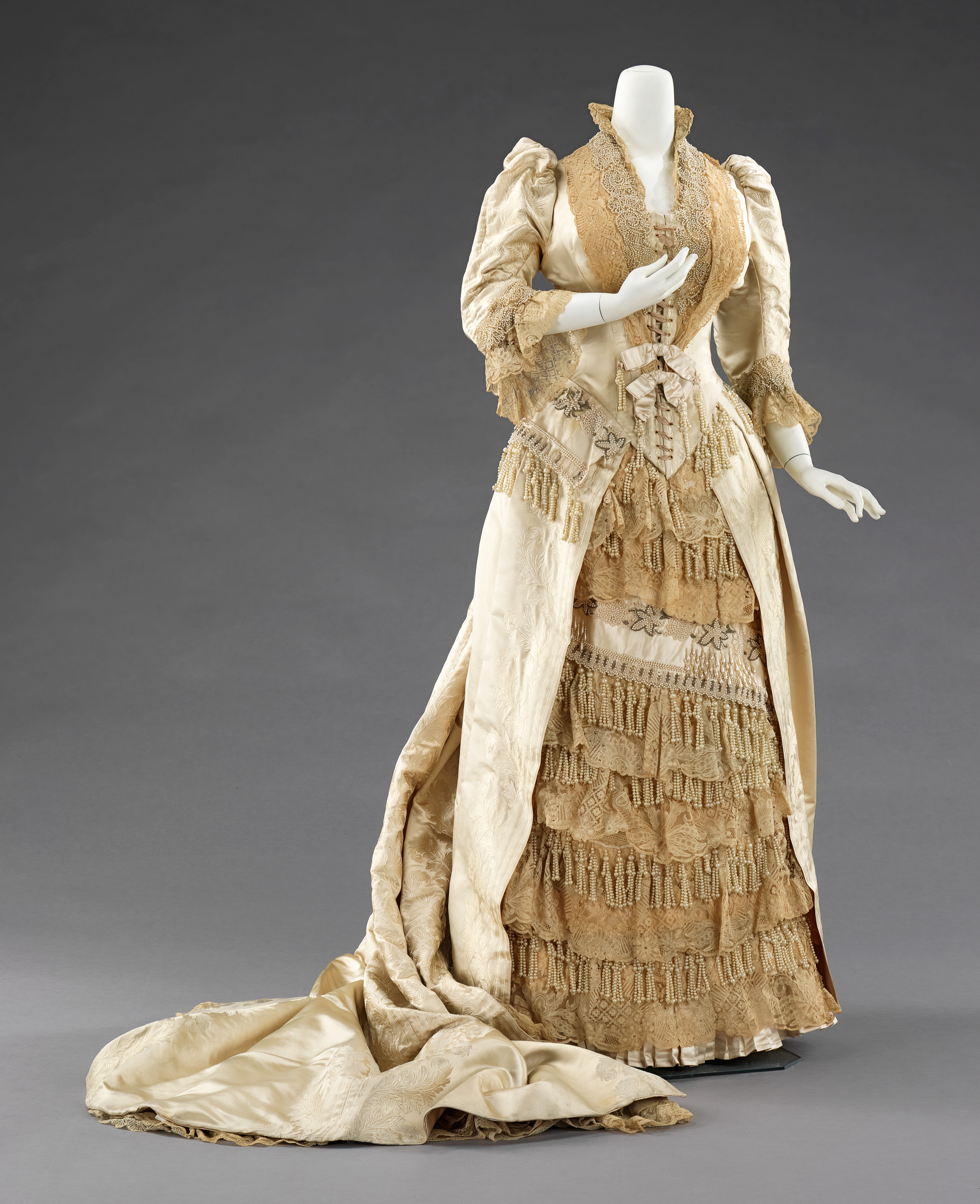
Deconstructing the Classical Elegance: The Court Presentation Dress as a Blueprint for 2026 Silhouettes
Within the hallowed archives of French Haute Couture, the court presentation dress—the robe de cour—stands as a monument to a bygone era of rigid social hierarchy and unparalleled craftsmanship. For the Natalie Fashion Atelier, this artifact is not a relic but a living lexicon. Our isolated aesthetic archaeology of the 18th-century French court gown, specifically those constructed from a dialogue between silk and linen, reveals a profound tension between opulence and restraint. This research paper deconstructs the classical elegance of this silhouette, extracting its core architectural principles and translating them into the material language of 2026 high-end fashion. We posit that the interplay of a rigid, sculptural silk structure against the organic, breathable foundation of linen provides the critical tension necessary for the next generation of luxury silhouettes—ones that prioritize architectural volume without sacrificing fluidity, and historical gravitas without compromising modern wearability.
The Architectural Grammar of the Robe de Cour
The court presentation dress of the Ancien Régime was a masterpiece of engineered drapery. Its silhouette was defined by a rigid, conical bodice—the corps à baleines—and a vast, panniered skirt that extended laterally, creating a horizontal plane of immense presence. This form was not merely decorative; it was a statement of status, a physical manifestation of the wearer’s place within a meticulously ordered cosmos. The primary material, silk, provided the necessary sheen and structural integrity. Heavy silk damasks, brocades, and taffetas were used to create a surface that could hold its shape, reflecting light and the power of the court. The secondary material, linen, served as the invisible but indispensable foundation. It was the structural underlay, the lining for the stays, and the interlining for the panniers. Linen’s inherent tensile strength and breathability allowed for the creation of these extreme volumes without suffocating the wearer, a paradox of comfort and constraint.
Key Architectural Elements: The corps à baleines created a vertical axis of power, compressing the torso into a perfect cone. The panniers, often constructed from whalebone and linen canvas, generated a horizontal axis of presence. The junction of these two axes—the waist—became a fulcrum of control, a point where the rigid silk of the bodice met the expansive silk of the skirt. This junction, often marked by a tablier or a decorative stomacher, was the site of maximum tension and elegance. The silhouette was not organic; it was geometric, a deliberate abstraction of the female form into a symbol of courtly power.
Materiality in Dialogue: Silk and Linen as Opposing Forces
Our archaeological analysis focuses on the material dialectic between silk and linen. In the court dress, silk is the protagonist—the visible, performative surface. Its properties—high luster, crisp hand, and ability to hold a crease—were exploited for maximum visual impact. Silk taffeta, for example, creates a rustling sound, an auditory marker of presence. Linen, conversely, is the antagonist—the hidden, structural backbone. Its properties—high tensile strength, moisture-wicking, and natural resistance to deformation—made it the ideal material for the unseen architecture. This is not a simple binary; it is a sophisticated partnership. The silk’s beauty is dependent on the linen’s strength. The linen’s functionality is elevated by the silk’s luxury.
For 2026, this dialogue is inverted. The luxury of the 2026 silhouette is not found in the overt display of wealth but in the inversion of visibility. We propose a new material hierarchy: linen becomes the protagonist, and silk becomes the structural antagonist. A heavy, double-faced linen, woven with a subtle herringbone pattern, provides the primary surface. Its matte finish and tactile depth offer a sense of grounded, modern luxury. Silk, in this context, is not used for volume but for tension and articulation. A fine, bias-cut silk charmeuse is employed as a structural interlining, creating internal tension points that control the drape of the linen. The result is a silhouette that appears soft and organic from the exterior but is, in fact, rigorously engineered from within.
Translating the Silhouette: The 2026 High-End Silhouette
The 2026 high-end silhouette, as derived from the court presentation dress, is defined by three key transformations: the inverted cone, the modulated pannier, and the articulated waist.
The Inverted Cone: From Compression to Expansion
The historical corps à baleines compressed the torso. Our 2026 interpretation expands it. We deconstruct the rigid bodice into a series of architectural panels of heavy linen, each cut on the bias to follow the body’s natural curves. These panels are not sewn together in a traditional seam but are connected by silk tension straps—narrow bands of bias-cut silk charmeuse that are sewn under tension. This creates a bodice that is both supportive and flexible, a soft corset that molds to the wearer’s form without constriction. The silhouette is an inverted cone: wider at the shoulders, tapering to a defined but unconstrained waist. This is a silhouette of power that breathes, a gesture toward the historical rigidity but executed with modern comfort.
The Modulated Pannier: From Lateral Volume to Vertical Flow
The historical pannier created extreme horizontal volume. Our 2026 interpretation reimagines this as modulated vertical volume. The skirt is constructed from multiple layers of linen, each cut in a gored pattern to create a bell-like shape. The volume is not achieved through rigid understructures but through internal silk weighting. Small, hidden pockets of silk satin are sewn into the hem and side seams. These weights, combined with the natural drape of the linen, create a controlled, flowing silhouette that moves with the body. The lateral expanse of the pannier is translated into a dynamic, cascading volume that shifts with the wearer’s gait. The effect is one of monumental presence without static bulk.
The Articulated Waist: The Fulcrum of Control
The historical waist was a point of rigid connection. Our 2026 interpretation makes it a point of articulated movement. The junction between the linen bodice and the linen skirt is not a fixed seam but a silk gusset. A wide band of silk taffeta, pleated into a fan shape, bridges the two sections. This gusset allows for a range of motion—bending, twisting, sitting—while maintaining the visual integrity of the silhouette. The silk acts as a hinge, a point of both connection and release. This articulation is the key to the silhouette’s modern relevance: it is a dress that can be worn, not just displayed.
Conclusion: The Archaeology of Future Luxury
The court presentation dress, when subjected to rigorous aesthetic archaeology, reveals itself not as a costume but as a system of architectural principles. By isolating the material dialogue between silk and linen, we have extracted a blueprint for the 2026 high-end silhouette. The future of luxury lies not in the revival of historical forms but in the re-engineering of their core tensions. The inverted cone, the modulated pannier, and the articulated waist are not nostalgic gestures; they are sophisticated, technical solutions to the modern demand for garments that are both monumental and wearable, powerful and fluid. The silk and linen of the court dress, once hidden and visible, are now partners in a new material economy—one where structure is soft, volume is controlled, and elegance is defined by the intelligent interplay of opposing forces. This is the legacy of the robe de cour for Natalie Fashion Atelier: a classical elegance deconstructed, reimagined, and made wholly, undeniably modern.