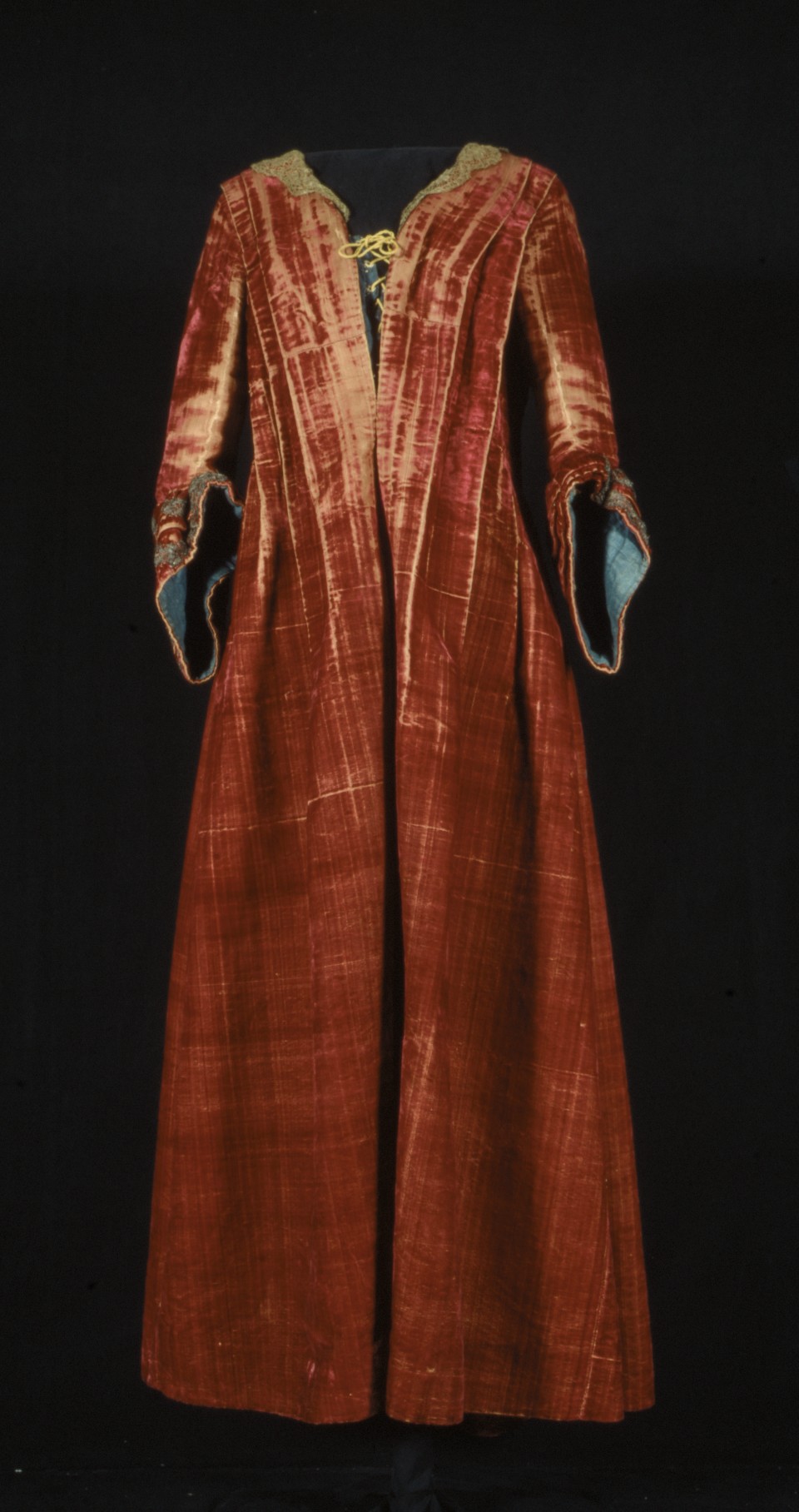
Deconstructing the Robe à la Française: A Technical Analysis of Materiality and Silhouette for 2026 Haute Couture
Within the isolated archive of aesthetic archaeology, the Robe à la Française stands as a paramount artifact of 18th-century aristocratic opulence. For Natalie Fashion Atelier, this garment—born from the ateliers of Paris and the silk looms of Lyon—represents more than a historical curiosity; it is a foundational text in the grammar of luxury. This research artifact deconstructs the classical elegance of the Robe à la Française, specifically its interplay of silk, metal, and linen, to extrapolate a technical framework for 2026 high-end silhouettes. The objective is not replication, but a rigorous translation of structural logic and material philosophy into a contemporary lexicon of form, volume, and restraint.
I. The Anatomical Lexicon of the Robe à la Française
The Robe à la Française, at its zenith, is defined by two primary architectural features: the sacque back and the stomacher front. The sacque back, with its generous pleats falling freely from the shoulders to the floor, creates a volumetric cascade that defies the body’s natural lines. This is not a silhouette of containment but of deliberate, theatrical expansion. The stomacher, conversely, is a rigid, triangular panel of intricate embroidery, often reinforced with metal threads, that compresses the torso into a narrow, elongated cone. The juxtaposition of these two zones—the liberated back and the constrained front—generates a dynamic tension that is the garment’s core aesthetic principle.
Materiality is the silent orchestrator of this tension. The silk, typically a lampas or brocade from Lyon, provides a fluid, lustrous ground that catches light and movement. The metal, woven as gold or silver thread, introduces a structural rigidity and a reflective surface that anchors the embroidery. The linen, used as an inner lining and for the foundation of the stomacher, offers a crisp, breathable counterpoint to the silk’s slipperiness. In the archive, we observe that the linen’s tensile strength is critical: it bears the weight of the metal embroidery and the pull of the silk, preventing distortion. This triad—silk for drape, metal for structure, linen for resilience—forms a closed-loop system of material performance.
II. Deconstructing Classical Elegance: The Silhouette as a System of Forces
Classical elegance in the Robe à la Française is not a static quality but a function of controlled asymmetry and volumetric hierarchy. The silhouette operates on a principle of inverted pyramid when viewed from the side: the narrow, compressed stomacher transitions into the wide, sweeping sacque back, which then flares into the pannier-supported skirt. This creates a visual weight that is both top-heavy and dynamically balanced. The elegance arises from the precision of this transition—the exact point where the pleats release from the shoulder, the precise angle of the stomacher’s decline.
For the 2026 silhouette, we extract a key technical insight: volumetric modulation. The Robe à la Française teaches us that volume must be anchored by a counterpoint of compression. A 2026 interpretation would not replicate the pannier but instead deploy a focalized expansion—a single, dramatic pleat or a cascading train that originates from a highly structured, almost architectural shoulder line. The materiality of silk becomes the vehicle for this expansion, its weight and sheen dictating the fall of the fabric. The metal is no longer limited to embroidery; it is reimagined as a structural wire or a fine chainmail insert that provides internal scaffolding, allowing the silk to hold a shape without external boning. The linen is elevated to a visible, textural element—perhaps as a crisp, unbleached underlayer that peeks through slits in the silk, creating a dialogue between the raw and the refined.
III. Materiality as a Narrative for 2026: Silk, Metal, Linen
The 2026 luxury consumer demands a narrative of craft, sustainability, and tactile intelligence. The historical triad of silk, metal, and linen offers a potent narrative when recontextualized.
Silk in the 2026 atelier is not merely a fabric but a programmable medium. We propose a double-faced silk gazar—a fabric with a matte, almost paper-like finish on one side and a high-gloss, liquid surface on the other. This duality allows for a single garment to shift between opacity and luminosity, echoing the Robe à la Française’s play of light. The gazar’s inherent stiffness permits architectural folds that do not collapse, a direct lineage from the sacque back’s pleats.
Metal is re-engineered as a micro-articulated alloy, woven into the silk at specific stress points. Rather than heavy embroidery, we embed fine, flexible metal filaments along the spine and the leading edge of a sleeve. This creates a dynamic exoskeleton that can be shaped by the wearer, allowing the silhouette to be adjusted from a closed, columnar form to an open, bell-like shape. This is a direct translation of the stomacher’s rigid control, but rendered as an interactive, almost kinetic element.
Linen is elevated to a prime material, not a mere lining. We source a hand-hammered flax linen that has been treated with a natural resin to achieve a subtle, sculptural stiffness. This linen is used for the garment’s foundation—a visible, structural corset that sits outside the silk. The contrast between the linen’s earthy, irregular texture and the silk’s polished surface creates a tension that is both historical and hyper-modern. The linen corset, laced with fine metal cords, becomes the visual and structural anchor for the entire silhouette.
IV. The 2026 Silhouette: A Technical Proposition
Based on this deconstruction, we propose a 2026 silhouette for Natalie Fashion Atelier: the “Sacque Column.” This silhouette retains the Robe à la Française’s core principle of a compressed front and a liberated back, but in a contemporary, verticalized form.
The front is a narrow, high-necked column of double-faced silk gazar, with the matte side facing outward. A micro-articulated metal filament runs vertically along the sternum, allowing the wearer to bend the column into a subtle curve, creating a personalized, asymmetric line. The back is a single, dramatic pleat that releases from a sharp, linen-reinforced shoulder. The pleat is formed from the glossy side of the silk gazar, creating a stark contrast of finish. The linen corset, visible through a strategic cut-out at the waist, provides the structural counterpoint, its laces trailing down the back like a modern interpretation of the sacque’s waterfall pleats.
The hem is asymmetrical: a sharp, floor-length line at the front, sweeping into a dramatic train at the back. The train is weighted with a single, heavy metal bead at its tip, ensuring it falls with a precise, controlled gravity. This silhouette is not about volume for volume’s sake; it is about controlled release—a tension between the rigid and the fluid, the compressed and the expansive.
V. Conclusion: The Archive as a Living Blueprint
The Robe à la Française, when subjected to rigorous aesthetic archaeology, reveals itself not as a relic but as a system of material and structural logic. The 2026 haute couture silhouette, as conceived by Natalie Fashion Atelier, is a direct descendant of this logic. By re-engineering the triad of silk, metal, and linen, we achieve a silhouette that is both historically literate and technologically advanced. The elegance is no longer in the imitation of a past form, but in the intelligent translation of its underlying principles—volume as a dialogue, material as a narrative, and structure as a personal, interactive experience. This is the future of luxury: a deep, respectful dialogue with the archive, executed with the precision of a Parisian atelier and the vision of a 21st-century curator.