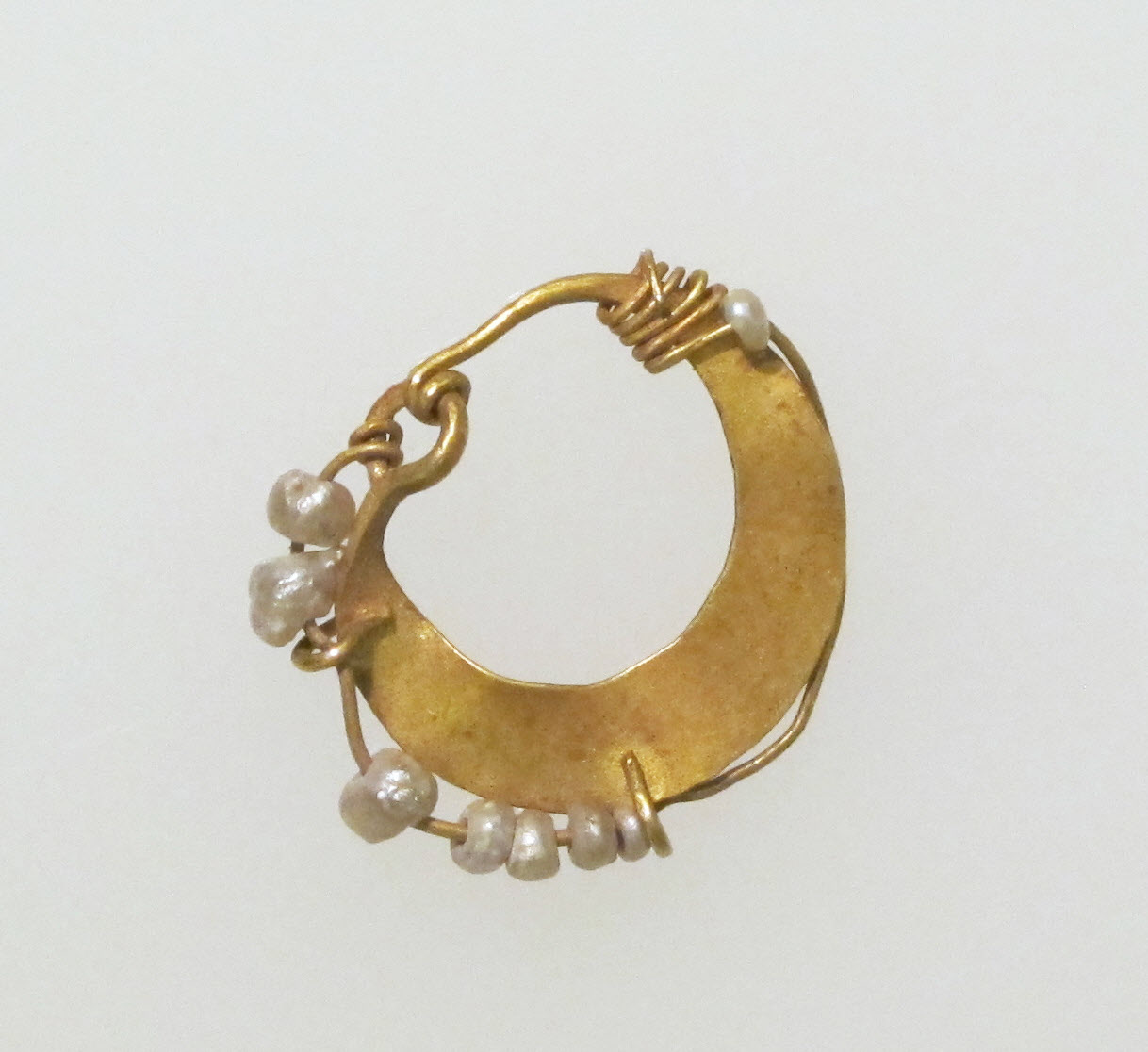
The Crescent Earring as Structural Archetype: Gold, Duality, and the 2026 Silhouette
Within the hallowed archives of Natalie Fashion Atelier, the crescent earring emerges not merely as an object of adornment, but as a foundational architectural principle. Its form—a delicate arc of gold—resonates with a profound historical duality, echoing the archive’s own tension between the reflective and the eternal. The referenced node, “一面是光洁银镜上以黄金镶嵌的纷繁棕叶纹,另一面是冰冷石棺板上以浮雕诉说的生命叙事” (one side a polished silver mirror inlaid with intricate gold palmettes, the other a cold sarcophagus slab narrating life through relief), provides the critical dialectic. This artifact is a study in opposition: luminosity versus opacity, ornamentation versus narrative, the fleeting reflection versus the enduring stone. For the 2026 haute couture silhouette, this crescent form and its materiality in gold dictate a new lexicon of structural elegance, one defined by controlled asymmetry, suspended mass, and a dialogue between surface brilliance and volumetric depth.
Deconstructing the Classical Elegance: The Crescent as Liminal Space
The classical crescent earring is traditionally understood through its symmetry and its gentle, receptive curve. However, the archive context compels a more radical deconstruction. The earring is not a static half-circle; it is a liminal threshold. It occupies the space between the mirror’s surface (the realm of the immediate, the decorative) and the sarcophagus’s depth (the realm of the historical, the narrative). In this reading, the crescent’s gold becomes the materialized boundary between two opposing states of being. Its elegance is not in its simplicity, but in its function as a structural hinge.
This deconstruction informs the 2026 silhouette by introducing the concept of the “negative space arc.” The classical silhouette, whether in a gown or a jacket, often relies on a continuous line. The crescent earring teaches us to break that line. The 2026 silhouette will feature deliberate, crescent-shaped cut-outs—not as mere decoration, but as architectural voids that frame the body. These voids, inspired by the earring’s inner curve, will be edged in metallic embroidery or structural boning, creating a tension between the fabric’s mass and the exposed skin. The gold of the earring translates into gilded structural seams—fine chains, metallic thread, or liquid gold appliqué—that trace the arc of these voids, defining the boundary between the garment’s surface and the narrative space it creates.
Materiality of Gold: From Adornment to Structural Armature
Gold, in the context of this archive, is not a mere color or a precious metal. It is a material of duality. On the mirror side, it is inlaid, flat, and decorative—a surface pattern. On the sarcophagus side, it is absent, replaced by the narrative of stone. The crescent earring, in its pure gold form, synthesizes these two extremes. It is both the ornamental surface and the structural support. For the 2026 silhouette, gold must be liberated from its traditional role as embellishment and elevated to a primary structural material.
This manifests in several technical applications. First, golden armatures will be integrated into the garment’s internal architecture. Inspired by the earring’s ability to hold its shape against the ear, these armatures will be used to create self-supporting collars, cuffs, and hemlines that arc away from the body, mimicking the crescent’s poised suspension. These are not stiff cages but flexible, articulated structures of gold-plated metal or densely woven metallic thread, allowing for movement while maintaining a defined, sculptural form.
Second, the concept of the “inlaid gold” from the mirror side informs a new technique in fabric manipulation. We will develop “golden intarsia”—a process where panels of matte, sculpted fabric (representing the stone sarcophagus) are interlocked with panels of liquid, reflective gold lamé or micro-pleated metallic silk (representing the mirror). The crescent earring’s form dictates the geometric pattern of this interlocking. The silhouette will be divided into zones of opacity and zones of reflection, with the crescent arc acting as the transitional seam between them. This creates a garment that changes its visual weight and luminosity as the wearer moves, echoing the archive’s narrative of shifting perspectives.
The 2026 Silhouette: Asymmetry, Suspension, and the Narrative Arc
The crescent earring’s most profound influence on the 2026 silhouette is its inherent asymmetry. A single earring, worn on one side, creates an immediate imbalance that is both elegant and provocative. This principle is translated into the silhouette through asymmetric draping and cantilevered volumes. A gown, for example, might feature a single, sweeping crescent-shaped train that originates from the right shoulder, its gold-embroidered edge tracing a path down the back and pooling on the floor. The left side of the garment remains clean, linear, and grounded—representing the “stone” side of the archive. The right side is the “mirror,” the arc of gold, the suspended narrative.
This asymmetry is not random; it is a calculated architectural imbalance. The crescent’s curve dictates the center of gravity for the entire silhouette. The gold armature within the garment ensures that the suspended volume does not collapse but maintains its arc, creating a dynamic tension between the body’s vertical axis and the garment’s horizontal, sweeping line. This is the “suspended narrative” silhouette—a form that appears to be in a state of perpetual, elegant motion, forever caught between the reflective surface and the carved depth.
Conclusion: The Gold Arc as a New Design Lexicon
The crescent earring, viewed through the lens of this specific archive, is not a simple historical reference. It is a generative architectural diagram. Its gold materiality, its liminal form, and its embedded duality provide a complete technical and aesthetic framework for the 2026 haute couture collection. The classical elegance of the earring is deconstructed into its core components: the arc as structural void, the gold as primary armature, and the asymmetry as narrative driver. The resulting silhouettes will be characterized by their gilded structural seams, suspended crescent volumes, and a profound dialogue between surface and depth. This is not a revival of a past form, but a re-articulation of its fundamental principles into a new, forward-looking design language—one that honors the historical tension between the mirror and the stone, the ornament and the narrative, and translates it into the living, moving architecture of the 2026 woman.