The Dressing Gown as Architectural Blueprint: Cotton’s Reclamation of American Ease for 2026 Haute Couture
At Natalie Fashion Atelier, the practice of aesthetic archaeology demands a rigorous excavation of garments that have been historically marginalized by the haute couture canon. Among the most potent artifacts in the American archive is the dressing gown—a garment of domestic privacy, of unscripted movement, and of a distinctly American pragmatism. This research artifact deconstructs the classical elegance of the dressing gown not as a relic of leisure, but as a foundational silhouette for 2026. The chosen materiality—cotton—is not a concession to simplicity but a deliberate, radical choice. In an era of hyper-technical fabrics and synthetic opulence, cotton’s inherent drape, breathability, and capacity for structural memory become the primary vectors for redefining luxury. This paper posits that the dressing gown, when stripped of its decorative excess and examined through the lens of isolated aesthetic archaeology, offers a blueprint for a new haute couture: one that marries American ease with Parisian precision, and cotton with the highest echelons of silhouette engineering.
Archaeological Excavation: The Classical Elegance of the American Dressing Gown
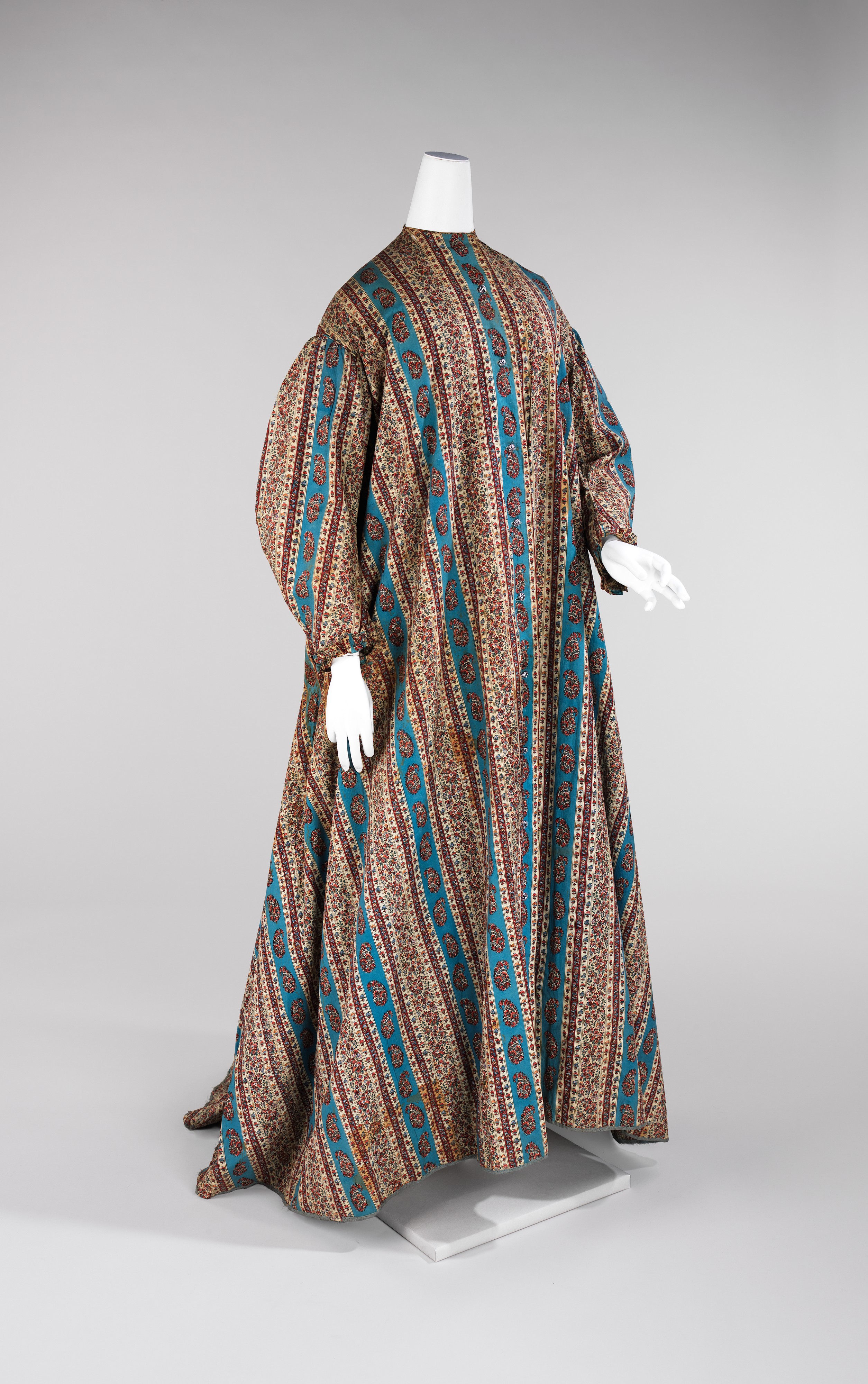
The American dressing gown, circa 1880-1920, was a paradox of form and function. Unlike its European counterpart—often a silk- or velvet-lined robe of ostentatious display—the American iteration was defined by utilitarian grace. Its classical elegance resided not in ornamentation, but in the purity of its line: a generous, unbroken shoulder, a deep V-neck that elongates the torso, and a columnar body that falls from the shoulder to the hem with minimal interruption. The kimono sleeve, borrowed from Japanese aesthetics but naturalized by American manufacturers, provided a three-dimensional volume that allowed for unrestricted movement while maintaining a sculptural silhouette. The belt, or sash, was not a cinch but a structural anchor, creating a dynamic tension between the garment’s volume and the body’s form.
This is the isolated artifact we preserve: a cotton dressing gown from a New England textile mill, circa 1895. The cotton is a double-faced twill, woven with a subtle herringbone pattern that is only visible upon close inspection. The fabric’s weight—approximately 8 ounces per square yard—is critical. It is neither flimsy nor stiff; it possesses a drape coefficient that allows it to fall in soft, vertical folds while retaining enough body to hold a crease at the shoulder and cuff. The seams are felled, not overlocked, a technique that creates a flat, durable finish and eliminates bulk. The hem is a simple, turned-under edge, devoid of lace or trim. This is elegance through negative space—a garment that achieves its grandeur by what it refuses to add.
Materiality as Strategy: Cotton’s Reclamation of High-End Silhouettes
For 2026, the haute couture customer is no longer seeking the weight of brocade or the cold precision of technical knits. The post-pandemic luxury market demands tactile truth—fabrics that breathe, that age with grace, and that carry the memory of the body. Cotton, in its most refined forms, answers this demand with a sophistication that synthetic fibers cannot replicate. The cotton for the 2026 dressing gown silhouette is not the humble percale of bed linens; it is a Giza 45 extra-long staple cotton, mercerized to a subtle luster and woven into a satin-faced twill. This construction yields a fabric that is simultaneously fluid and structured, with a drape index that rivals silk but with a matte finish that reads as modern restraint.
The key to the silhouette’s success lies in the shoulder-to-hem ratio. The dressing gown’s classical elegance is defined by its ability to create a continuous, unbroken line from the nape of the neck to the floor. In 2026, this is achieved through a single-piece construction of the front panels, with the kimono sleeve cut as an extension of the body. The cotton’s grain line is meticulously aligned to the vertical axis, ensuring that the fabric’s natural bias does not distort the silhouette. A subtle interlining of fine cotton organdy is fused to the shoulder seam and the inner edge of the sleeve, providing the necessary structural memory to prevent the fabric from collapsing into the armpit. The result is a silhouette that appears effortless but is engineered with the precision of a Parisian atelier.
Silhouette Engineering: From Domestic Privacy to Public Haute Couture
The 2026 dressing gown silhouette is not a literal reproduction; it is a translation of the artifact’s core principles into a contemporary context. The garment is designed to be worn as a day-to-evening coat, a duster, or a statement piece over a simple column dress or tailored trousers. The following technical elements are critical to its success:
Volume Management: The dressing gown’s generous volume is controlled not by a belt but by a hidden internal drawstring at the waist, accessible through a discreet side seam slit. This allows the wearer to adjust the silhouette from a loose, architectural column to a more defined, cinched shape. The drawstring is made of the same cotton twill, braided and waxed for durability, and is anchored to a cotton grosgrain tape that is sewn into the side seams. This system eliminates the need for an external sash, preserving the garment’s clean, unbroken line.
Shoulder Architecture: The kimono sleeve is reimagined with a dropped shoulder seam that falls two inches below the natural shoulder point. This creates a softer, more relaxed line while still maintaining a defined silhouette. The seam is reinforced with a cotton bias binding that is cut on the true bias, allowing it to curve smoothly around the armhole without puckering. The sleeve itself is cut with a slight bell shape at the cuff, adding a subtle, feminine volume that echoes the garment’s historical roots.
Hem and Finish: The hem is a double-turn hem of 1.5 inches, weighted with a cotton cord sewn into the fold. This weight ensures that the garment hangs with a clean, straight fall, even in a breeze. The interior seams are bound with a cotton lawn tape, a technique that eliminates fraying while adding a whisper of texture against the skin. The closure is a series of invisible cotton-covered snaps at the front, allowing for a seamless, unbroken front panel when the garment is worn open.
Conclusion: The Cotton Dressing Gown as a 2026 Luxury Archetype
The dressing gown, in its American form, is a masterclass in restrained opulence. It achieves its elegance through the purity of its line, the intelligence of its construction, and the integrity of its material. For 2026, this artifact offers a counterpoint to the excesses of previous decades. The cotton dressing gown silhouette is not a costume; it is a second skin—a garment that moves with the body, that ages with grace, and that speaks to a new definition of luxury: one rooted in comfort, precision, and the quiet power of a perfectly executed line. At Natalie Fashion Atelier, we do not merely preserve history; we activate it, transforming the domestic dressing gown into a statement of haute couture for the discerning, modern woman.