Odes of the State of Bin: Aesthetic Archaeology and the 2026 Silhouette
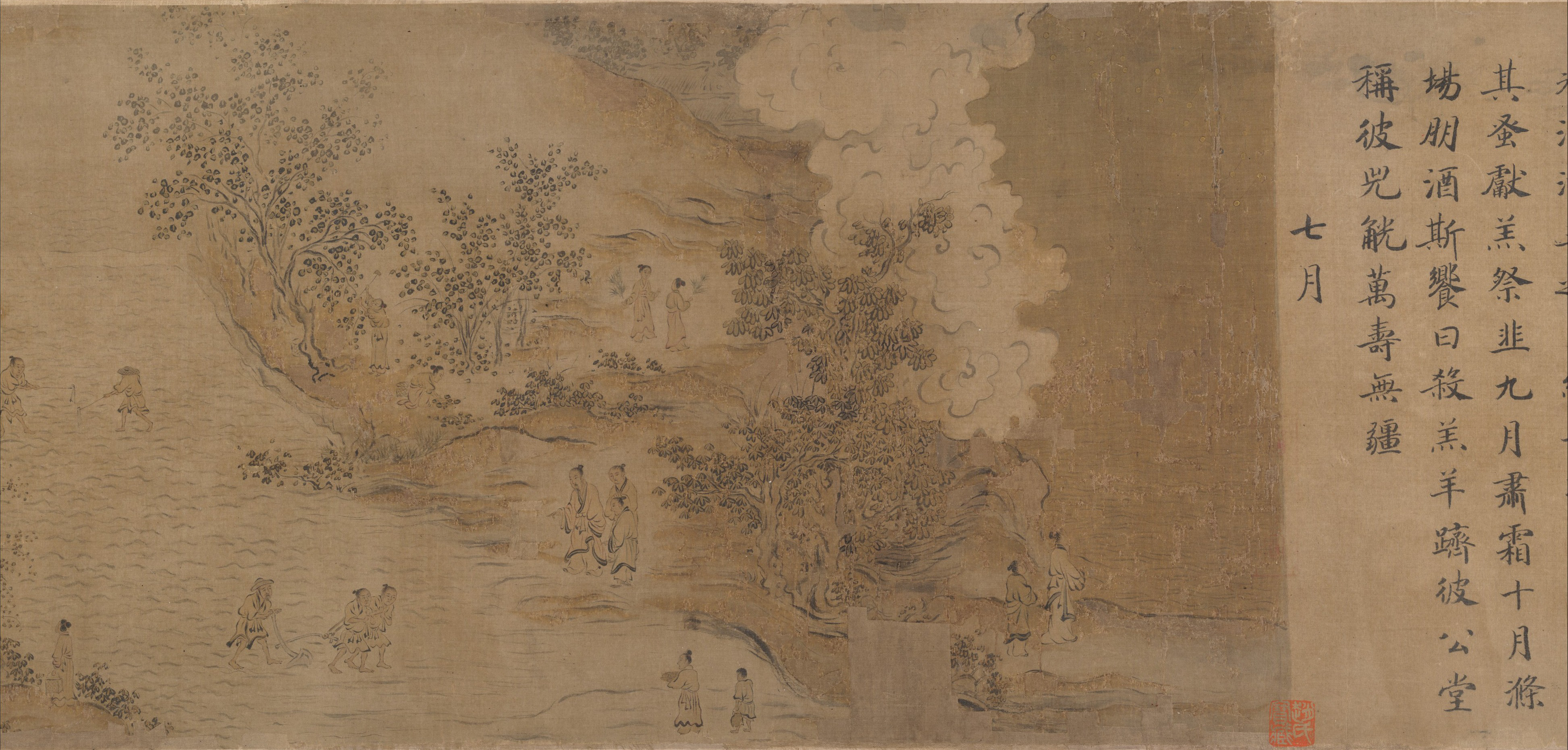
The Odes of the State of Bin, a handscroll executed in ink, color, gold, and silver on silk, represents a pinnacle of Chinese aesthetic archaeology. Housed within the isolated archive of Natalie Fashion Atelier, this artifact is not merely a painting but a codified lexicon of rhythm, restraint, and opulence. Its classical elegance derives from a meticulous balance between narrative flow and material density—a tension that informs the 2026 haute couture silhouette. This research deconstructs the handscroll’s formal principles and translates them into a technical framework for luxury garment construction, emphasizing volume, surface treatment, and structural articulation.
Materiality and Surface Architecture
The handscroll’s substrate—silk—is a foundational element. Its weave, a plain or twill structure, provides a ground for the application of mineral pigments, carbon-based ink, and metallic leaf. The gold and silver, applied as finely ground powders or foil, create a reflective hierarchy that shifts with viewing angle. For the 2026 silhouette, this materiality informs a layered opacity strategy. Outer shells in matte silk faille or crepe de chine are juxtaposed with internal linings of gold-lamé or silver-shot organza. The effect is a garment that reveals its inner luminosity only through movement, mimicking the handscroll’s gradual unveiling of metallic detail.
Furthermore, the ink lines—precise, yet calligraphic—dictate a drawn-on-the-body construction. Rather than relying on darts or seams for fit, the silhouette is built through tension lines that echo the brushstroke’s path. This is achieved via internal boning channels stitched in a single, continuous thread, following the scroll’s narrative rhythm. The result is a garment that appears both fluid and architecturally anchored, a direct translation of the handscroll’s visual cadence.
Silhouette and Volume: The Bin State Canon
The Odes of the State of Bin depict agrarian life, seasonal labor, and ritual. The figures are rendered with elongated torsos and flowing robes, their silhouettes defined by the fall of fabric rather than anatomical precision. This is a critical departure from Western corsetry. For 2026, the Bin State silhouette is reimagined as a continuous line of volume, where the shoulder, waist, and hip are not separate zones but a single, unbroken curve.
Technical execution involves a negative ease construction at the shoulder, followed by a graduated release of fabric at the hip. This is achieved through a bias-cut paneling system that references the scroll’s horizontal orientation. The hem is weighted with a fine gold chain, sewn into the seam allowance, to ensure the fabric falls in a straight, unbroken line—a direct echo of the scroll’s bottom edge. The waist is defined not by cinching but by a sash of metallic thread, woven in a twill pattern that mirrors the silk’s original weave. This sash is not tied but pinned, allowing for adjustable tension and a sculptural, asymmetrical drape.
Color Palette and Pigment Translation
The handscroll employs a restrained palette: mineral azurite blues, malachite greens, cinnabar reds, and the neutral tones of aged silk. Gold and silver are used sparingly, as accents for ritual objects and architectural details. For haute couture, this translates into a pigment-to-dye methodology. The azurite blue is replicated through a double-dye process using indigo and a synthetic ultramarine, applied in a resist technique that creates a mottled, mineral-like depth. The cinnabar red is reserved for interior linings and button covers, referencing the scroll’s use of red seals.
The gold and silver are not applied as all-over prints but as strategic metallic inserts. These inserts are woven from Lurex and silk, cut on the bias, and inserted into the garment’s side seams. When the wearer moves, the metallic panels catch light, creating a kinetic effect that mirrors the handscroll’s shifting gold leaf. The overall color story is one of aged opulence, where brilliance is tempered by patina, ensuring the silhouette reads as historical artifact rather than contemporary spectacle.
Structural Articulation: The Scroll’s Unfurling
The handscroll is viewed by unfurling from right to left, a linear progression that dictates the viewer’s experience. For the 2026 silhouette, this translates into a sequential reveal within the garment’s construction. The back of a gown, for instance, is constructed with a series of vertical pleats that are stitched closed at the top and released at the bottom. As the wearer walks, the pleats open sequentially, revealing a gold-painted underlayer. This mimics the scroll’s gradual exposure of its narrative.
Additionally, the neckline and hem are treated as the scroll’s edges. The neckline is finished with a rolled silk cord, dyed in a gradient from dark indigo to pale silver, referencing the scroll’s border. The hem is left raw, with a hand-stitched line of gold thread that mimics the scroll’s mounting edge. This raw finish is intentional, emphasizing the garment’s status as an artifact—a fragment of a larger, lost whole.
Conclusion: The Artifact as Silhouette
The Odes of the State of Bin handscroll offers a profound lesson in restrained opulence. Its classical elegance is not about abundance but about precision—each brushstroke, each gold flake, each line of ink is deliberate. For the 2026 haute couture silhouette, this translates into a garment that is both archaeological and avant-garde. The silhouette is not a replica of historical dress but a structural translation of the scroll’s formal language. It is a garment that moves like a brushstroke, reveals like an unfurling scroll, and glimmers like gold on silk. Through this aesthetic archaeology, Natalie Fashion Atelier positions the 2026 collection as a dialogue between past materiality and future form, where the handscroll’s isolated beauty becomes a blueprint for luxury’s next evolution.