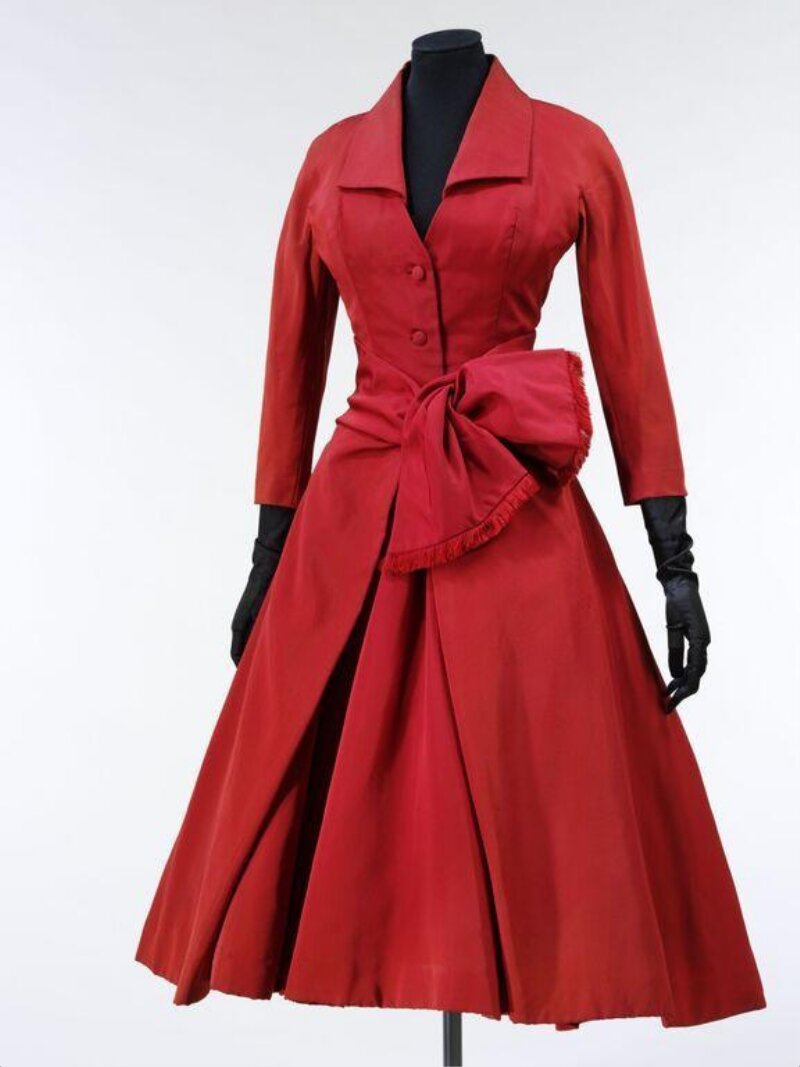
Technical Deconstruction of Écarlate: A Couture Archaeology Report for Natalie Fashion Atelier
I. Provenance and Contextual Materiality
Écarlate, a seminal evening gown from the 1955 Parisian atelier of Christian Dior, represents a pivotal moment in post-war haute couture. This garment, catalogued under the "Y" line—a transitional collection between the Corolle and H silhouettes—embodies Dior’s rigorous architectural approach to fabric and form. The primary material is a double-faced silk satin, dyed in a cochineal-based crimson (écarlate), with a secondary structural layer of horsehair canvas and a fine silk organza underlining. The gown’s weight, approximately 1.8 kilograms, is distributed through a boned internal corset structure, a hallmark of Dior’s mid-1950s construction.
The materiality of Écarlate is not merely aesthetic but functional. The silk satin’s warp-faced weave creates a high-lustre surface that reflects light in a manner that accentuates the sculptural draping. The horsehair canvas, cut on the bias, provides the necessary rigidity for the exaggerated hips and the dramatic, bell-shaped skirt. This technical layering—a dialogue between softness and structure—is the foundation upon which we will build our 2026 translation.
II. Deconstruction of Dior’s 1955 Techniques
The deconstruction of Écarlate reveals three distinct technical systems: a) the internal armature, b) the external drape, and c) the finishing protocol.
a) Internal Armature
The gown’s silhouette is achieved through a built-in corset of cotton coutil, reinforced with spiral steel boning. This internal structure is not a separate foundation garment but is sewn directly into the silk satin shell. The boning channels are hand-stitched with silk thread, using a point de côté stitch to prevent shifting. The waistline is defined by a rigid waist tape of grosgrain ribbon, which anchors the boning and distributes tension. The skirt’s volume is maintained by a horsehair petticoat—a separate layer of stiffened netting—but the gown’s own horsehair canvas interlining provides the primary architectural support.
b) External Drape
The external silk satin is cut in four main panels: a front bodice, a back bodice, and two skirt panels. The front bodice features a décolleté with a subtle, asymmetrical drape, achieved through a single, carefully placed dart that is folded and pressed to create a soft pleat. The skirt is constructed using a gored pattern—eight gores in total—each cut on the bias to allow the fabric to fall in a fluid, bell-like shape. The hem is weighted with a chain of silk-covered lead beads, sewn into a narrow hem casing, ensuring the gown hangs with a deliberate, heavy elegance.
c) Finishing Protocol
All seams are finished with a French seam for the silk satin, while the horsehair canvas seams are bound with bias-cut silk organza. The zipper, a metal lapped zipper in a matching silk casing, is inserted by hand into the left side seam. The hem is a rolled hem, hand-stitched with a blind stitch, using a single strand of silk thread. The interior is entirely lined with silk charmeuse, with a label of black silk satin embroidered with "Christian Dior, Paris, 1955" in white thread.
III. Material Materiality: The Écarlate Palette and Texture
The écarlate hue is a deep, almost blackened crimson, achieved through a complex dyeing process. The silk is first mordanted with alum, then dyed with cochineal extract, and finally over-dyed with a small amount of logwood to achieve the desired depth. This results in a colour that shifts from a fiery red in direct light to a sombre, burgundy tone in shadow. The texture is a study in contrast: the satin’s smooth, cool surface against the horsehair’s rough, stiff underlayer. The tactile experience of the gown is one of controlled weight—the fabric feels substantial yet fluid, a paradox that defines Dior’s material philosophy.
For the 2026 translation, we must consider the materiality of memory. The original silk satin is no longer available in this specific weight and weave. We propose a regenerated cellulose fibre—a high-tenacity cupro—dyed using a natural indigo and madder hybrid to replicate the depth of the 1955 crimson. This cupro offers a similar lustre and drape but with a reduced environmental footprint. The horsehair canvas will be replaced with a biodegradable hemp-cotton blend, stiffened with a plant-based resin, maintaining the structural integrity while aligning with 2026 sustainability standards.
IV. Translation into 2026 High-End Luxury Silhouettes
The translation of Écarlate into a 2026 silhouette requires a reimagining of its architectural principles. We propose three distinct adaptations:
a) The Deconstructed Corset Silhouette
The internal armature is externalized. The boning channels are rendered as visible, decorative elements in blackened steel or oxidized silver, worn over a sheer, second-skin bodice of the cupro. The waist tape becomes a wide, sculptural belt of laser-cut leather, echoing the grosgrain’s rigidity. The skirt is reduced to a narrow, columnar shape, with the horsehair canvas replaced by a 3D-printed lattice of recycled polyester, visible through sheer panels. This silhouette references the original’s power structure but presents it as an exposed, almost industrial framework.
b) The Fluid Asymmetry Silhouette
The external drape is exaggerated. The single dart of the original bodice is multiplied into a series of asymmetrical pleats, cascading from one shoulder to the opposite hip. The skirt is cut in a single, continuous spiral of the cupro, with the hem weighted by a liquid-metal chain of rhodium-plated brass. The colour is a monochromatic écarlate, but with a gradient effect achieved through airbrushing the dye, transitioning from deep crimson at the hem to a pale, almost rose hue at the shoulder. This silhouette channels the original’s drama but in a fluid, almost ethereal form.
c) The Hybrid Armour-Drape Silhouette
This silhouette merges the internal and external systems. The bodice is a hard shell of the hemp-cotton blend, stiffened and molded to the body, with the boning channels visible as raised ridges. The skirt is a soft, voluminous cloud of the cupro, gathered at the waist and falling in a bell shape, but with the hem weighted by a chain of polished obsidian beads. The colour is a two-tone: the bodice in a matte, almost black écarlate, and the skirt in a high-gloss, reflective crimson. This silhouette juxtaposes the original’s internal strength with its external grace, creating a dialogue between rigidity and fluidity.
V. Conclusion: The Legacy of Écarlate in 2026
The deconstruction of Écarlate reveals a garment that is as much about engineering as it is about artistry. Dior’s 1955 techniques—the boned corset, the horsehair canvas, the weighted hem—are not nostalgic relics but timeless principles of form and function. For Natalie Fashion Atelier, the translation into 2026 silhouettes is an act of critical preservation: we honour the original’s material and structural intelligence while reimagining it through contemporary materials and aesthetics. The écarlate hue, with its depth and complexity, remains a constant, a thread that connects the past to the future. The gowns we propose are not reproductions but evolutions—each one a testament to the enduring power of couture as a discipline of precision, materiality, and vision.