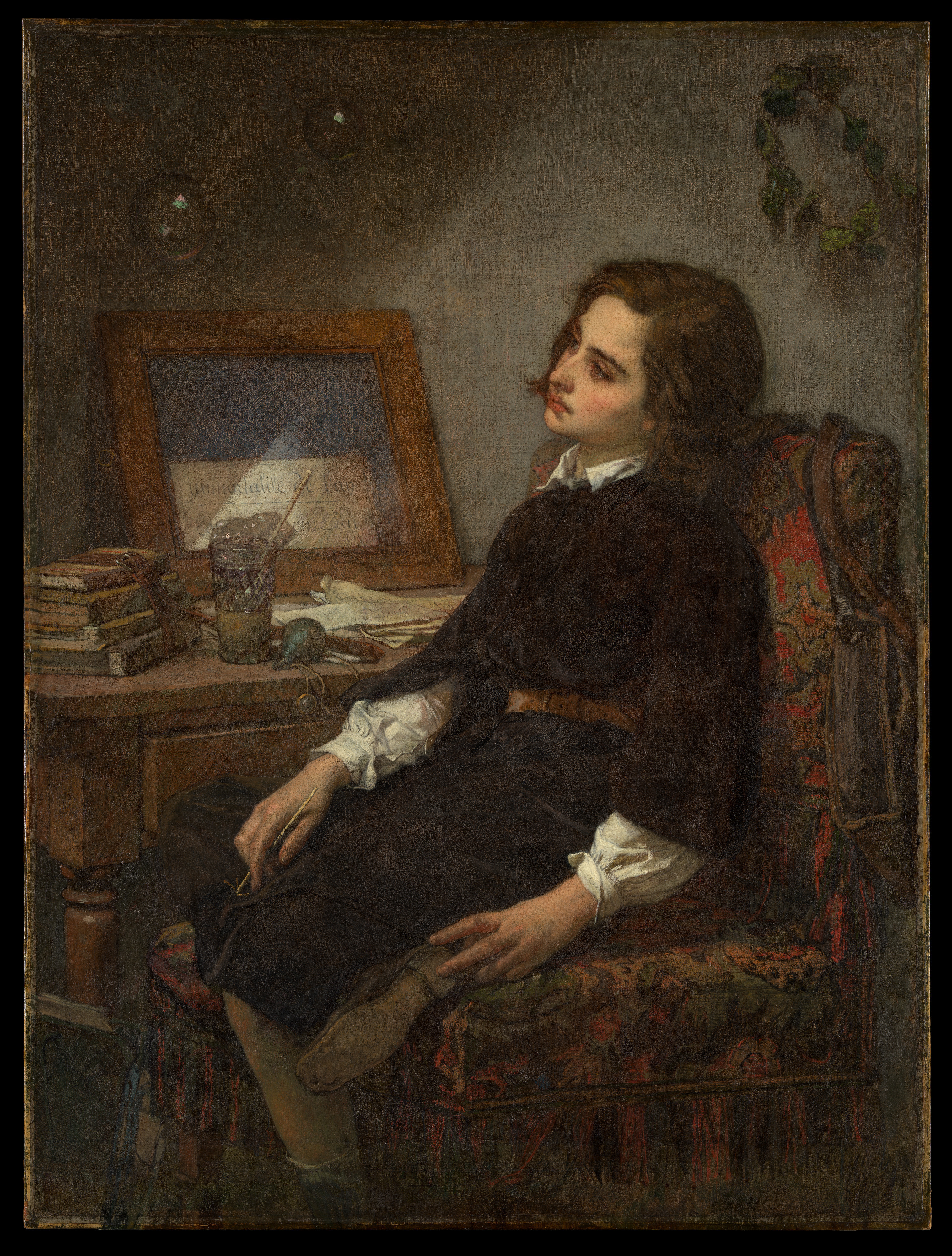
From Transient Perfection to Tangible Form: The Oil-on-Canvas Bubble as a 2026 Silhouette Blueprint
The ephemeral sphere of a soap bubble, immortalized in the oil-on-canvas masterpieces of the 17th and 18th centuries, presents a paradox of permanence. These paintings—by artists such as Jean-Baptiste-Siméon Chardin or the Dutch _vanitas_ school—capture not merely a child’s pastime, but a profound meditation on fragility, light, and the fleeting nature of earthly beauty. For Natalie Fashion Atelier, this isolated aesthetic archaeology offers a radical departure from the rigid geometries of contemporary luxury. By deconstructing the classical elegance of the painted bubble—its iridescent surface, its liquid tension, its weightless suspension—we derive a lexicon for 2026 haute couture silhouettes that are at once ethereal and structurally audacious.
The Chromatic Architecture of Iridescence
The oil-on-canvas technique is uniquely suited to rendering the bubble’s prismatic surface. Artists layered thin, translucent glazes of pigment—cobalt blue, rose madder, lead-tin yellow—over a dark ground, allowing the base to simulate the bubble’s internal depth. This chromatic architecture directly informs the 2026 silhouette through a strategy of optical layering. We propose a garment constructed not from a single fabric, but from a succession of sheer, organza-like panels, each dyed with a single spectral note. The base layer, a deep ink-black silk gazar, serves as the pictorial dark ground. Over it, a panel of gossamer-thin tulle in a pale cerulean is suspended, followed by a whisper of rose-gold lamé, and finally a top layer of liquid crystal-coated micro-mesh. The resulting silhouette is not a static shape but a dynamic color field that shifts with the wearer’s movement, mimicking the bubble’s iridescent shimmer. The cut is deliberately amorphous—a bias-cut column dress that pools at the floor, its edges unfinished, as if the pigment is still bleeding outward.
Tension and Surface: The Liquid Silhouette
A bubble’s form is a perfect sphere of minimal surface area, held in tension by the pressure of its internal air. The oil painting captures this tension in the delicate, almost invisible highlight on the bubble’s crown and the subtle distortion of the background reflected in its convex surface. For 2026, this translates into a silhouette defined by internal structural pressure rather than external boning. We deconstruct the classical corset, replacing rigid whalebone with pneumatic channels—sealed, air-filled tubes of silicone embedded within a double-faced satin. These channels, when inflated to a specific pressure, create the bubble’s characteristic spherical volume at the shoulder, the hip, or the back of a jacket. The garment’s surface becomes a liquid membrane, stretched taut over these invisible air pockets. The cut is minimalist—a single-seam, floor-length cape that, when inflated, billows into a perfect, weightless orb around the body. The hem is weighted with micro-beads of polished hematite, mimicking the heavy, liquid edge of the painted bubble before it detaches from the pipe.
Fragility as a Luxury Material
The classical elegance of the painted bubble lies in its acknowledged transience. The _vanitas_ tradition directly equates the bubble with the brevity of life. In the 2026 collection, this fragility is not a weakness but the ultimate luxury. We translate this into a silhouette of deliberate impermanence. Consider a gown constructed from a single, continuous thread of silk organza, woven into a dissolving lattice. The structure is held together by a water-soluble polymer thread. The garment is presented in a sealed, humidity-controlled vitrine. Upon the wearer’s selection, the vitrine is opened, and the gown is donned. Over the course of an evening, the polymer threads begin to dissolve from the natural moisture of the skin and the ambient air, causing the lattice to slowly, gracefully, collapse. The silhouette shifts from a structured column to a liquid puddle of silk. This is not a design flaw; it is the narrative of the bubble—a perfect, fleeting moment of beauty that surrenders to time. The wearer becomes a living _vanitas_ painting.
Reflection and Distortion: The Architectural Double
Oil-on-canvas bubbles are masterful at capturing reflected and distorted images—the window of the painter’s studio, the face of the child. This specular distortion becomes a core architectural principle for the 2026 silhouette. We propose a double-shell garment. The inner shell is a fitted, matte black jersey bodysuit, the “subject.” The outer shell is a rigid, transparent sphere of polished polycarbonate, the “bubble.” This sphere is not a simple dome; its surface is engineered with a series of convex and concave lenses, calibrated to reflect and distort the inner shell and the surrounding environment. The silhouette is defined by the optical relationship between the two layers. The outer sphere can be hinged, opening like a clamshell to reveal the inner garment. When closed, the wearer is encased in a perfect, reflective orb, their form fragmented and multiplied across the lensed surface. This silhouette is a direct homage to the painted bubble’s ability to contain a world within a sphere—a wearable, architectural camera obscura.
Conclusion: The Weight of Air
The classical elegance of the oil-on-canvas soap bubble is not found in its permanence, but in its perfect, suspended moment. For Natalie Fashion Atelier, the 2026 silhouette is not a shape to be worn, but a state of matter to be inhabited. By deconstructing the painterly techniques of iridescence, tension, fragility, and reflection, we arrive at a new definition of luxury: the ability to capture the ephemeral and make it tangible. The garments are heavy with the weight of air, luminous with the memory of pigment, and structured by the physics of a child’s breath. This is the aesthetic archaeology of the bubble—a return to the very essence of form, suspended between being and nothingness. The 2026 silhouette is not a dress; it is a painting you can wear, a moment you can hold, a bubble that will not burst.