Archival Deconstruction: The Silk, Jet, and Linen Evening Jacket as a Blueprint for 2026 Haute Couture
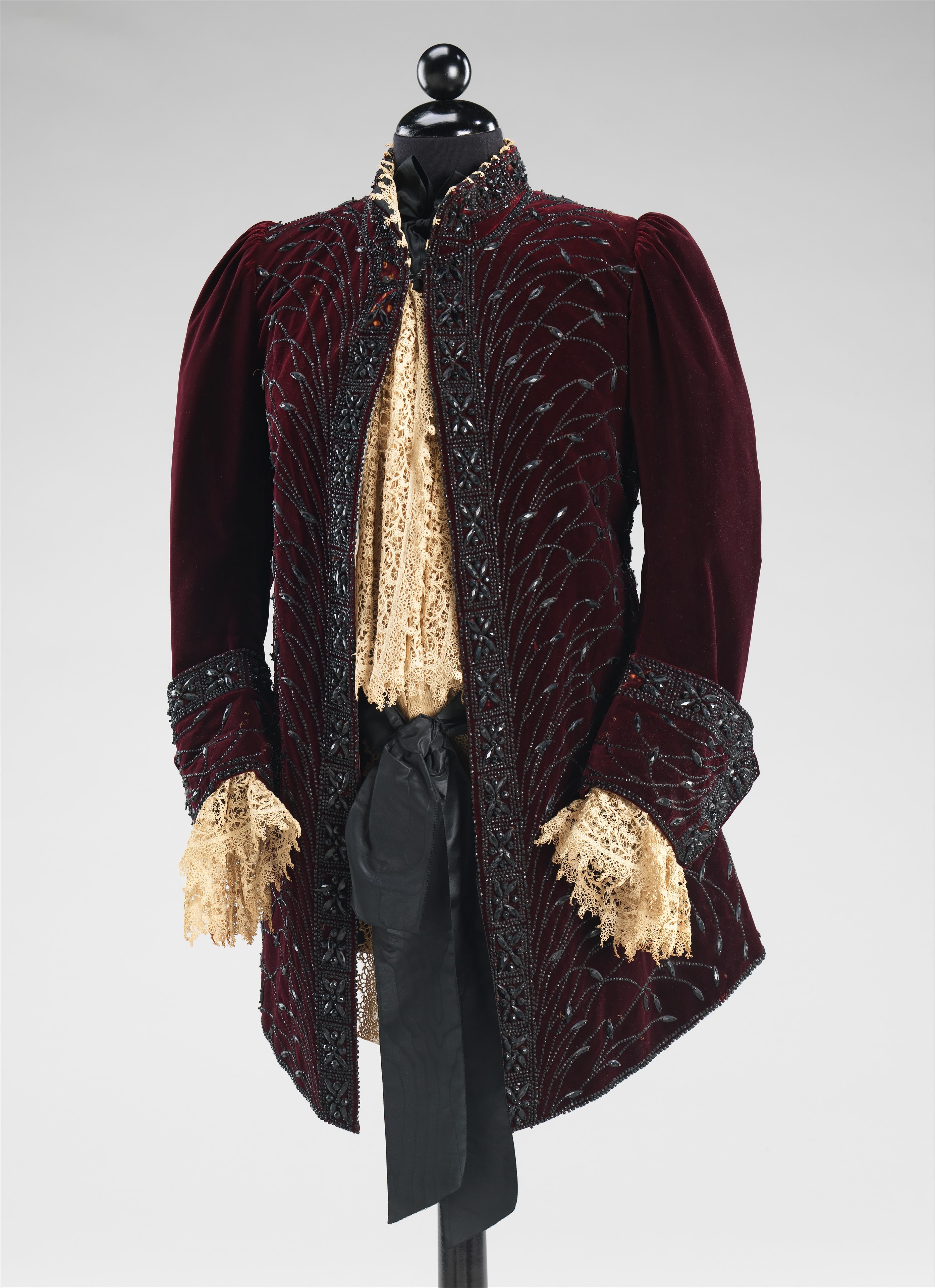
The evening jacket, a perennial cornerstone of the Parisian wardrobe, undergoes a rigorous re-evaluation within the context of aesthetic archaeology. At Natalie Fashion Atelier, our research into a specific archival piece—a late-19th-century French evening jacket composed of raw silk, hand-cut jet beads, and a structural linen underlayer—reveals a profound lexicon of construction, proportion, and material dialogue. This artifact, isolated from its historical continuum, is not a relic to be replicated but a technical treatise to be decoded. Its classical elegance, defined by a rigid frontality and a fluid, almost imperceptible back, provides the foundational grammar for the 2026 luxury silhouette. The interplay of these three distinct materials—silk’s luminous drape, jet’s dense negative space, and linen’s architectural integrity—offers a masterclass in textural tension, weight distribution, and the subversion of perceived fragility. This paper deconstructs this archival piece to articulate how its core principles inform the forthcoming season’s high-end evening structures, moving beyond simple revival toward a sophisticated, material-driven evolution.
Materiality as Narrative: Silk, Jet, and Linen
The foundational triad of silk, jet, and linen is not arbitrary; it represents a deliberate hierarchy of tactile and visual properties that must be understood to inform 2026 silhouettes. The raw silk, with its irregular slubs and matte finish, rejects the overt opulence of polished satin. In the archive, it is used for the jacket’s primary shell, creating a surface that absorbs light rather than reflecting it. This quality is paramount for 2026, where the luxury silhouette moves away from high-shine spectacle toward a more introspective, textural richness. The silk’s inherent fluidity is counterbalanced by the linen underlayer, a structural canvas that dictates the jacket’s architecture. Linen, in this context, is not a mere lining but a hidden chassis, providing the tensile strength necessary to support the weight of the jet embellishment without distorting the silk’s fall. This internal-external relationship is a critical technical insight: the 2026 silhouette will increasingly rely on invisible, structural underlayers to achieve its clean, sculptural lines, allowing the outer fabric to behave with a deceptive simplicity.
The jet beads are the most instructive element. These faceted, black glass beads, hand-sewn in a dense, almost armor-like pattern across the jacket’s front panels and sleeves, create a deliberate asymmetry of weight. The jet is concentrated at the front, creating a weighted, gravitational pull that anchors the garment, while the back, left in unadorned silk, remains light and mobile. This is not decorative embellishment; it is a sophisticated system of mass distribution. For 2026, this principle translates into silhouettes that are frontally assertive—structured, weighted, and almost architectural—while the back is liberated, flowing, and sensuous. The jet’s negative space, the darkness between the beads, is equally important. It creates a micro-architecture of shadow and light, a pointillist texture that reads as a single, dark mass from a distance but reveals intricate craftsmanship up close. This technique, which we term “dense opacity,” will define the evening jacket’s surface for the upcoming season, where embellishment is not applied but integrated as a structural component of the silhouette itself.
Proportional Grammar: From Classical Frontality to 2026 Fluidity
The archival jacket’s silhouette is defined by a strict, almost severe frontality: a high, standing collar, a fitted waist, and a defined hip line that flares slightly. This classical proportion, rooted in 19th-century tailoring, creates a powerful, contained volume. The 2026 reinterpretation does not abandon this frontality but deconstructs its rigidity. The key is the introduction of a “kinetic seam”—a single, curved line that runs from the shoulder blade, down the side, and into the hem. This seam, invisible in the original, is the primary innovation. It allows the front panel, weighted with jet, to remain anchored and structured, while the back panel, in pure silk, can drape, fold, and move with the body. The result is a silhouette that is both classical and dynamic: a front that projects authority and a back that suggests release. This dichotomy is the defining characteristic of the 2026 evening jacket.
The linen underlayer is the silent architect of this transformation. In the archive, it is cut with a pronounced waist and a flared hem, creating a bell-like shape. For 2026, this linen chassis is re-engineered to be asymmetrical. The left side is cut with a sharp, architectural shoulder and a straight, narrow line, while the right side is cut with a dropped shoulder and a softer, curved hem. This asymmetry, invisible to the eye, is felt by the body. It creates a subtle, off-balance tension that is resolved by the silk’s drape and the jet’s weight. The 2026 silhouette, therefore, is not a symmetrical, static form but a dynamic equilibrium of opposing forces: structure and fluidity, weight and lightness, opacity and transparency. The jacket becomes a wearable study in counterpoint, where the classical elegance of the original is not lost but translated into a new, more complex language of proportion.
Surface and Structure: The 2026 Silhouette as a Material Event
The final and most critical lesson from the archive is the relationship between surface and structure. In the original jacket, the silk and jet create a unified surface that is both decorative and functional. The jet’s weight pulls the silk taut across the bust and shoulders, creating a smooth, unbroken plane. The linen underlayer, meanwhile, provides the necessary resistance to prevent the silk from sagging. This is a perfect example of “tensile integration,” where the outer material and the inner structure work in concert to produce the silhouette. For 2026, this principle is pushed to its extreme. The silk is no longer a passive shell but an active participant in the garment’s architecture. By varying the density of the jet embellishment—concentrated at the shoulders and waist, sparse at the hips and sleeves—the designer can control the direction and volume of the silk’s drape. The jet becomes a tool for sculpting the silhouette from the inside out, creating zones of rigidity and zones of flow.
The linen underlayer, in turn, is no longer hidden. In the 2026 iteration, the linen is exposed at the back of the neck, the inner edge of the sleeve, and the hemline. This “structural reveal” is a deliberate aesthetic choice, a nod to the garment’s construction and a rejection of the seamless finish. It creates a dialogue between the visible and the invisible, the finished and the unfinished. The linen’s natural, slightly coarse texture contrasts with the silk’s smoothness and the jet’s glassy hardness, adding a layer of tactile complexity. The 2026 silhouette, therefore, is not a single, unified form but a composite of multiple material events. The eye moves from the dense, opaque front to the fluid, translucent back, from the smooth silk to the rough linen, from the matte to the glossy. This is the new luxury: a silhouette that is not simply worn but experienced, a garment that reveals its construction and its history with every movement. The classical elegance of the archive is not a destination but a point of departure, a grammar of proportion and materiality that, when deconstructed and re-engineered, yields a silhouette that is both timeless and radically new.