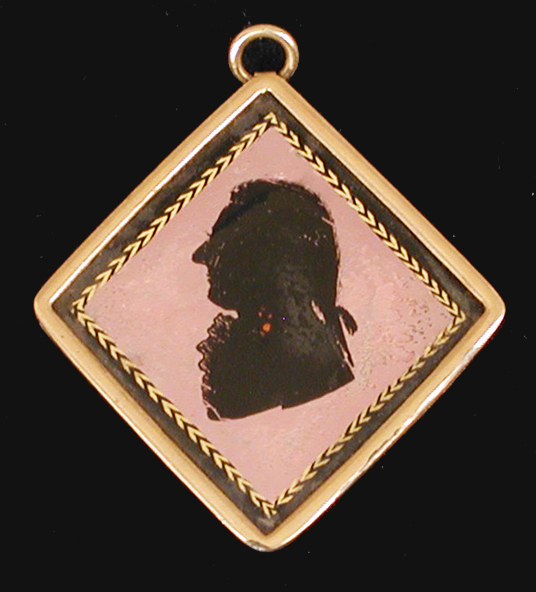
Deconstructing the Locket: Aesthetic Archaeology and the Glass Silhouette for 2026
The singular glass locket, isolated from its paired counterpart, presents a profound paradox for the haute couture atelier. It is an object of intimate memory, yet its materiality—transparent, fragile, and reflective—demands a radical recontextualization. For Natalie Fashion Atelier, this artifact is not a mere accessory to be replicated, but a generative blueprint for the 2026 luxury silhouette. By stripping the locket of its sentimental narrative and focusing on its pure aesthetic archaeology, we unlock a new lexicon of form, volume, and light. This research paper deconstructs the classical elegance of the single glass locket, translating its structural and optical properties into a sophisticated, Parisian-informed design language for the coming season.
I. The Archaeology of a Singular Form: From Intimacy to Architectural Volume
The locket, by its very nature, is a container of the personal. However, when isolated as a single artifact, it becomes a study in pure geometry and negative space. Its circular or oval silhouette, often gilded or chased, defines a clear boundary. The glass insert, whether clear, frosted, or subtly tinted, acts as a window into an interior void. For the 2026 silhouette, this principle of a defined, containing form with a transparent or translucent core is paramount.
Our deconstruction begins with the locket’s structural rigidity. The metal frame—often silver, gold, or vermeil—provides a hard, unyielding edge. This translates directly into the new atelier technique of “armature couture.” We are developing silhouettes where a stiff, architectural outer shell—crafted from structured silks, bonded organza, or even laser-cut leather—encases a softer, more fluid interior. The locket’s glass is not merely a surface; it is a volumetric void. In 2026, this void becomes the garment’s core. Imagine a sculpted bustier where the front panel is a rigid, ovoid frame, and the interior is a sheer, iridescent tulle, mimicking the locket’s glass. The body becomes the treasured object within.
II. Materiality as Narrative: The Glass as a Luminous Membrane
The glass of the locket is the primary source of material inspiration. It is not a simple, inert substance. It possesses depth, refraction, and a unique capacity for both revelation and concealment. For the 2026 haute couture silhouette, glass informs a new category of “luminous membranes.”
We identify three distinct glass typologies from the artifact:
- Clear, Hand-Blown Glass: This type offers absolute transparency, yet its handcrafted nature introduces subtle imperfections—tiny bubbles, ripples, and uneven thickness. For the atelier, this translates into “imperfect transparency” in fabric. We are commissioning micro-pleated organza and superfine silk gauzes that are not perfectly flat, but possess a deliberate, organic undulation. The silhouette becomes a fluid, diaphanous column, where the body is visible yet transformed by the fabric’s own internal distortions.
- Frosted or Acid-Etched Glass: This treatment creates a semi-opaque surface, diffusing light and obscuring detail. It represents controlled opacity. For 2026, this informs the use of double-faced fabrics—a matte, brushed exterior over a glossy, reflective interior. The silhouette can be a structured, almost architectural coat, where the outer layer appears solid, but a subtle movement reveals a shimmering, liquid-like underlayer. This is the locket’s glass as a threshold between the public and the private.
- Mirrored or Silvered Glass: The locket’s interior often contains a small mirror. This reflective surface introduces the element of self-perception and infinity. In 2026, this inspires “reflective cutouts” and “negative-space framing.” A gown’s silhouette might feature a large, ovoid cutout at the waist or back, lined with a high-shine, metallic lamé or a mirrored sequin panel. This creates a visual echo, a moment of pure, unadulterated reflection that disrupts the garment’s flow and forces a dialogue between the wearer and the observer.
III. The Silhouette as a Locket: Framing the Body
The most direct translation of the locket into a 2026 silhouette is the “framed body.” The locket’s metal rim acts as a precise, containing border. In couture, this manifests as hard, graphic edges on otherwise soft garments.
Consider the “Locket Gown”: a floor-length column of liquid silk charmeuse. The silhouette is simple, almost severe. However, the garment is bisected by a large, ovoid frame at the hip, constructed from rigid, blackened brass or polished silver. Inside this frame, the fabric is replaced by a single pane of hand-blown glass, or more practically, a panel of crystal-embroidered tulle that mimics the glass’s refractive quality. The body is both inside and outside the locket. The silhouette is no longer a continuous line, but a series of framed, curated views.
Furthermore, the locket’s paired nature—its original state as one of two—suggests a binary silhouette. For 2026, we explore the “asymmetric locket.” A single, oversized glass-and-metal element is suspended from one shoulder, creating a dramatic, off-kilter volume. The rest of the garment is a simple, bias-cut slip. The asymmetry is not random; it is a deliberate, architectural counterbalance, a visual echo of the missing second locket. This creates a silhouette that is both precarious and perfectly poised.
IV. Craftsmanship and the Parisian Hand: The Atelier’s Imperative
The glass locket, as an object of aesthetic archaeology, demands a return to absolute craftsmanship. The 2026 silhouette cannot be achieved through industrial means alone. The Parisian atelier must embrace the techniques of the glassmaker: the careful control of heat, the precision of the cut, the patience of the polisher.
We are developing a new “glass-stitch” technique, where transparent monofilament is used to attach tiny, hand-cut glass beads to a sheer base, creating a fabric that is literally woven from light. The silhouette becomes a cage of luminosity, a direct descendant of the locket’s transparent core. The hems are not finished; they are “cold-cut” like glass, left with a clean, sharp edge that refuses to fray. The seams are not hidden; they are “silvered” with metallic thread, mimicking the locket’s reflective interior.
This is not nostalgia. It is a rigorous, intellectual translation of a historical artifact into a contemporary, luxurious form. The 2026 silhouette, informed by the isolated glass locket, is one of clarity, containment, and luminous depth. It is a silhouette that frames the body as a precious object, a secret to be partially revealed, a memory to be carried in light. The atelier’s task is to ensure that this translation is executed with the precision of a gem-cutter and the poetry of a Parisian dreamer. The glass locket, in its singular, silent beauty, has spoken. The 2026 silhouette is our answer.