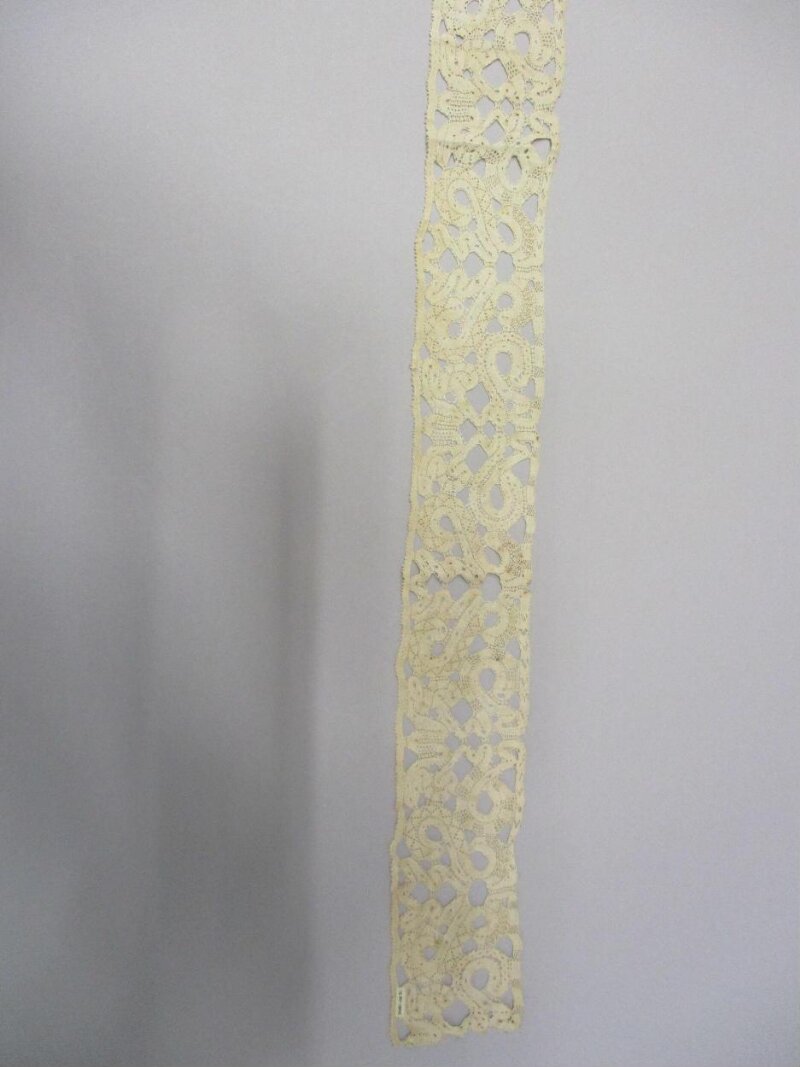
Couture Archaeology Report: The Structural Poetry of 17th-Century Lace
Subject: Technical Deconstruction of 17th-Century Point de France and Venetian Gros Point Lace. Origin: Western Europe, c. 1660-1700. Prepared For: Natalie Fashion Atelier Creative Directorate. Report Date: October 26, 2023. Objective: To excavate the material and technical DNA of Baroque lace, providing a foundational analysis for its translation into the 2026 luxury silhouette, focusing on structure, contrast, and modern materiality.
I. Technical Deconstruction: Anatomy of Air
The supremacy of 17th-century lace lies not merely in its aesthetic but in its architectural duality. It is a textile built from absence and presence, a rigorous framework supporting ethereal voids. Our analysis focuses on two pinnacle techniques: the needle lace of Point de France and the bobbin lace of Venetian Gros Point.
Point de France (needle lace) is a sculptural, additive process. It begins with a parchment pattern, upon which a foundational outline cordonnet is stitched. The lacemaker then builds the fabric from the void outward, using a single needle and thread to create a network of buttonhole stitches (point de bride). The technical marvel is the réseau—the connecting ground mesh. In early pieces, this is a irregular hexagonal mesh (fond de neige), later regularized into the iconic hexagonal fond chant. The motifs—floral sprays, acanthus leaves, Baroque scrolls (rinceaux)—are created with dense, padded stitches (cordonnet), rendering them in high relief against the transparent ground. The materiality is singular: a fine, tightly spun linen thread, granting structural integrity and a matte, luminous finish.
In contrast, Venetian Gros Point (bobbin lace) is a subtractive, woven construction. Dozens of bobbins manipulate multiple threads simultaneously on a pillow, plaiting and twisting to form a cohesive cloth. Its signature is the tape-like, raised outline of motifs, which are not stitched onto a mesh but are integrally woven with a sparse, almost invisible ground. The technique creates a dramatic, three-dimensional effect where the motif appears to float, connected by minimal bars (brides). The texture is more pronounced, the thread often slightly heavier, resulting in a bolder, more graphic shadow play.
II. Materiality & Semiotic Language
The material choice—hand-spun linen—was not incidental. Linen’s inherent stiffness held the intricate constructions in precise form, while its lack of elasticity ensured dimensional stability over time. The matte surface captured and diffused light, giving lace its characteristic glow, unlike the sharp reflection of silk. This was a fabric of calculated contrast: the stark whiteness against rich, dark velvets or vivid silks; the rigid, almost architectural structure creating an illusion of softness and flux.
Semiotically, these laces were maps of power and patronage. The density of work (requiring thousands of hours for a single collar) was a direct index of wealth. The motifs—the fleur-de-lys, the pomegranate, the scallop shell—were heraldic, denoting allegiance, faith, and intellectual engagement with the natural sciences. The technical execution itself was the message: a testament to human mastery over material, transforming a humble linen thread into a commodity more valuable than precious metal.
III. Translation for the 2026 Silhouette: From Ornament to Architecture
For the 2026 Natalie Atelier collection, we propose a translation that moves beyond appliqué. The core principles—structural contrast, dimensional relief, and the dialogue between opacity and transparency—must be re-engineered for a contemporary corporeal sensibility.
A. Technical Reinterpretation
Modern Grounds & Negative Space: The réseau should be liberated from its hexagonal prison. We propose experimenting with irregular, algorithmic mesh structures generated via 3D digital knitting, using ultrafine polymer monofilaments fused with biodegradable metallic yarns. The negative space becomes a designed element, calibrated to frame specific points of anatomy—the clavicle, the scapula, the curve of the sternum.
Motif as Exoskeleton: The raised cordonnet of Point de France and the plaited tape of Gros Point inspire a shift from surface decoration to load-bearing structure. Using ultrasonic welding and laser-sintering techniques on layered technical textiles (organic silk georgette fused with thermoplastic polyurethane), we can create self-supporting lace motifs that define the garment’s shape. A bodice could be engineered where the lace itself provides the corsetry, its dense floral patterns acting as boning channels and strategic support panels.
B. Material Innovation
The 2026 material palette must echo linen’s paradox of strength and delicacy but with enhanced performance and sustainability. Proposals include: 1.) Lab-grown, structural spider silk protein for unparalleled tensile strength in ultra-fine diameters, allowing for unprecedented fineness in modern brides and meshes. 2.) Ceramic-coated organic cotton, providing a subtle, matte luminescence and shape memory. 3.) Photochromic and thermochromic dyes integrated into the thread, allowing the lace to respond to environmental stimuli—a pattern that emerges with body heat or sunlight, making the wearer an active participant in the textile’s revelation.
C. Silhouette Integration
The 2026 silhouette will embrace a deconstructed grandeur. Key propositions include:
The Cantilevered Gown: A columnar dress in matte technical faille, featuring a single, monumental sleeve constructed entirely of re-scaled Gros Point tape motifs in sintered silk, creating a self-supporting, sculptural form that extends from the shoulder.
The Transparency Layering System: Separates built from multiple, independent layers of laser-cut point d’esprit and dense, 3D-printed motif panels. Worn together, they create a complex, depth-filled effect reminiscent of the layering seen in 17th-century portraiture, but with a modular, contemporary functionality.
The Liquid Contrast Evening Suit: A sharp, tailored jacket in deep obsidian wool crepe, interrupted by a bib and cuffs of stark white, architecturally constructed needle lace—a direct, powerful homage to Baroque contrast, yet utterly modern in its clean lines.
IV. Conclusion & Strategic Recommendation
The 17th-century lacemaker was an architect of the ephemeral. For Natalie Atelier’s 2026 vision, this archaeology is not a revival but a strategic extraction of core codes. The future of luxury lies in intelligent materiality and structural honesty. We must not replicate the lace, but replicate the thinking: the relentless pursuit of contrast, the elevation of technique to narrative, and the courage to make structure the primary ornament. By transposing the principles of the cordonnet and the réseau into the language of advanced material science and silhouette engineering, we will create a collection that speaks of depth, history, and formidable modernity—a true couture archaeology for the future.