Aesthetic Archaeology: Deconstructing the Carved and Gilded Armchair for 2026
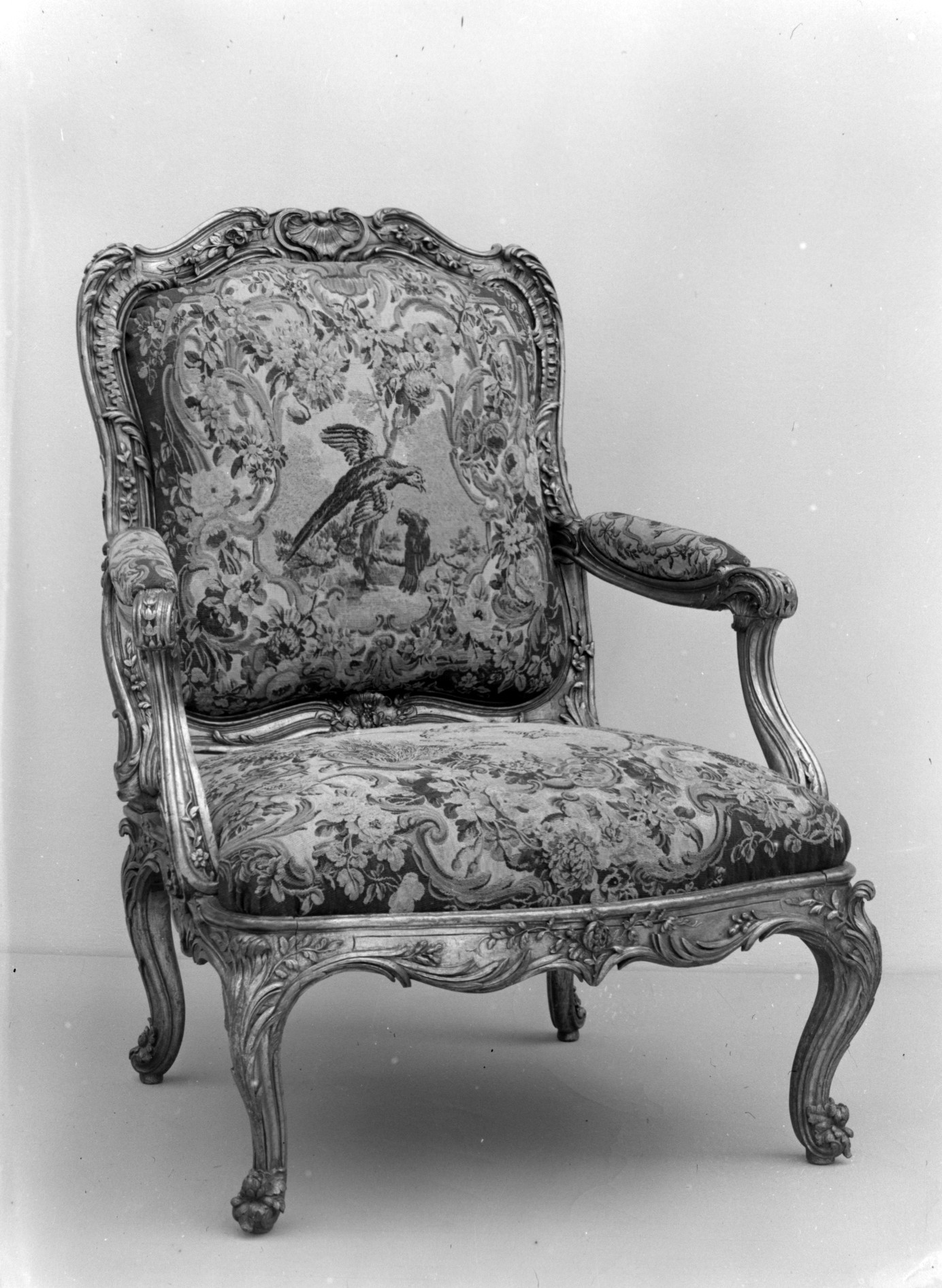
This research artifact undertakes a rigorous deconstruction of a singular armchair, part of a larger set, isolated from its original domestic or palatial context. Through the lens of aesthetic archaeology, we excavate the formal, material, and symbolic DNA of this object. The chair—a composite of carved and gilded beech, upholstered in wool and silk tapestry—is not merely a relic of decorative arts. It is a condensed manifesto of classical elegance, a three-dimensional blueprint for volumetric luxury. For the 2026 Haute Couture season at Natalie Fashion Atelier, this armchair informs a radical reinterpretation of the silhouette: a shift from draped fabric to architectural structure, from soft fluidity to gilded rigidity, and from flat ornament to tactile, narrative tapestry.
I. The Skeletal Framework: Carved and Gilded Beech as Structural Silhouette
The armchair’s primary structure—carved and gilded beech—provides the foundational vocabulary for 2026’s high-end silhouettes. The wood is not a hidden armature; it is the protagonist. Its carvings, typically acanthus leaves, scrolling volutes, and cabochons, create a rhythm of positive and negative space. The gilding, a thin layer of gold leaf over a red bole ground, creates a surface that is both reflective and absorptive, catching light in a manner analogous to lame or metallic brocade.
Silhouette Application: The 2026 collection will feature exoskeletal gowns and jackets. The beech’s carved structure translates directly into rigid, sculpted boning that is externalized. Instead of hidden corsetry, the structural cage becomes the garment’s primary aesthetic feature. We propose a “gilded cage” silhouette:
1. The Volute Shoulder: The scrolling armrest of the chair is reimagined as a single, continuous spiral of gold-lacquered resin or sculpted metal thread that wraps from the shoulder, around the upper arm, and terminates at the elbow. This creates a dramatic, asymmetrical line that is both protective and ornamental, echoing the chair’s protective embrace.
2. The Acanthus Spine: The carved acanthus leaf motif, with its deeply undercut layers, is translated into a back panel of a gilded leather or metallic mesh. This panel is not sewn to the garment but is attached via a system of articulated hinges, allowing the wearer a restricted, regal range of motion. The silhouette becomes a rigid, architectural carapace from the nape of the neck to the lower back.
3. The Cabochon Hip: The rounded, polished cabochon forms found on the chair’s front stretcher inform a sculptural hip detail. A single, large, domed piece of lacquered wood or cast brass is set into the side seam of a skirt or trousers, creating a pronounced, artificial curve. This is a direct quotation of the chair’s volumetric, three-dimensional ornament.
II. The Upholstered Flesh: Wool and Silk Tapestry as Narrative Surface
The chair’s seat and back are clad in a wool and silk tapestry. This is not a passive covering; it is a dense, woven narrative. The wool provides a matte, durable ground, while the silk wefts create highlights, depth, and a subtle, shifting luster. The tapestry’s imagery—often pastoral scenes, mythological figures, or floral arabesques—is a form of surface architecture, building a story through thread.
Silhouette Application: The 2026 silhouette will reject flat digital prints in favor of woven, three-dimensional surface treatments. The tapestry’s structure informs two distinct approaches:
1. The Tapestry Gown: A full-length gown will be constructed from jacquard-woven panels that are not merely printed but structurally integral. The weave will be engineered to create raised, padded areas corresponding to the tapestry’s floral motifs. These padded forms—like the wool’s pile—will push the garment’s surface outward, creating a bas-relief effect on the body. The silhouette is no longer a smooth cylinder but a topographic landscape of highs and lows, directly mirroring the tapestry’s texture.
2. The Silk-Wool Hybrid Layer: The contrast between the tapestry’s wool ground and silk highlights will be replicated through a layering technique. A base layer of heavy, matte wool crepe will be overlaid with panels of silk organza or duchesse satin. These silk panels will be cut and appliquéd in the exact shapes of the chair’s tapestry motifs—a shepherd, a tree, a cloud. The silk will be hand-embroidered with metallic threads to mimic the gilded wood’s reflection, creating a dialogue between the two material systems. The silhouette becomes a collage of textures, with the matte wool providing a grounding volume and the silk creating floating, luminous accents.
III. The Classical Elegance Deconstructed: Proportion, Symmetry, and the Golden Ratio
The armchair’s classical elegance is not arbitrary. It is governed by principles of proportion and symmetry, often derived from the Golden Ratio. The height of the back relative to the seat, the width of the armrests to the seat depth, and the placement of carved ornament all follow a mathematical harmony. This is the essence of classical design: a balance that feels inevitable and restful to the eye.
Silhouette Application: For 2026, we deconstruct this harmony to create intentional, controlled dissonance. The silhouette will be fragmented, then reassembled according to the same proportional rules, but with exaggerated elements.
1. The Asymmetrical Golden Ratio: A single garment will be divided into two halves. The left side will adhere to a 1:1.618 proportion (e.g., a short, fitted bodice and a long, full skirt). The right side will invert this ratio, creating a longer bodice and a shorter, narrower skirt. This creates a dynamic, unbalanced silhouette that is still rooted in classical mathematics. The asymmetry is not chaotic; it is a calculated distortion of the chair’s perfect symmetry.
2. The Fragmentary Ornament: The chair’s carved ornament is complete and whole. In the 2026 silhouette, ornament will be fragmented and displaced. A single acanthus leaf will be detached from its scroll and placed as a shoulder pauldron. A cabochon will be removed from the leg and used as a hip ornament on a dress. This technique of aesthetic archaeology—extracting parts from the whole and recontextualizing them—creates a silhouette that is both familiar and alien, a memory of classical elegance rendered in a new, deconstructed syntax.
IV. Materiality as Silhouette: The 2026 Manifesto
The final synthesis of this research is a material manifesto for the 2026 collection. The armchair teaches us that structure is silhouette. The gilded beech provides the rigid, architectural frame; the tapestry provides the narrative, tactile surface. The 2026 haute couture silhouette will therefore be a hybrid of sculpture and textile.
Key Silhouette Archetypes for 2026:
1. The Exoskeletal Armchair Gown: A floor-length gown with a rigid, gilded corset that extends into a full, tapestry-like skirt. The corset is carved from lacquered wood or cast resin, mimicking the chair’s acanthus and volute motifs. The skirt is a heavy jacquard woven with a pastoral scene, the fabric itself padded to create a bas-relief effect. The silhouette is architectural, immovable, and regal.
2. The Fragmentary Tapestry Suit: A tailored jacket and trousers where the jacket’s structure is fragmented. One sleeve is a full, gilded volute; the other is a simple, tailored sleeve. The jacket’s lapels are cut from tapestry fragments, appliquéd onto a wool ground. The trousers are narrow and unadorned, allowing the jacket’s fragmentary ornament to dominate. The silhouette is deconstructed, intellectual, and modern.
3. The Gilded Cage Coat: A full-length coat made entirely of gilded leather and metal mesh, with no fabric lining. The coat’s structure is a cage of carved and gilded panels, echoing the chair’s armrests and back. The coat is worn over a simple, sheer silk dress. The silhouette is transparent, protective, and luxurious, a direct translation of the chair’s function: to enclose and display.
In conclusion, this isolated armchair, stripped of its original context, becomes a pure form of aesthetic research. Its carved and gilded beech, its wool and silk tapestry, and its classical proportions are not historical curiosities. They are active, generative principles for a 2026 haute couture silhouette that is at once rigid and narrative, architectural and tactile, classical and radically new. The Natalie Fashion Atelier 2026 collection will not imitate the armchair; it will inhabit its logic, translating its material and formal grammar into the language of the body.