Deconstructing the Vessel: Earthenware Elegance and the 2026 Silhouette
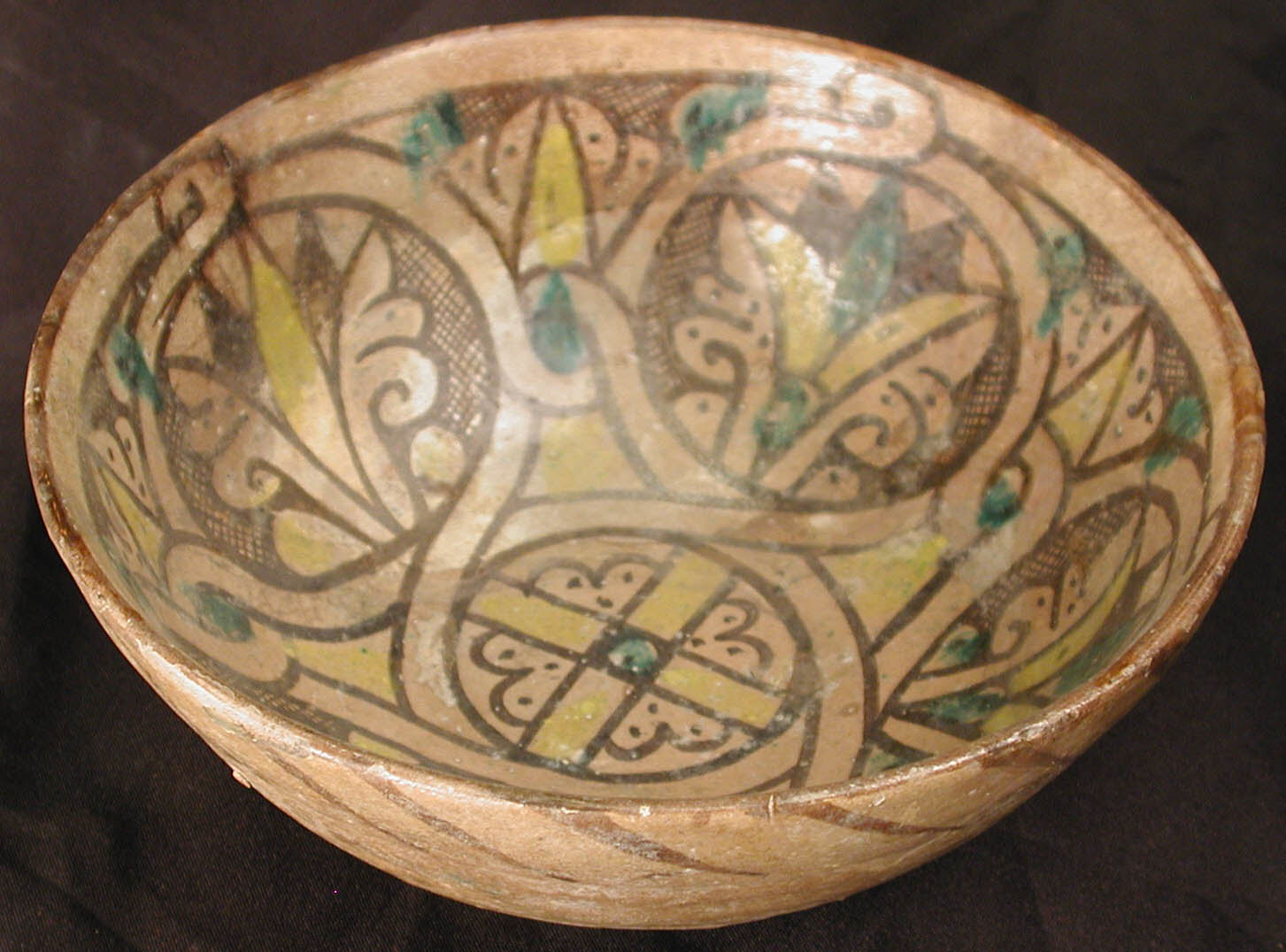
The Natalie Fashion Atelier research division presents an isolated aesthetic archaeology of a singular object: a bowl. This is not an artifact of a specific dynasty or a celebrated kiln, but a global heritage archetype—a hemispherical form rendered in earthenware, its surface a canvas of buff slip, underglaze painted in polychrome pigments under a transparent glaze. Stripped of provenance, it becomes a pure study in form, material, and surface tension. This paper deconstructs the bowl’s classical elegance—its structural logic, its chromatic restraint, and its haptic invitation—to derive a technical lexicon for the 2026 haute couture silhouette.
The Structural Paradigm: The Hemispherical Silhouette
The bowl’s primary architectural gesture is the hemisphere. This is not a passive curve but a dynamic equilibrium between containment and release. The rim defines a precise horizontal plane, while the body descends in a continuous, unbroken arc to a stable base. For the 2026 silhouette, this translates into a radical reconsideration of the shoulder-to-hip continuum.
From Rim to Shoulder: The Defining Horizon
The bowl’s rim is its most assertive line—a clean, unwavering circle that anchors the entire composition. In couture, this becomes the architectural shoulder. We propose the Rim Line silhouette: a sharp, horizontal shoulder seam that extends beyond the natural acromion, creating a rigid, almost cantilevered structure. This is not a padded, soft shoulder; it is a molded, sculptural element, achieved through internal boning and precision-cut interfacing. The fabric, likely a dense faille or a structured wool crepe, must hold this line without drape. The neckline, conversely, recedes into a void—a deep, clean scoop that mirrors the interior of the bowl, creating a negative space that frames the collarbone and neck.
The Continuous Arc: Draping the Body as a Vessel
Below the shoulder, the body of the garment must mimic the bowl’s unbroken curve. This rejects the modern convention of a separate bodice and skirt. Instead, the 2026 silhouette demands a monolithic, columnar form that flows from the shoulder line to the hem in a single, controlled parabola. The fabric is cut on the bias, but with a crucial intervention: interior tension seams. These are hidden, vertical seams that pull the fabric taut against the torso, preventing any sagging or pooling. The result is a silhouette that is both voluminous and rigid—a hollow volume that encases the body without clinging to it. The hemline, like the bowl’s base, is a subtle, inward curve, creating a gentle, almost imperceptible lift at the center front and back.
The Materiality of Surface: Buff Slip and Polychrome Pigments
The bowl’s materiality is not merely decorative; it is a structural and textural argument. The buff slip—a thin, liquid clay coating—creates a matte, absorbent ground. The polychrome pigments are then applied as underglaze, their colors muted by the subsequent transparent glaze, which adds a vitreous, glossy depth. This layering informs a new approach to fabric and finish.
The Ground: Matte, Absorbent, and Tactile
The buff slip is the foundation. For 2026, the primary fabric must possess a similar matte, dry hand. We identify a heavy, unbleached linen-cotton blend, sand-washed to remove all sheen. This fabric is not dyed; it is the buff ground itself. Its texture is slightly napped, offering a subtle, tactile resistance. This is the canvas upon which all subsequent intervention occurs. The garment’s structure is built from this ground, and its surface is the site of the couture narrative.
The Chromatic Intervention: Underglaze as Embroidery
The polychrome pigments on the bowl are not applied as a uniform field. They are discrete, hand-painted motifs—floral, geometric, or abstract—that float on the buff surface. The transparent glaze then seals them, creating a depth where the pigment sits under the surface. For couture, this is translated into a radical embroidery technique: underglaze silk appliqué.
Fine, hand-dyed silk organza strips—in hues of cobalt, terra cotta, and verdigris—are cut into precise, organic shapes. These are not sewn onto the surface of the garment. Instead, they are inserted into a second layer of the buff ground fabric, which is then fused to the primary shell. The silk strips are visible through a sheer, top layer of transparent organza, which acts as the glaze. The result is a chromatic depth: the colors appear to float within the fabric, not on it. The motifs are isolated, never touching, echoing the bowl’s composition. This technique requires immense precision; each appliqué is a bespoke element, placed according to a master pattern that respects the garment’s three-dimensional curve.
The Haptic and the Visual: The Transparent Glaze as Finish
The final layer of the bowl—the transparent glaze—is not merely a protective coating. It is a unifying optical field that transforms the matte slip and the matte pigments into a glossy, reflective whole. For the 2026 silhouette, this is achieved through a final, overall treatment of the garment’s surface.
The Glaze as a Liquid Finish
We propose a micro-crystalline spray finish, applied to the completed garment. This is not a stiff lacquer. It is a fine, atomized mist of a cellulose-based solution that, when cured, creates an imperceptible, flexible film. This film imparts a subtle, vitreous sheen to the matte buff ground and the silk appliqués. It unifies the surface, making the entire garment feel like a single, continuous object. The finish also adds a slight resistance to touch—a smooth, almost cool surface that contrasts with the fabric’s underlying texture. This is the haptic signature of the collection: a garment that feels like a glazed vessel, both precious and structural.
Conclusion: The Bowl as a Couture Manifesto
The isolated aesthetic archaeology of this earthenware bowl yields a coherent, radical proposition for the 2026 haute couture silhouette. It is not a literal translation of shape, but a translation of structural and material logic. The hemisphere becomes the Rim Line shoulder and the monolithic column. The buff slip becomes the matte, tactile ground. The underglaze pigments become the embedded silk appliqués. The transparent glaze becomes the unifying, vitreous finish.
This is a silhouette of controlled volume, chromatic depth, and haptic complexity. It rejects the ephemeral for the permanent, the draped for the structured, the printed for the embedded. It is a vessel for the body, not a covering. For Natalie Fashion Atelier, the bowl is not a decorative motif; it is a blueprint for a new architectural elegance, one that finds its power in the tension between a rigid exterior and a hollow, interior space. This is the 2026 silhouette: a masterpiece of containment and revelation.