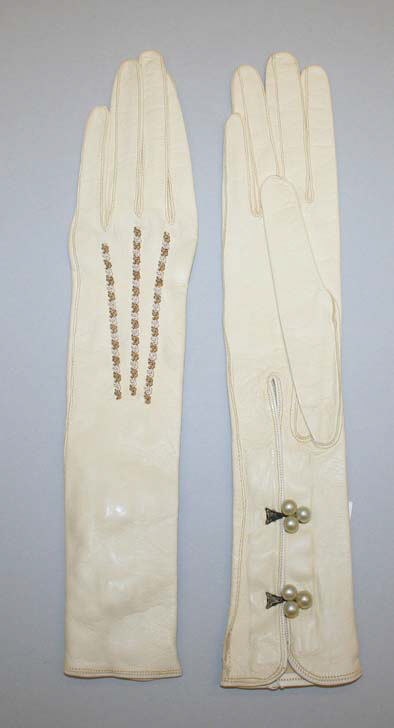
The Architecture of the Hand: Deconstructing Classical Elegance in Leather and Silk
Within the hallowed archives of Natalie Fashion Atelier, the glove exists not merely as an accessory, but as a foundational artifact of aesthetic archaeology. It is a microcosm of French Haute Couture’s highest principles: the marriage of sculptural form with the supplest of materials. Isolated from its historical context, the classical glove—a seamless union of kid leather and raw silk—reveals a profound technical lexicon. For the 2026 silhouette, this lexicon is not a nostalgic reference; it is a blueprint for a new architectural minimalism. We are deconstructing the glove’s tension, its second-skin fit, and its precise articulation to inform a silhouette that is simultaneously severe and sensuous, rigid and fluid.
The Historical Precedent: The Glove as a Structural Envelope
In the 18th and 19th centuries, the French glove was an exercise in negative-space engineering. The gant de chevreau (kid leather glove) was meticulously cut, not sewn, to the hand’s anatomy. Its primary technical challenge was the quatre-mains seam—a nearly invisible stitch that allowed the leather to envelop the hand without distortion. This required a material of extreme tensile strength and unparalleled softness. The leather, sourced from the Limousin region, was tanned to a pliable, almost liquid state. This was not a covering; it was a second epidermis.
Simultaneously, the silk glove—often a gant de soirée—offered a different logic. Its strength was not in tensile hold but in its drape and luster. The silk, woven in Lyon, created a surface that caught light with a liquid, almost metallic sheen. Its technical role was to elongate the arm, creating a continuous, unbroken line from the fingertip to the shoulder. The historical silhouette, therefore, was defined by two opposing material forces: the leather’s compressive, structural grip and the silk’s expansive, luminous flow.
Materiality as a 2026 Silhouette Driver
The 2026 luxury silhouette, as curated by the Atelier, rejects the binary of “fabric” versus “accessory.” Instead, it treats the glove’s materiality as a primary structural element for the entire garment. We are applying the glove’s logic to the torso, the sleeve, and the bodice.
Leather as a Second-Skin Corset
The classical glove’s kid leather, with its ability to stretch and recover, informs a new generation of structural, unboned corsetry. For 2026, we are developing a “glove-leather” bodice—a single, continuous piece of laser-perforated lambskin that is cut to the exact negative space of the torso, mimicking the quatre-mains principle. The seams are not decorative; they are functional articulation points, allowing the leather to flex with the wearer’s breath. The silhouette is a taut, architectural column from the bust to the hip, creating a stark, modern elegance. The tension is palpable, yet the material breathes. This is the silhouette of controlled release—a direct descendant of the glove’s perfect fit.
Silk as a Liquid, Elongating Mantle
The historical silk glove’s primary function was to create a continuous, uninterrupted line. For 2026, this principle is translated into the “glove-sleeve”—a full-length, bias-cut silk organza sleeve that extends from the shoulder to the wrist, or even beyond, into a detached glove. The material is not sewn in panels; it is cut in a single, spiraling piece that wraps the arm. The effect is a monolithic, liquid column of light. The silhouette here is not about volume but about optical extension. The silk’s luster creates a visual weightlessness, while its sheer weight provides a subtle, gravitational pull. The result is a silhouette that is both ethereal and grounded, a paradox of pure Parisian technique.
Deconstructing the Classical Elegance: The 2026 Silhouette Matrix
The classical elegance of the glove is defined by three principles: tension, articulation, and continuity. We are deconstructing these to create three distinct 2026 silhouette families.
Silhouette I: The Tension Column
This silhouette is derived from the leather glove’s compressive force. The garment is a high-neck, long-sleeved sheath dress constructed from a single piece of glove-leather. The seams are placed not at the sides but at the anterior and posterior median lines, mimicking the glove’s palm-and-back construction. The result is a silhouette that is sculptural and severe, with a waist that is defined not by a belt but by the material’s own memory. The 2026 iteration uses a matte, micro-perforated leather that allows for breathability while maintaining a polished, architectural finish. This is elegance as restraint.
Silhouette II: The Articulated Wing
Borrowing from the glove’s articulated fingers, this silhouette focuses on the sleeve and shoulder. The garment features a deconstructed, multi-paneled sleeve where each panel is cut and sewn to allow for independent movement, much like the fingers of a glove. The material is a double-faced silk satin, one side matte, one side glossy. The panels can be worn closed, creating a seamless column, or unbuttoned to reveal the glossy interior, creating a dramatic, wing-like flare. The silhouette is dynamic and transformative, a living garment that adapts to the wearer’s gesture.
Silhouette III: The Continuous Line
This is the purest translation of the silk glove’s logic. The garment is a floor-length, bias-cut gown made from a single, continuous piece of charmeuse silk. The cut is such that the fabric flows from the shoulder, over the bust, and down to the hem without a single seam. The glove’s principle of uninterrupted line is applied to the entire body. The silhouette is liquid, luminous, and deeply sensual. The 2026 version incorporates a subtle, internal structure—a hidden, glove-leather waistband that provides a point of tension, preventing the silk from becoming formless. The result is a silhouette that is both fluid and controlled, a perfect synthesis of the two materials.
The Curatorial Conclusion: A New Lexicon of Touch
The classical glove, isolated and deconstructed, reveals a profound truth: luxury is not about volume or ornament, but about the precision of a touch. The 2026 silhouettes for Natalie Fashion Atelier are not garments in the traditional sense; they are extensions of the hand’s logic—architectural, articulate, and deeply personal. The leather provides the structure, the memory, the tension. The silk provides the flow, the light, the extension. Together, they create a silhouette that is a study in opposites: hard and soft, compressive and expansive, severe and sensual. This is the future of Haute Couture: a return to the fundamental, a re-examination of the smallest artifact to unlock the grandest form. The glove is no longer an accessory. It is the blueprint.