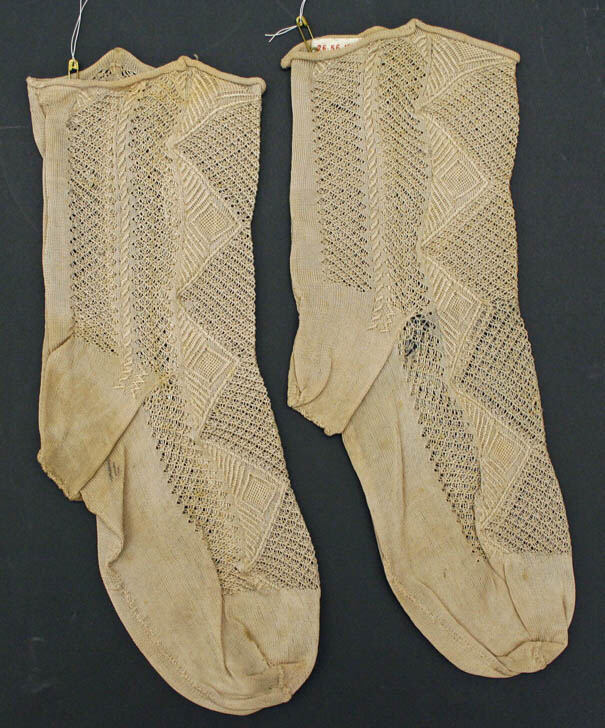
The Unseen Foundation: Silk Socks as an Aesthetic Archaeology for 2026 Haute Couture
Within the hallowed archives of Natalie Fashion Atelier, the study of the isolated artifact—the singular object divorced from its original context—yields profound insights. The subject of this research is the Italian silk sock, a masterpiece of understated luxury. Often relegated to the periphery of fashion history, the silk sock represents a pinnacle of material and structural intelligence. This artifact, when subjected to rigorous aesthetic archaeology, reveals a lexicon of elegance that directly informs the architectural silhouettes and tactile narratives of our 2026 Haute Couture collection. The sock is not merely a covering; it is a testament to the marriage of rigorous craftsmanship and sensory opulence, a silent dialogue between the body and the garment that we now seek to elevate to the primary plane of design.
Materiality and the Italian Silk Paradox
The core of this artifact’s power lies in its materiality. Italian silk, particularly the seta di Como tradition, is characterized by a specific grammage and twist that yields a fabric of paradoxical properties. It possesses a liquid drape that conforms to the ankle and calf with a second-skin precision, yet its inherent structural integrity—a result of the long-staple filaments and precise weaving—prevents it from collapsing into mere transparency. This is not the silk of a blouse; it is a silk engineered for tension and compression. The micro-structure of the weave, often a fine gauge jersey or a subtle rib, creates a surface that is both matte in its depth and luminous in its reflection of light. This duality—the matte-lustre finish—is the foundational aesthetic principle for our 2026 silhouettes. It teaches us that luxury is not about overt shine, but about the controlled absorption and refraction of light across a three-dimensional form.
From an archival perspective, the isolated silk sock presents a challenge: it is a fragment of a complete ensemble, yet it contains a complete universe of design logic. The reinforced heel and toe—often executed in a denser, slightly thicker silk weave—are not merely functional. They are architectural interventions. They create a subtle, almost imperceptible shift in volume and opacity, a gradient of compression that sculpts the foot and ankle. This principle of graduated material density is the primary technical takeaway for 2026. We are translating this into high-end silhouettes by using silk panels of varying weights and weaves within a single garment—a gown, a bodysuit, a pair of trousers—to create a dynamic, sculpting effect without the need for boning or rigid structures. The silk sock proves that the most powerful architecture is often invisible, felt rather than seen.
Deconstructing Classical Elegance: The Silhouette of the Limb
The classical elegance of the Italian silk sock is defined by its relationship to the limb. It does not hide the leg; it elevates the leg into a column of refined volume. The sock’s silhouette is a study in negative space and positive form. The cuff, often finished with a delicate, hand-rolled edge or a subtle picot stitch, creates a precise terminus. This line of demarcation—where the silk ends and the skin begins—is a moment of high aesthetic tension. In 2026, we are applying this principle of the precise terminus to our entire silhouette. Hemlines are not soft; they are architectural cuts. Necklines are not draped; they are engineered to create a clean, sharp edge that frames the body as the sock cuff frames the calf. The sock teaches us that elegance is the mastery of the boundary.
Furthermore, the sock’s ability to create a continuous, unbroken line from the toe to the knee (or higher) is a precursor to the modern obsession with the bodysuit and the one-piece garment. The isolated artifact reveals that the most sophisticated way to dress the body is to treat it as a single, cohesive volume. The silk sock’s seamless construction—or its near-seamless circular knitting—is a lesson in fluidity. For 2026, we are translating this into cut-and-sew techniques that eliminate side seams on dresses and coats, creating a garment that flows around the body like a liquid column. The negative ease of the sock—its slight compression against the skin—informs our use of bias-cut silk panels that are cut with a calculated tension, hugging the body’s curves without constraint. This is the new luxury: a silhouette that is both compressive and liberating, a second skin of architectural silk.
From Archive to Atelier: The 2026 Silhouette Manifesto
The aesthetic archaeology of the Italian silk sock yields a clear manifesto for the 2026 Haute Couture collection. The silhouette is no longer a static shape; it is a dynamic field of material intelligence. The primary forms we are developing are:
- The Compressed Column Gown: Inspired by the sock’s graduated grip, this gown uses a single, continuous piece of double-faced silk satin. The bodice is cut with a high degree of negative ease, creating a gentle compression that defines the torso. The skirt, in contrast, is cut on the bias with a relaxed tension, allowing the silk to fall in a liquid, unbroken column. The transition between these two states—compressed and released—is the silhouette’s defining feature, a direct translation of the sock’s heel-to-calf gradient.
- The Architectural Bodysuit: This is the sock’s most direct descendant. Constructed from a custom-developed silk jersey with a micro-rib structure, the bodysuit is engineered to sculpt the entire torso. The reinforced panels at the waist and hip mirror the sock’s reinforced heel, creating a subtle, corrective architecture. The neckline and leg openings are finished with a hand-rolled picot edge, a direct homage to the sock’s cuff. This piece is designed to be worn as a standalone top or as a foundational layer, a silent, luxurious structure beneath a sheer silk tunic.
- The Tension-Drape Coat: This silhouette deconstructs the sock’s continuous line into a larger, more dramatic form. Cut from a heavy, matte silk faille, the coat is constructed from a single, unbroken piece of fabric. The seamless construction at the shoulders and side seams creates a fluid, monolithic volume. The coat’s hem is a precise, architectural line, mimicking the sock’s terminus. The entire garment is designed to move as a single, cohesive entity, a liquid shell that envelopes the body without interruption.
Conclusion: The Silent Pedagogy of the Fragment
The isolated Italian silk sock, a fragment of a forgotten wardrobe, is not a relic. It is a pedagogical tool of the highest order. It teaches us that the most profound luxury is found in the unseen, the felt, the engineered. Its materiality—the matte-lustre silk, the graduated compression, the precise terminus—provides a complete technical and aesthetic vocabulary for the 2026 silhouette. We are not merely reviving a past style; we are extracting a design philosophy. The sock’s silent, elegant logic—its mastery of tension, light, and volume—now defines the very architecture of our future. In the hands of the atelier, this humble artifact becomes the blueprint for a new era of haute couture, where the foundation is as important as the form, and the unseen is the ultimate statement of power.