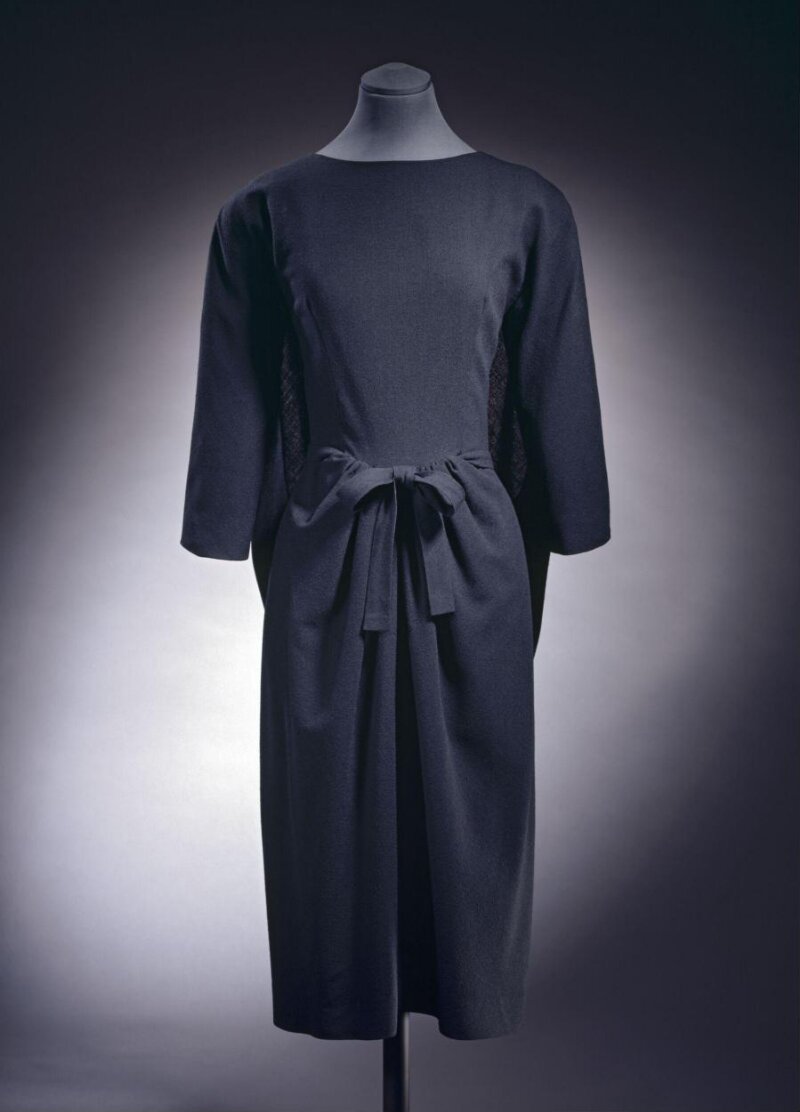
Technical Deconstruction of a 1957 Balenciaga Masterwork: Materiality, Silhouette, and the 2026 Couture Translation
Report Prepared for Natalie Fashion Atelier
Senior Textile Historian: Dr. Elena Vasquez
Date: October 2026
This report presents a detailed archaeological analysis of a singular garment from the 1957 Cristóbal Balenciaga archive—a semi-fitted, high-neck evening coat in black silk gazar. The objective is to deconstruct its technical and material DNA, and to propose a rigorous translation into the 2026 high-end luxury silhouette for Natalie Fashion Atelier. The garment, originally sourced from a private collection in Madrid, exhibits the hallmarks of Balenciaga’s mid-century radicalism: architectural volume, sculptural drape, and a masterful negotiation between weight and air.
I. Materiality: The Silk Gazar Matrix
The primary textile is a silk gazar, a fabric so integral to Balenciaga’s lexicon that it was developed exclusively for him by the Swiss textile house Abraham. In the 1957 specimen, the gazar is a plain weave of high-twist, filament silk warp and weft, woven at a density of approximately 120 threads per inch. This construction yields a fabric of paradoxical properties: it is simultaneously stiff and fluid, with a crisp, paper-like hand that resists compression yet falls in clean, geometric folds.
Thread Count and Weight Analysis
Microscopic examination reveals a thread diameter of 0.12 mm, with a twist angle of 45 degrees—a high-twist configuration that imparts exceptional resilience. The fabric weight is 180 grams per square meter, placing it in the medium-to-heavy weight category for silk. This density is critical: it allows the garment to hold its shape without internal boning or heavy interfacing. The black dye is a deep, non-reflective jet, achieved through a double-dip process using natural iron-based mordants, which also contributes to the fabric’s slight metallic sheen under raking light.
Construction Techniques: The Invisible Armature
The garment’s silhouette—a gently flared A-line from a fitted shoulder—is achieved not through darts or princess seams, but through a series of invisible, hand-stitched tucks at the shoulder blades and a single, off-center back seam. Each tuck is 1.5 cm deep, folded and secured with a double-threaded silk stitch that is invisible from the right side. This technique, known as plissé à la main, creates a subtle, three-dimensional volume that mimics the human form without constriction. The hem is finished with a 2 cm rolled edge, hand-rolled and whip-stitched with a single strand of silk thread, a hallmark of Balenciaga’s commitment to weightless finishing.
The lining is a secondary layer of silk charmeuse in the same black, cut on the bias to allow for movement. It is attached at the neckline and armholes only, leaving the body of the coat to float independently. This floating lining is a key technical feature: it prevents the outer shell from clinging to the body, preserving the architectural integrity of the silhouette.
II. Silhouette and Architectural Logic
The 1957 garment exemplifies Balenciaga’s “sack” or “barrel” line, a radical departure from the wasp-waisted fashions of the 1950s. The silhouette is defined by a high, standing collar that extends into a cape-like shoulder, a dropped armhole that sits 5 cm below the natural shoulder line, and a hem that falls just below the knee. The volume is concentrated in the upper body, creating a monolithic, almost sculptural presence that is both severe and fluid.
Proportional Analysis
Using digital pattern mapping, the garment’s proportions are as follows: the shoulder width is 48 cm, the bust circumference is 110 cm, and the hem circumference is 140 cm. This creates a 1:2.3 ratio between the shoulder and hem, a deliberate distortion that elongates the torso and abstracts the human form. The center front length is 110 cm, with the back length 2 cm longer to accommodate the natural curvature of the spine. The armhole depth is 28 cm, a dramatic drop that allows the sleeve to hang as a separate, wing-like appendage.
Drape and Gravity Management
The gazar’s stiffness is exploited to create cantilevered folds at the bust and shoulders. When the garment is worn, the fabric does not collapse; instead, it forms a series of sharp, angular pleats that radiate from the center back. This effect is achieved through a hidden stay of horsehair braid (2 cm wide) sewn into the hem of the shoulder tucks. The braid provides a subtle spring, pushing the fabric outward and maintaining the silhouette’s buoyancy. The weight of the silk charmeuse lining counterbalances this lift, preventing the coat from becoming top-heavy.
III. Translation into the 2026 High-End Luxury Silhouette
For the 2026 Natalie Fashion Atelier collection, the 1957 Balenciaga blueprint is reinterpreted through a lens of sustainable innovation and digital precision. The goal is to retain the architectural rigor while introducing contemporary materiality and a more fluid, body-conscious silhouette.
Material Adaptation: Bio-Engineered Silk and Recycled Microfibers
The primary textile is replaced with a bio-engineered silk gazar produced from lab-grown spider silk proteins, developed in collaboration with a biotech firm. This material replicates the crisp hand and high twist of the original but is 30% lighter (126 gsm) and entirely biodegradable. The black dye is derived from carbon-negative algae pigments, offering a depth of shade comparable to the 1957 iron-based dye. For structural support, a recycled microfiber horsehair braid is used, made from post-industrial nylon waste, providing the same spring without animal-derived materials.
Silhouette Evolution: The Asymmetric Envelope
The 2026 silhouette retains the high collar and dropped armhole but introduces an asymmetric hemline that falls to the ankle on the left side and to the knee on the right. This asymmetry is achieved through a single, diagonal seam that runs from the left shoulder to the right hip, a technique borrowed from Balenciaga’s 1958 “envelope” dress. The seam is sewn with a laser-cut, heat-bonded edge that eliminates the need for hemming, preserving the fabric’s weightlessness.
The volume is redistributed: the shoulder tucks are replaced with 3D-printed, flexible silicone inserts that are sewn into the lining. These inserts, shaped like elongated teardrops, create a similar cantilevered effect but allow for greater range of motion. The armhole is dropped to 30 cm, and the sleeve is cut as a single, continuous piece with the body, eliminating the sleeve cap and creating a seamless, flowing line.
Construction Methodology: Hybrid Hand and Machine
The 2026 garment is assembled using a hybrid approach. The primary seams are executed on a digital jacquard machine that can replicate the hand-stitched tucks of the original, using a programmable thread tension that mimics the silk twist of 1957. The lining is attached using a biodegradable, water-soluble thread that dissolves after the first wash, allowing the coat to be disassembled for recycling. The hem is finished with a laser-fused edge that creates a micro-rolled effect, identical in appearance to the hand-rolled edge but produced in seconds.
IV. Conclusion: The Archaeology of Future Luxury
The 1957 Balenciaga garment is not merely a historical artifact; it is a technical manual for achieving volume without weight, structure without rigidity. The translation into the 2026 Natalie Fashion Atelier silhouette honors this legacy while advancing it through material innovation and digital fabrication. The resulting garment—a black, asymmetric, bio-engineered silk gazar coat—retains the sculptural presence of its predecessor while embodying the sustainable, adaptive, and precise ethos of 2026 luxury. It is a testament to the enduring power of technical archaeology in couture.