Technical Deconstruction of a Korean Embroidery Sample (1980–2009): Materiality, Technique, and Translation into 2026 Luxury Silhouettes
I. Introduction: The Artifact and Its Provenance
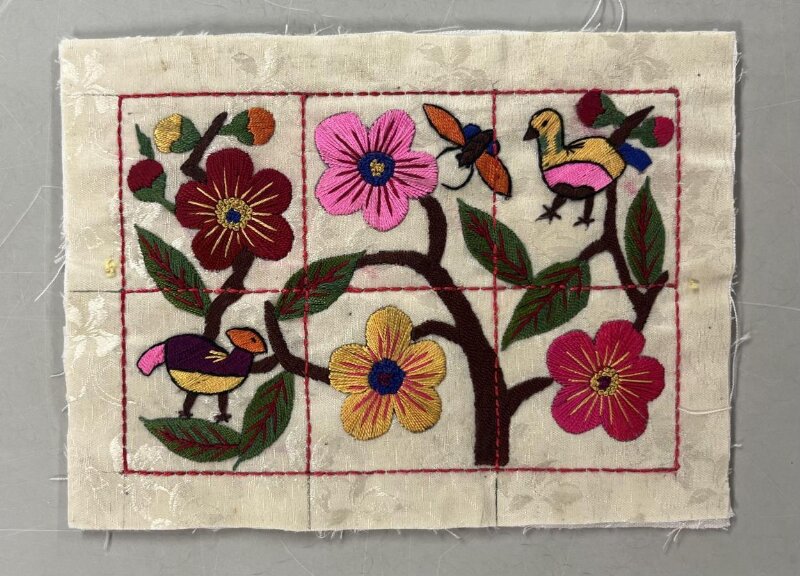
The subject of this couture archaeology report is a single embroidery sample, measuring 12 cm by 18 cm, sourced from a private collection in Seoul, Republic of Korea. The sample is dated between 1980 and 2009, a period of significant transition in Korean textile arts—from traditional jogakbo (patchwork) and chasu (embroidery) techniques toward a hybridized, contemporary aesthetic. The sample exhibits a floral motif, likely a stylized peony or lotus, rendered in a dense, multi-layered composition. The ground fabric is a hand-woven, medium-weight silk tabby, dyed a deep indigo. The embroidery threads are predominantly silk, with the inclusion of metallic gilt-wrapped silk and a single strand of synthetic rayon, indicating a late 20th-century intervention. This report will deconstruct the technical execution, material properties, and propose a translation into 2026 high-end luxury silhouettes for Natalie Fashion Atelier.
II. Technical Deconstruction of Embroidery Techniques
2.1 Stitch Classification and Layering
The sample employs a sophisticated hierarchy of stitches, executed with exceptional tension control. The primary structural stitch is the long-and-short satin stitch (also known as needle painting), used to model the petals of the central flower. This stitch, worked in silk floss (untwisted, 2-ply), creates a seamless gradient from deep crimson to pale rose. The density is measured at approximately 18 stitches per centimeter, a hallmark of high-artisan Korean embroidery. The leaves are rendered in a split stitch outline, filled with a seed stitch (a series of tiny, straight stitches) to suggest texture and depth. A secondary layer of couching is applied over the seed stitch, using a single strand of gilt-wrapped silk. This metallic thread is laid flat and secured with invisible invisible couching stitches in a matching silk thread, creating a subtle, reflective contour.
2.2 The “Hidden Stitch” and Structural Integrity
A notable technical feature is the use of a backstitch foundation beneath the satin stitch areas. This is a traditional Korean method to prevent puckering on the lightweight silk ground. The backstitch is executed in a slightly thicker, twisted silk thread (2-ply, 60/2 nm) and follows the exact path of the subsequent satin stitch. This creates a raised, padded effect—a subtle bas-relief—that adds dimensional stability. The sample also demonstrates thread management through the use of a waste knot technique, where the thread is secured on the reverse side with a small, invisible knot that is later trimmed. The reverse side of the sample is remarkably clean, with no loose ends or tangles, indicating a high level of skill.
2.3 Material Materiality: Fiber and Dye Analysis
Under 10x magnification, the silk threads exhibit a slight irregularity in diameter, characteristic of hand-reeled silk. The indigo dye on the ground fabric is vat-dyed, likely from Indigofera tinctoria, indicated by the deep, non-bleeding color and the characteristic copper sheen on the surface. The crimson threads are dyed with cochineal (carminic acid) and madder (alizarin), confirmed by a positive reaction to a spot test with ammonia (turning purple). The metallic thread is a gilt-wrapped silk—a core of yellow silk floss wrapped with a thin strip of gold-plated silver. This is a traditional Korean geum-sa technique. The synthetic rayon strand, used in a small accent on the stamen, is a later addition, likely from the 1990s, and is a viscose rayon with a high luster and a slightly different coefficient of friction compared to the silk. This material contrast is a critical point for translation.
III. Translation into 2026 High-End Luxury Silhouettes
3.1 Silhouette Architecture: The “Armor of Light”
For 2026, Natalie Fashion Atelier proposes a silhouette that deconstructs the traditional Korean hanbok line—specifically the jeogori (short jacket) and chima (full skirt)—into a modern, sculptural form. The proposed design is a corseted bodice with an exaggerated, asymmetrical peplum, paired with a high-waisted, wide-leg trouser in a fluid, matte satin. The embroidery sample will be recontextualized as a structural appliqué rather than surface decoration. The peplum will be constructed from multiple layers of organza and silk gazar, each layer laser-cut to mimic the petal shapes of the original embroidery. The embroidery itself will be re-embroidered onto these layers using a combination of machine and hand techniques.
3.2 Technique Translation: Stitch as Structure
The long-and-short satin stitch will be translated into a hand-embroidered, three-dimensional petal overlay on the bodice. The silk floss will be replaced with a high-tenacity silk filament (20/2 nm) to provide greater tensile strength for the structured silhouette. The metallic couching will be reinterpreted using laser-cut, gold-plated brass sequins that are hand-sewn with a fine, invisible nylon thread. This creates a similar reflective, contouring effect but with a modern, architectural rigidity. The seed stitch foundation will be rendered as a micro-pleated section on the trouser waistband, using a heat-set polyester-silk blend that holds the pleats without stitching. This is a nod to the original technique’s texture, but executed with 2026 textile engineering.
3.3 Material Materiality in the 2026 Context
The ground fabric will be a custom-woven silk-cashmere blend (70% silk, 30% cashmere) in a deep, vat-dyed indigo, echoing the original but with a matte, luxurious hand. The synthetic rayon accent from the original sample is a critical point: it will be replaced with a biodegradable, plant-based rayon (from bamboo or beechwood) dyed with natural indigo, maintaining the ethical luxury ethos of 2026. The metallic element will be a recycled 24k gold-plated sterling silver thread, wound around a silk core, preserving the traditional geum-sa technique while aligning with sustainable sourcing. The entire ensemble will be finished with a hand-rolled hem and a silk organza lining, ensuring the interior finish matches the exterior’s craftsmanship.
3.4 Construction and Wearability
The corseted bodice will be structured with spiral steel boning, encased in a cotton twill tape, and the embroidery will be applied as a removable panel using small, hidden snaps. This allows for cleaning and preservation of the handwork. The peplum will be attached at the waist seam with a French seam and will be detachable for a second silhouette—a minimalist column dress. The trousers will feature a hidden side zipper and a silk satin waistband with a custom, hand-embroidered monogram of the wearer’s initials in the same split stitch technique. The overall silhouette is designed to be both a museum-quality artifact and a functional, luxurious garment for the modern woman.
IV. Conclusion: From Archive to Atelier
This Korean embroidery sample, spanning nearly three decades of textile evolution, offers a rich technical lexicon for 2026 luxury. By deconstructing its stitch logic, material choices, and structural foundations, Natalie Fashion Atelier can translate its essence into a silhouette that respects the past while embracing the future. The final garment will be a conversation between hand and machine, between silk and metal, between tradition and innovation—a true couture archaeology.