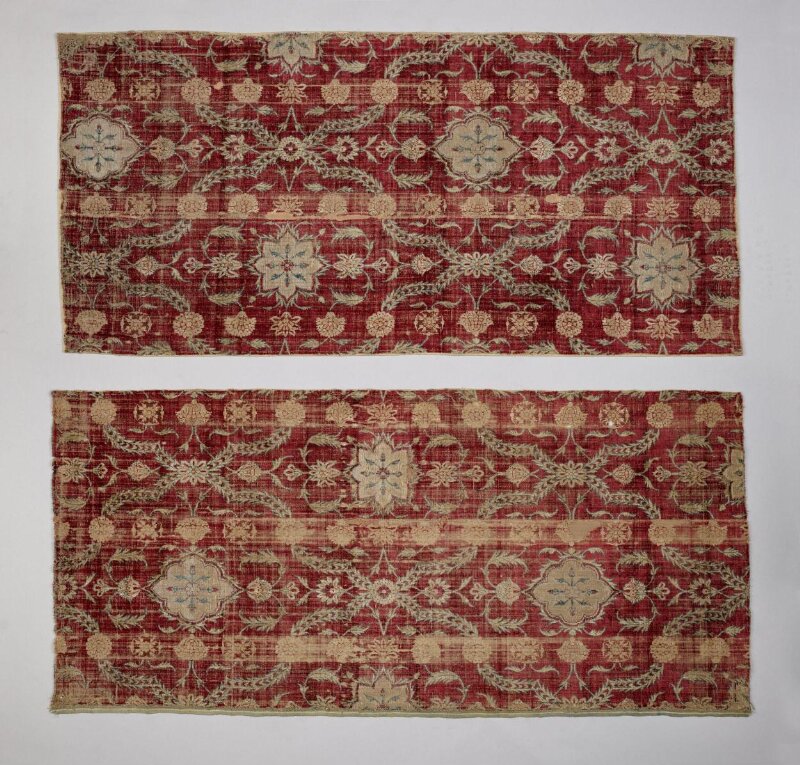
Couture Archaeology Report: The Velvet Treasury of the Mughal Ateliers
Subject: Technical Deconstruction of 17th-Century Mughal Velvet
Origin: Imperial Workshops (Karkhanas), Mughal Empire, circa 1650-1700
Analyst: Senior Textile Historian, Natalie Fashion Atelier
Purpose: To excavate the material intelligence of historical velvet for the 2026 luxury silhouette.
The Mughal Empire’s 17th century represents a zenith of textile artistry, where fabric was not merely material but a medium for projecting imperial power, spiritual geometry, and sublime luxury. Among its most revered achievements was velvet—a textile so dense with technical innovation and symbolic weight that it functioned as soft architecture. This report deconstructs the Mughal velvet technique, analyzes its inherent materiality, and proposes a framework for its translation into the 2026 high-end luxury lexicon, moving beyond pastiche into profound technical dialogue.
I. Technical Deconstruction: The Tripartite Alchemy of Mughal Velvet
Mughal velvet was not a single fabric but a complex, layered system of craftsmanship. Its superiority lay in the symbiotic relationship between material selection, loom technology, and decorative intervention.
1. Material Matrix: The foundation was a silk warp and weft of exceptional quality, often sourced from Bengal. The pile, however, was where alchemy occurred. Weavers utilized zari: silver thread flattened and wound around a silk core, then gilded. This created a pile that reflected light differentially than modern metallic yarns, offering a deep, molten glow. The velvet ground was often further enriched with supplementary silk wefts of contrasting colors (voided velvet), creating a luminous, multi-hued foundation for patterns.
2. Loom Logic & The Pile Mechanism: Velvet was woven on a drawloom, a sophisticated device allowing for the pre-programming of intricate patterns. The critical innovation was the use of metal rods. During weaving, the zari pile threads were lifted over these temporary rods. Once a section was complete, the rods were removed, leaving loops. These loops were then hand-cut with precision shears to create the plush, dense pile. The height of the rod dictated pile height, allowing for sculptural variation within a single textile. This method produced a fabric of immense weight, density, and dimensional tactility impossible to replicate with contemporary power looms.
3. Surface Narrative: Buta, Boteh, and the Floral Universe: The patterns were not merely applied but woven into the structure. The iconic buta (paisley) and elaborate flowering scrolls were integral. The technique of khat (twill weaving) and kimkhwab (brocaded velvet) allowed for pattern areas to be in lush cut-pile velvet, while backgrounds or connecting vines remained in uncut loops or plain silk, creating a play of texture and sheen. This resulted in a narrative surface where light and shadow defined the motif as much as color.
II. Materiality & Sensory Philosophy
The materiality of Mughal velvet communicated a specific philosophy of luxury. Its weight conveyed substance and permanence. The acoustic quality—a profound, muted rustle—signaled presence. The thermal property was insulating, creating a microclimate of grandeur. Most critically, its light interaction was choreographed: the cut zari pile absorbed and reflected light in a low, diffuse manner, causing patterns to emerge and recede as the wearer moved. This was not a glittering fabric, but one that glowed from within, embodying a concept of restrained, inherent radiance—a stark contrast to the often overt luminosity of contemporary luxury.
III. Translation for the 2026 Silhouette: Principles for a New Opulence
For Natalie Fashion Atelier’s 2026 vision, direct reproduction is not the goal. Instead, we must extract the core principles and re-engineer them through a modern lens of sustainability, technology, and contemporary form.
Principle 1: Structural Dimensionality over Applied Decoration.
The 2026 silhouette should integrate texture as structure. Imagine a tailored coat where the buta motif is not printed, but rendered through a modern interpretation of voided velvet: areas of dense, bio-engineered silk pile juxtaposed with matte, biodegradable leather or fused technical taffeta. The pattern becomes a topographic map of textures, defining seam lines and darts. Pile height modulation can be used to create subtle contouring on minimalist column dresses, enhancing the body’s form through tactile shadow.
Principle 2: The Modern Zari: Light as a Material.
Replacing historical metal-wound threads, we propose partnerships with material science labs to develop regenerative luminescent yarns. These could involve silk infused with sustainable, photoluminescent algae pigments or cellulose-based yarns coated with a microscopic layer of recycled, vapor-deposited aluminum. The goal is to capture the Mughal velvet’s variable glow: a fabric that gathers ambient light and emits a soft, delayed radiance, changing from day to evening wear. This becomes the new "quiet luxury" — a luxury of perception and phenomenon.
Principle 3: Weight & Movement Recalibrated.
The historical weight must be translated into a modern, fluid gravity. Using weighted hem techniques developed for performance wear, and integrating the dense velvet only in strategic panels (yokes, cuffs, hems) over a base of liquid crepe or technical chiffon, we create garments that move with a deliberate, elegant drag. This honors the Mughal sense of substance while allowing for the ease demanded by the contemporary lifestyle. A wide-leg velvet pant, weighted at the hem, would move with an iconic, silent authority.
Principle 4: The Silhouette Archaeology: Jama meets Architecture.
Deconstruct the Mughal jama (fitted coat) and peshwaz (robe). Their cross-over closures, asymmetric fastenings, and volume-from-the-shoulders construction are ripe for abstraction. Propose a 2026 evening gown that uses a velvet-paneled, cross-wrap bodice, flowing into a skirt of layered, laser-cut velvet "jali" (pierced stone screen) motifs over a luminous slip. This translates the architectural principles of reveal-and-conceal and structured drapery.
Conclusion: Towards a Velvet Intelligence
The Mughal velvet was a pinnacle of integrated design—where material, technique, and symbol were inseparable. For our 2026 collection, this historical intelligence must inform a new material syntax. We are not reviving velvet; we are reviving its deep technical premise: that luxury is a multi-sensory, dimensional experience woven into the very structure of the cloth. By fusing this archaeological insight with forward-looking materials and silhouette innovation, Natalie Fashion Atelier can define a new chapter in the story of opulence—one that is as intellectually rich and sensorially profound as the courtly treasures that inspired it. The result will be a collection that doesn’t reference history, but converses with it in the language of tomorrow.