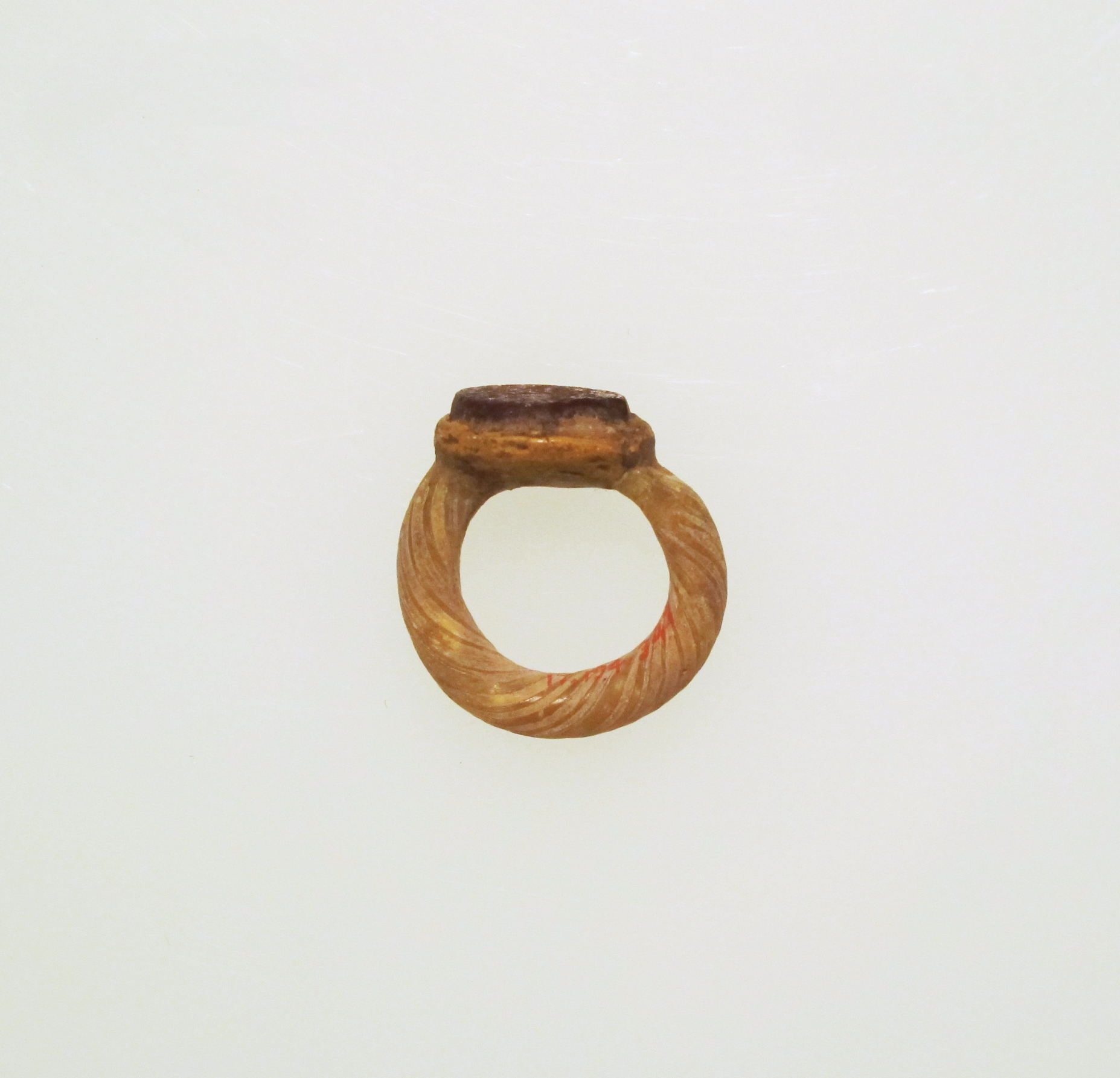
Deconstructing the Classical: The Glass Finger Ring as a Blueprint for 2026 Silhouettes
Within the isolated archives of aesthetic archaeology, the Roman glass finger ring emerges not merely as a personal adornment, but as a profound text on materiality, light, and the transience of form. For Natalie Fashion Atelier, this artifact—fragile yet enduring, transparent yet deeply tactile—offers a radical departure from the opulent solidity of traditional couture. The 2026 silhouette, as informed by this heritage piece, is not about replicating antiquity, but about internalizing its core principles: the tension between structural integrity and ethereal presence, the interplay of opacity and translucency, and the deliberate erosion of hard edges. This research artifact deconstructs the ring’s classical elegance to extract three key directives for high-end silhouettes: the Liquid Armor principle, the Fractured Contour, and the Patina of Time.
The Liquid Armor Principle: Structural Transparency
The Roman glass ring, often formed by coiling molten glass around a mandrel, presents a paradox: it is a rigid circle, yet its materiality suggests a frozen liquid state. This duality is the foundation of the Liquid Armor principle for 2026. The silhouette must feel both protective and permeable. Unlike the heavy, opaque armor of medieval or military inspiration, this is a defense rendered in light.
Technically, this translates to the use of micro-perforated organza and laser-cut vitreous panels applied to structural corsetry. The garment’s foundation—a boned bodice or a sculpted hip—is visible through a diaphanous outer layer. The glass ring’s characteristic iridescence, caused by centuries of chemical weathering, is replicated through the strategic placement of prismatic sequins and liquid metallic threads that shift color with movement. The silhouette is not a solid block; it is a volume defined by its internal tensions. A 2026 evening gown, for instance, might feature a rigid, almost architectural, back panel of clear resin and silver leaf, while the front cascades in a fluid, translucent silk georgette. The wearer is simultaneously encased and exposed, a living contradiction of strength and fragility.
The Fractured Contour: Asymmetry and the Broken Line
Few Roman glass rings survive intact. The typical artifact displays a fractured contour—a chipped edge, a missing segment, a crack that has become a feature of its beauty. This aesthetic of the incomplete is a powerful corrective to the relentless symmetry of modern fashion. For 2026, the silhouette must embrace the broken line as a signifier of luxury and authenticity.
This is not a haphazard tear, but a calculated disruption. The ring’s circular perfection is interrupted, and so too must the garment’s silhouette be interrupted. We propose the asymmetric hemline that does not taper gracefully, but cuts sharply, as if sheared by an ancient hand. Sleeves are designed with deliberate gaps, where a solid sleeve of duchess satin transitions into a lattice of sheer tulle, mimicking the ring’s missing glass shards. The shoulder line is a prime site for this technique: a single, strong shoulder pad in structured faille, while the opposite shoulder is left bare, framed by a single, floating strap of polished hematite beads—a direct reference to the ring’s broken band. The silhouette becomes a narrative of loss and survival, where the missing piece is more eloquent than the whole.
The Patina of Time: Material Memory and Surface Treatment
The most compelling aspect of the Roman glass ring is its patina—the iridescent, layered surface that speaks of centuries of burial, chemical reaction, and slow transformation. This is not a flaw; it is the ring’s ultimate value. For 2026, the silhouette must carry a material memory. The garment’s surface cannot be pristine. It must tell a story.
This directive informs our surface treatment protocols. We employ hand-painted pigments that mimic the ring’s layered oxidation—silver, gold, and copper tones that bleed into one another. Crushed glass beads are embedded into the fabric’s weave, catching light like the ring’s ancient facets. The silhouette itself is treated with selective distressing: a hem that is frayed, not cut; a seam that is left raw and visible, like a crack in the glass. The texture of the garment becomes a palimpsest. A 2026 tailored jacket, for example, might be constructed from a heavy wool crepe that has been hand-sanded in specific zones to create a worn, velvety finish, while the collar is stiffened with a resin that mimics the ring’s glassy hardness. The silhouette is not new; it is newly excavated.
Silhouette Architecture: The 2026 Collection Framework
Integrating these three principles, the 2026 silhouette for Natalie Fashion Atelier is defined by a specific architectural vocabulary:
The Vitreous Cocoon. A full-length coat in a bonded, semi-transparent nylon, structured with internal seams that reference the ring’s spiral formation. The silhouette is voluminous but weightless, with a high, sculpted collar that frames the face like a glass shard. The surface is treated with a prismatic foil that shifts from aqua to amber, echoing the ring’s patina.
The Fractured Column. A floor-length gown that appears, at first glance, to be a simple column. Upon closer inspection, the silhouette is bisected by a diagonal cut from the left hip to the right shoulder, revealing a second, inner layer of sheer black tulle and micro-crystals. The asymmetry is deliberate, a broken circle made wearable. The hem is hand-scalloped to mimic the ring’s irregular edge.
The Armor of Light. A structured bodysuit and skirt set, where the bodice is constructed from rigid, laser-cut leather panels that have been hand-painted with a metallic patina. The panels are separated by gaps of sheer mesh, creating a visual fragmentation. The skirt is a single, sweeping panel of liquid silk, its surface pleated in irregular, radial folds that recall the ring’s molten origins. The silhouette is both protective and revealing, a modern interpretation of the glass ring’s paradoxical strength.
Conclusion: The Eternal Fragment
The Roman glass finger ring, in its isolated archaeological context, is a masterclass in the power of the fragment. It teaches us that luxury is not found in perfection, but in the articulation of time and transformation. For the 2026 haute couture season, Natalie Fashion Atelier will not merely reference antiquity; we will internalize its material logic. The silhouette will be a vessel for light, a record of fracture, and a testament to the beauty of the broken line. The glass ring is not a relic; it is a directive. It commands us to build with transparency, to design with asymmetry, and to finish with the patina of memory. This is the new classical elegance: fragile, fractured, and eternal.