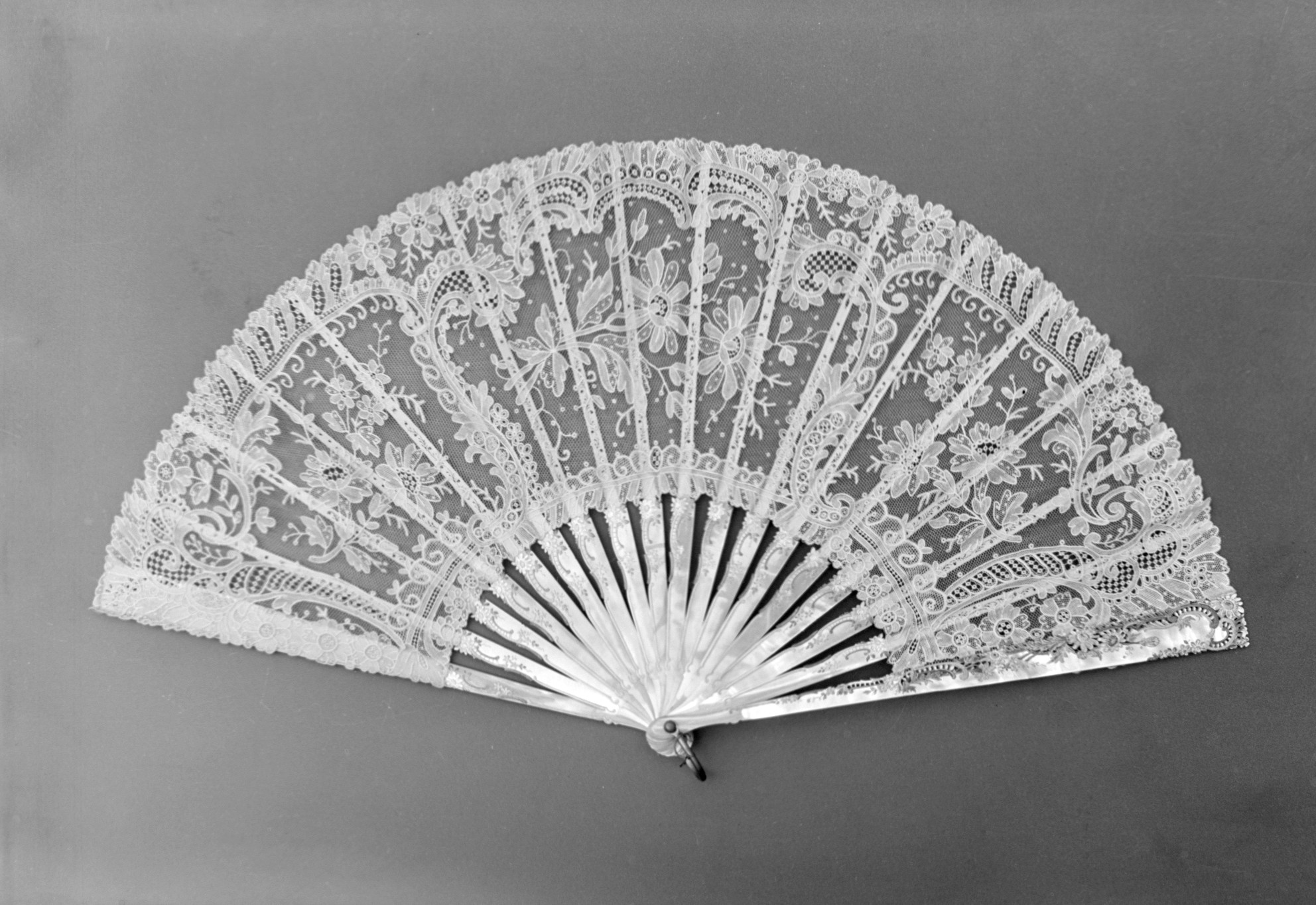
Aesthetic Archaeology of the Fan: Lace, Mother-of-Pearl, and Gilt as Foundational Lexicons for 2026 Haute Couture Silhouettes
Within the isolated archive of Natalie Fashion Atelier, the fan—specifically the plissé-éventail of the 18th-century French and East Asian courts—represents a singular artifact of kinetic elegance. This object, a composite of lace, mother-of-pearl, and gilt, transcends its functional origins as a cooling device or social semaphore. It is, in essence, a portable architectural system of tension, transparency, and light. For the 2026 haute couture season, this artifact informs a radical departure from static volume. The classical fan is deconstructed not as a decorative motif, but as a structural and textural grammar that governs the silhouette’s very engineering.
Deconstructing the Classical Elegance: The Fan as a System of Three Materials
The fan’s elegance is not found in its sum, but in the dialectical tension between its three primary materialities. Each element—lace, mother-of-pearl, gilt—performs a distinct architectural role that, when isolated and reconstituted, defines the 2026 silhouette.
Lace as Structural Transparency and Kinetic Membrane
In the historical fan, lace was not merely a decorative overlay; it was a membrane of negative space. The intricate patterns of Alençon or Chantilly lace created a lattice that allowed light to pass through while maintaining a defined, yet permeable, boundary. For 2026, this principle informs a new category of “breathable architecture” in evening wear. The silhouette is no longer a solid form but a layered system of perforated panels. Lace is elevated from a fabric to a structural mesh, laser-cut from silk organza or metallic thread, mimicking the fan’s pleated geometry. The 2026 silhouette, therefore, becomes a kinetic volume: the lace panels shift and open with the wearer’s movement, revealing and concealing the body in a choreographed sequence of transparency. This is not a static dress but a living fan that breathes.
Mother-of-Pearl as Luminosity and Articulated Armature
The mother-of-pearl guard sticks and ribs of the fan are its hidden skeleton. Their iridescence—a play of light across a nacreous surface—creates a luminous substructure. In the 2026 silhouette, this translates into articulated, non-rigid armatures that support the fabric from within. We are developing “nacreous boning”: thin, flexible strips of resin-infused abalone or reconstructed shell, set into the seams of a gown. These strips do not constrict; they guide the drape, creating a controlled, organic fall of fabric that echoes the fan’s unfolding motion. The mother-of-pearl informs a luminosity from within—a gown that glows with a soft, internal light, not from applied embellishment, but from the structural material itself. The silhouette is thus defined by a gradient of opacity, where the body is framed by a halo of iridescent structure.
Gilt as Gilded Tension and Structural Edge
The gilt, often applied to the fan’s outer sticks and rivets, is the element of tension and termination. It is the gilded edge that defines the fan’s arc, the point where the lace and mother-of-pearl meet their structural limit. In the 2026 couture silhouette, gilt is not a surface treatment but a functional boundary. We employ gilded metal thread and gold leaf appliqué at the hems, collars, and cuffs of garments. These gilded edges act as counterweights, providing the necessary tension to hold the fan-like pleats in place. The 2026 silhouette is thus characterized by a gilded tension line—a sharp, metallic contour that cuts through the softness of lace and the fluidity of mother-of-pearl. This creates a dialectic of hard and soft, a visual and tactile contrast that defines the modern Parisian line: severe yet ethereal, structured yet fluid.
From Artifact to Silhouette: The 2026 Lexicon of Form
The synthesis of these three materialities produces three distinct, yet interrelated, silhouette archetypes for the 2026 season. These are not mere shapes but systems of wear, informed by the fan’s core principles of folding, unfolding, and luminous tension.
The “Plissé-Éventail” Silhouette: A Kinetic Column
This silhouette is a direct translation of the fan’s pleated structure. It is a column dress constructed from multiple, overlapping panels of gilded lace. Each panel is anchored by a mother-of-pearl rib at the waist, allowing the lower portion to flare and contract with movement. The effect is a kinetic column—a form that is both rigid and fluid. The gilded edges of the lace panels catch the light, creating a scalloped, luminous contour that mimics the fan’s arc. This silhouette is not for static display; it is engineered for the gesture of unfolding, a dress that reveals its full volume only in motion. It is the 2026 answer to the grande robe à la française, but reduced to its essential, architectural bones.
The “Nacreous Armature” Silhouette: A Luminous Exoskeleton
Here, the mother-of-pearl is externalized. The silhouette is a sheath dress with a visible, articulated exoskeleton of iridescent ribs that trace the spine, the shoulders, and the hip. These ribs are not hidden; they are the primary structural element, with the lace fabric suspended between them like a web. The effect is a luminous exoskeleton that frames the body in a halo of nacreous light. The gilt is used at the joints of these ribs, creating a golden articulation that emphasizes the points of movement. This silhouette is a study in controlled transparency: the body is visible through the lace, but the mother-of-pearl structure creates a rhythm of opacity, a visual beat that guides the eye. It is a direct homage to the fan’s guard sticks, now worn as a second skin.
The “Gilded Tension” Silhouette: A Counterweighted Drape
This silhouette inverts the fan’s logic. It is a cape or a train that is anchored by a gilded counterweight at the hem. The fabric—a single, massive sheet of hand-embroidered lace—is pleated from a central point at the shoulder, fanning outwards. The mother-of-pearl is used as internal weighting, sewn into the hem to create a controlled, weighted fall. The gilt edge is not at the periphery but at the point of tension—a gilded clasp at the shoulder that holds the entire structure in balance. The silhouette is a drape of tension, a single, sweeping line that is both heavy and airy. It is the 2026 interpretation of the fan’s open position, a gesture of grand, controlled release.
Conclusion: The Archive as Living Lexicon
The fan, as an isolated artifact of aesthetic archaeology, is not a relic. It is a generative system. Its three core materialities—lace, mother-of-pearl, gilt—are not decorative elements but structural verbs that dictate the grammar of the 2026 silhouette. The lace provides the kinetic membrane, the mother-of-pearl provides the luminous armature, and the gilt provides the edge of tension. Together, they produce a couture that is not about static form but about controlled, luminous movement. The 2026 silhouette at Natalie Fashion Atelier is thus a living fan: a system of folding, unfolding, and light, worn as a second, architectural skin. It is the ultimate expression of Parisian elegance—a synthesis of historical rigor and radical, forward-facing innovation.