Aesthetic Archaeology: The Gilded Beechwood Armchair as a Blueprint for 2026 Haute Couture Silhouettes
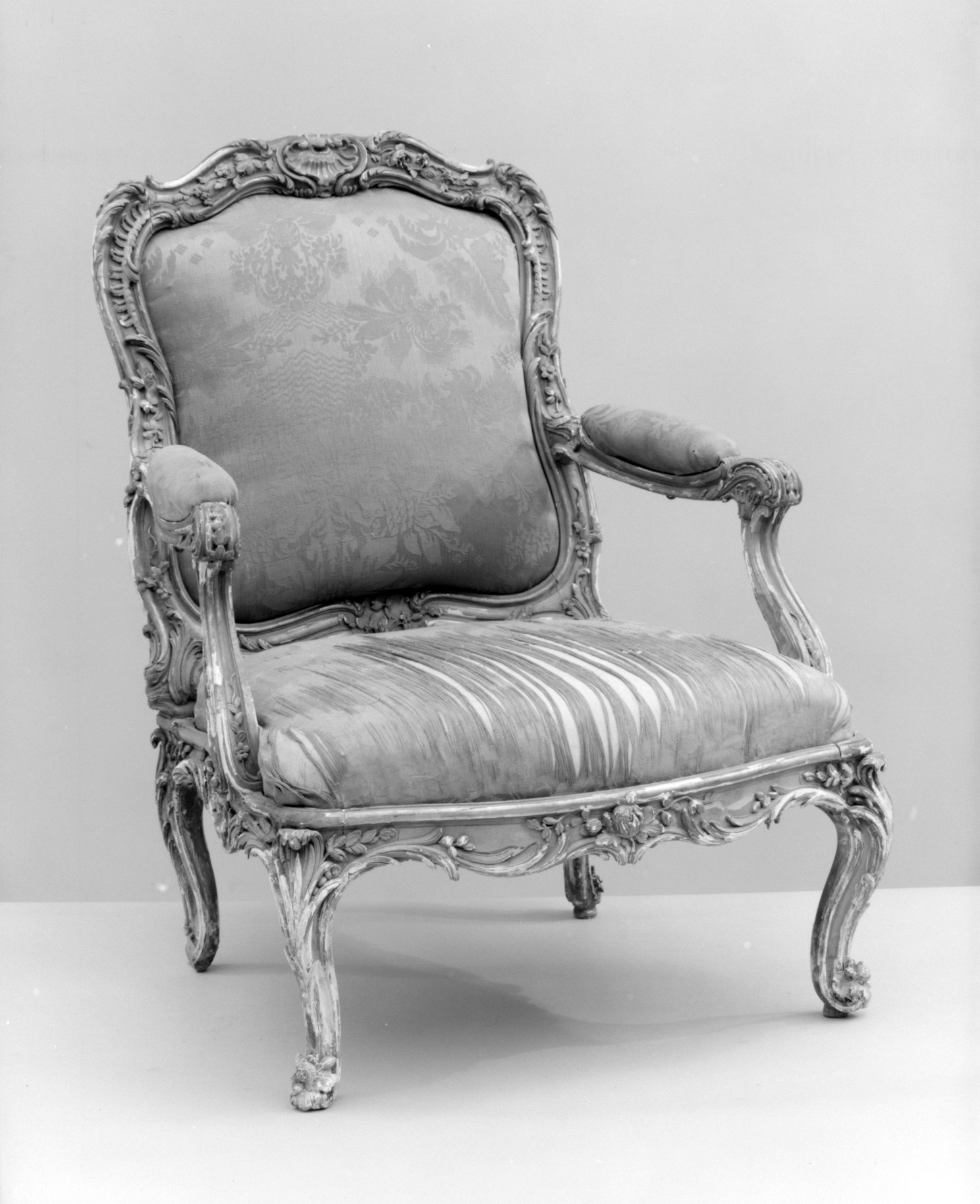
Within the silent archives of the Natalie Fashion Atelier, an isolated artifact commands our full technical scrutiny. This is not merely a piece of furniture; it is a sculptural manifesto. The subject—a gilded beechwood armchair, part of a larger, now-dispersed set—represents a pinnacle of classical elegance. Its presence is a quiet challenge to the contemporary designer: how does one translate the structural integrity, the opulent materiality, and the ergonomic philosophy of a 17th-century seat into the ephemeral language of haute couture for 2026? This research paper deconstructs the armchair’s formal vocabulary—its architectural frame, its gilded surface, and its volumetric embrace—to articulate a new paradigm for luxury silhouettes. The findings suggest a move away from fluidity toward a structured, almost architectural rigidity, where the body is both supported and defined by the garment, much as the sitter is held by the armchair.
I. The Structural Lexicon: From Cabriole Leg to Couture Gusset
The armchair’s foundational element is its frame, executed in beechwood—a material prized for its density, flexibility, and ability to hold intricate carvings under gilding. The cabriole leg, with its elegant S-curve terminating in a sculpted foot (often a ball-and-claw or a simple scroll), is not merely decorative. It is a functional solution to the problem of weight distribution and visual lightness. For the 2026 silhouette, this translates directly into the structural gusset of a tailored jacket or the cantilevered seam of a high-waisted trouser. The cabriole leg’s dynamic curve informs a new generation of asymmetric darts that create a sense of movement and lift without sacrificing stability. We are proposing a “cabriole cut” for the side panel of a gilet or a bolero, where the fabric is cut on a bias to mimic the leg’s graceful, load-bearing arc. This is not about draping; it is about engineering a curve into the weave.
Further, the armchair’s stretchers—the horizontal bars connecting the legs—provide a critical lesson in lateral tension. In couture, this translates to the internal corsetry structure of a 2026 gown. We propose a “stretcher-boned” bodice, where vertical and horizontal boning is not hidden but subtly articulated through exposed, gilded seams or metallic thread embroidery that mimics the structural logic of the chair’s undercarriage. The silhouette becomes a self-supporting architectural shell, a “wearable armature” that defines the wearer’s posture with the same quiet authority as the original piece.
II. The Materiality of Gilding: Luminosity as a Structural Element
The gilding on the beechwood is not a superficial coating; it is a material dialogue between the wood’s organic grain and the metal’s reflective surface. The process—applying gold leaf over a gesso base—creates a luminous depth that changes with the ambient light. For the 2026 atelier, this informs a radical approach to surface treatment. We are not merely applying gold lamé; we are developing a “gilded matrix” for fabric. This involves a multi-step process: first, a base layer of matte, high-density silk (the “gesso”), then a hand-applied application of metallic foil in specific, stress-bearing areas—the shoulders, the hips, the structural seams. The effect is not uniform; it is directional and sculptural, highlighting the garment’s architecture just as gilding highlights the chair’s carving.
The burnished finish of the original armchair—achieved through repeated rubbing with an agate stone—suggests a new technique for couture finishing. We propose a “burnished satin” where the fabric is compressed and polished at the seams using a heated, smooth tool, creating a high-gloss, almost metallic edge that contrasts with the matte body of the garment. This technique, which we term “ferrage au tissu,” elevates the seam from a point of construction to a point of aesthetic and luminous expression. The 2026 silhouette will not just be seen; it will be read through the interplay of light and shadow on its gilded surfaces.
III. The Volumetric Embrace: From Seat to Silhouette
The armchair’s most profound contribution to 2026 couture lies in its volumetric logic. The seat, back, and arms create a negative space—a void that is precisely defined by the chair’s positive form. This is the essence of the “enveloping silhouette.” We are moving away from the body-con and the oversized; we are entering the era of the “defined void.” The 2026 gown will not cling to the body nor drown it; it will create a sculptural envelope around it, with the body as the central, activating core.
Consider the armchair’s armrest. Its gentle, outward curve is not just for support; it is a visual anchor that frames the sitter’s torso. In couture, this translates to the “armrest sleeve”—a sleeve that is not a tube but a three-dimensional, cantilevered form that projects from the shoulder and curves around the wearer’s arm, creating a distinct, framed silhouette. This requires complex pattern engineering, using horsehair canvas and sculptural interfacing to maintain the shape without internal wires. The result is a garment that is self-possessed, a piece of wearable architecture that commands space.
The backrest of the armchair, often elaborately carved and slightly reclined, informs the “chair-back” bodice of an evening coat. This is a high, structured back that rises above the shoulders, creating a regal, protective shell. The carving’s intricate motifs—acanthus leaves, scrolls, or shell forms—are translated into raised embroidery using gilded bullion thread and beaded appliqué, creating a tactile, three-dimensional surface that echoes the original’s craftsmanship. The wearer becomes the living, breathing centerpiece of this architectural frame.
IV. The 2026 Silhouette: A Synthesis of Structure and Opulence
Synthesizing these elements, the 2026 Natalie Fashion Atelier silhouette is defined by three key principles: architectural rigidity, directional luminosity, and defined negative space. The primary silhouette is a structured, A-line or modified hourglass, but with a crucial difference. The structure is not hidden; it is celebrated. The cabriole-inspired gussets, the stretcher-boned bodice, and the armrest sleeves are all visible expressions of engineering. The gilding is not a surface decoration; it is a structural map, highlighting the points of tension and support. The overall effect is one of controlled opulence—a luxury that is intellectual, rigorous, and deeply rooted in the principles of classical craftsmanship.
This is not a nostalgia for the past but a dialogue with it. The gilded beechwood armchair, isolated in the archive, has yielded a new vocabulary for the atelier. The 2026 collection will not merely dress the body; it will frame it, support it, and elevate it, transforming the wearer into a living artifact of a new, rigorously defined elegance. The armchair is no longer a seat; it is a silhouette.