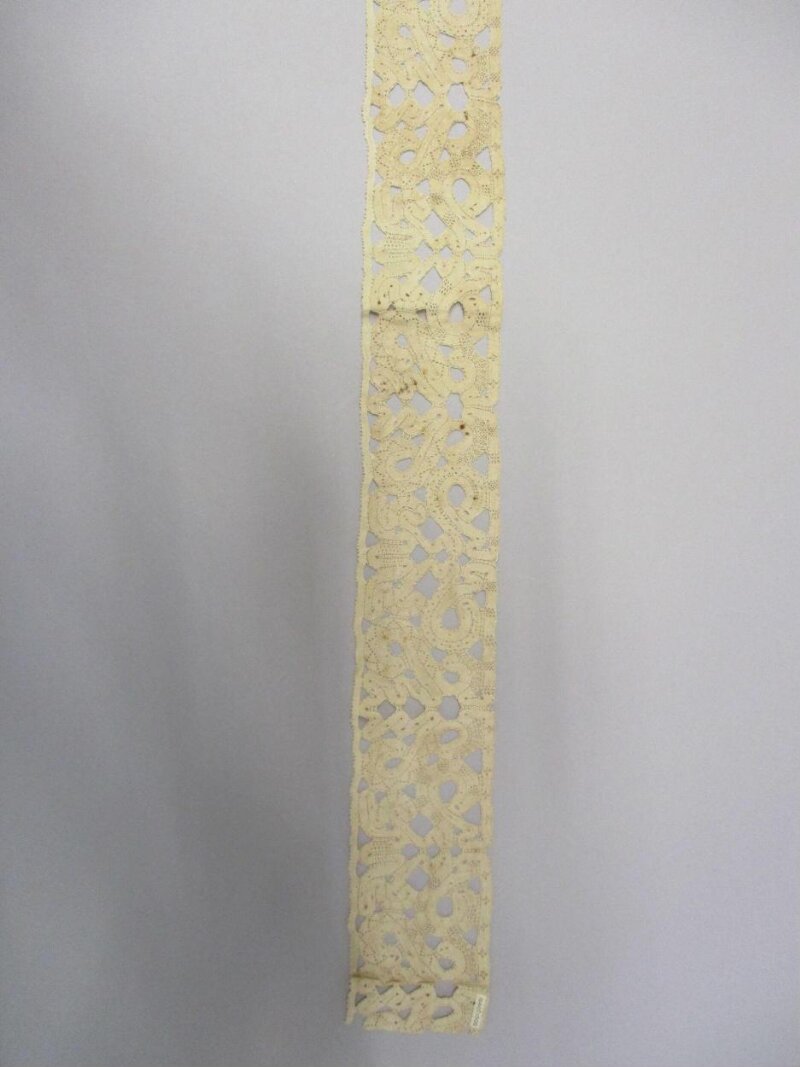
Couture Archaeology Report: The Structural Poetry of 17th-Century Lace
Subject: Technical Deconstruction of 17th-Century Point de France and Venetian Gros Point Lace.
Origin: France & Italy, c. 1660-1690.
Analyst: Senior Textile Historian, Natalie Fashion Atelier.
Purpose: To excavate the material intelligence of historical lace-making and propose its translation into the 2026 luxury silhouette lexicon.
I. Technical Deconstruction: Anatomy of an Airy Architecture
The 17th century witnessed lace's evolution from a delicate trim to a primary textile of sovereign power and wealth. Our analysis focuses on two pinnacle techniques: the needle lace (Point de France) and the bobbin lace (Venetian Gros Point). Contrary to their ethereal appearance, these laces are feats of structural engineering.
Point de France (Needle Lace): This is a constructive technique, building form from void. Using a single needle and thread, the lacemaker worked atop a parchment pattern, creating a network of buttonhole stitches (point de bride) to form the ground, or réseau. The motifs—floral sprays, acanthus leaves, Baroque scrolls (ordonnance)—were then darned into this net with dense, continuous stitching, creating a pronounced, sculptural relief. The integrity of the entire piece relies on the tensile strength and precision of each individual stitch, a monolithic structure born from singular, cumulative acts.
Venetian Gros Point (Bobbin Lace): In contrast, this is a deconstructive or plaiting technique. Dozens of bobbins, each holding a thread, are twisted and crossed over a pillow according to a complex pattern. The "gros point" or "raised work" is its defining characteristic: areas of dense, padded stitching (cordonnet) outline the motifs, creating a dramatic, three-dimensional effect akin to ivory or bas-relief carving. The ground is typically a hexagonal fond de neige (snowflake ground), a geometric stability that counterbalances the organic, voluptuous motifs. The structure is one of tension and interconnection; every thread is interdependent, and the collapse of one junction compromises the whole.
II. Material Materiality: The Substance of Light
The period's material choices were not merely aesthetic but intrinsic to the technical execution and symbolic language.
Thread: Finely spun linen thread was the paramount substrate. Its inherent stiffness held the demanding sculptural forms of Gros Point, while its matte, flaxen sheen allowed for exquisite chiaroscuro, catching light in the peaks and casting shadows in the valleys of the relief. Occasional use of bleached white or ecru created subtle tonal hierarchies. The material's resistance was essential—it had to withstand immense tension on the bobbin pillow and repetitive piercing by the needle without fraying.
Material Intelligence: The lace was not applied but was the garment itself—vast collars (rabats), engageantes (sleeve ruffles), and entire bodices. This demanded a material that could transition from fluid drape at the neck to rigid structure at the stomacher. The solution lay in the technique's density gradient: lighter réseau for flexibility, densely packed cordonnet for architectural support. The lace was its own internal corsetry, a paradox of strength and fragility.
III. Translation: 2026 Luxury Silhouette Proposals
For the 2026 Natalie Atelier collection, we propose not replication, but a translation of this material intelligence into a contemporary architectural idiom. The goal is to manifest the structural principles and philosophical contrast of 17th-century lace in modern materials and forms.
Proposal A: "Monolithic Darn" – The Needle Lace Legacy
This silhouette group interprets the constructive, additive nature of Point de France.
Technique: Utilize advanced 3D-printing with liquid polymer resins onto a soluble mesh ground. The "darning" will be rendered in varying densities, creating seamless garments where the "lace" is the entire woven structure. Motifs are translated into abstract, algorithmic growth patterns—recalling Baroque scrolls through parametric design.
Silhouette & Materiality: A columnar gown or a sharp-tailored blazer where the polymer lace provides both surface ornament and the garment's primary structural integrity. The material, while technically innovative, retains a linen-like matte finish. Key Innovation: Gradient rigidity—softer, more open "net" at the joints for movement, denser, sculptural "darning" across the bodice and shoulders to create shape without traditional underpinnings.
Proposal B: "Tension Field" – The Bobbin Lace Legacy
This group embodies the interdependent, tensile system of Venetian Gros Point.
Technique: Employ aerospace-grade micro-filaments (e.g., ultra-high-molecular-weight polyethylene) and precision laser-bonding to recreate the plaited, tension-based structure. The cordonnet is reinterpreted as channels of fused material or injected silicone, creating raised, tactile lines.
Silhouette & Materiality: Propose fluid, bias-cut foundations in liquid satin or matte jersey. Over this, apply expansive panels of the engineered "tension lace" as exoskeletal overlays. A slip dress becomes a study in contrast: the soft, clinging base versus the rigid, geometric lace web suspended over it, creating dynamic negative space. Alternatively, create a structured cocktail dress where the lace panel itself, stiffened by its own internal tension, forms the entire corseted bodice, attached only at key stress points.
IV. Synthesis & Conclusion: The New Ordonnance
The 17th-century lacemaker was an architect of air. For 2026, Natalie Atelier must become an architect of intention. The core takeaways for translation are:
1. Structural Ornament: Ornament must resume its historical role as structure. Embellishment is not applied; it is constitutive.
2. Graded Materiality: A single textile must perform multiple functions—support, drape, transparency—through calculated variations in density and technique.
3. Philosophical Contrast: Embrace the dialectic at the heart of this archaeology: the monolithic vs. the plaited, the constructed vs. the tension-held. This should manifest as a clear dichotomy within the collection, offering distinct but philosophically linked silhouettes.
By deconstructing the lace not as a mere pattern, but as a system of material logic, we can engineer a new luxury for 2026—one that speaks of heritage through hyper-innovation, replacing nostalgia with a profound and wearable structural poetry.