The Strip as Structural Line: Deconstructing Classical Elegance for 2026
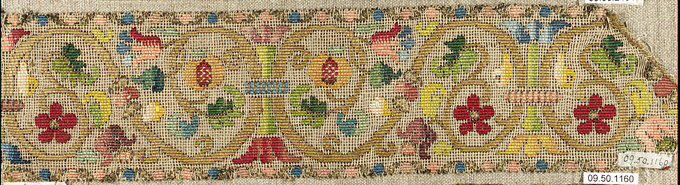
Within the isolated archive of Natalie Fashion Atelier, the motif of the strip has been excavated not as a decorative afterthought, but as a primary architectural principle. In the context of global heritage, the strip—whether a ribbon of embroidered net, a band of buratto lace, or a meticulously executed punto à rammendo—represents a fundamental unit of construction. This research artifact deconstructs the classical elegance of these linear elements, tracing their lineage from historical craftsmanship to their radical re-interpretation for the 2026 luxury silhouette. The strip is not merely a pattern; it is a structural logic, a method of delineating space on the body, and a dialogue between absence and presence.
Heritage Lineage: The Strip in Global Craft
The aesthetic archaeology of the strip reveals a universal yet distinct language. From the narrow, woven bands of buratto used in Renaissance Italian textiles to the intricate, darning-like stitches of punto à rammendo employed in 17th-century French linens, the strip has historically served as both a functional edge and a decorative border. In Japanese sashiko or the geometric bands of Andean weaving, the strip is a record of repetition, a testament to the hand's rhythm. For the 2026 collection, we do not replicate these forms; we extract their structural DNA. The classical elegance of a silk ribbon or a netted band is its inherent tension—it holds, it frames, it defines. This tension becomes the core of our new silhouette language.
Materiality as Structural Syntax: Embroidered Net, Buratto, Punto à Rammendo
The materials selected for this investigation—embroidered net, buratto, punto à rammendo, and silk—are not merely decorative surfaces. They are the syntax of our deconstruction.
Embroidered net provides a ground of transparency. The net itself is a grid of strips, a woven void. When embroidered, the strip becomes a line of density against the open field. For 2026, we utilize this contrast to create optical architecture. A gown’s silhouette is not cut from a solid fabric; it is built from parallel strips of embroidered net, spaced to reveal the body in precise intervals. The classical elegance of a column dress is deconstructed into a series of vertical bands, each one a self-contained structural element, yet together forming a cohesive, fluid form.
Buratto, a historical gauze with a distinct, open weave, offers a different kind of strip. Its inherent rigidity, when cut on the bias, creates a strip that can be shaped into sculptural curves. We employ narrow strips of buratto as boning, not hidden within a lining, but exposed as an exoskeleton. These strips, hand-stitched with punto à rammendo at their junctions, create a lattice that defines the silhouette from the outside in. The classical elegance of a corseted waist is reinterpreted as a series of articulated, breathable bands that move with the body while maintaining a precise, architectural line.
Punto à rammendo, the darning stitch, is the most intimate of these techniques. Historically used for invisible mending, here it becomes a visible, structural tool. Strips of silk are joined not by seams, but by dense, parallel rows of punto à rammendo. This creates a flexible, yet incredibly strong, linear joint. The strip is no longer a cut edge; it is a constructed line. For the 2026 silhouette, this allows for radical draping. A single, continuous strip of silk, mended to itself at strategic points, can form a complete bodice or a spiraling skirt. The classical elegance of a draped Grecian gown is re-articulated through the precision of the darning stitch, creating a silhouette that is both ancient and futuristic.
From Archive to Silhouette: The 2026 Strip Construction
The transition from historical artifact to 2026 high-end silhouette requires a shift in perspective. We are not designing a dress with a strip pattern; we are designing a dress that is a system of strips.
The Vertical Strip Silhouette: A floor-length evening gown is constructed from twelve parallel strips of embroidered net, each 8 centimeters wide. The strips are not sewn together along their entire length. Instead, they are connected at the shoulder, at the hip, and at the hem using punto à rammendo in a contrasting silk thread. Between these connection points, the strips float, creating a controlled, vertical aperture. The classical elegance of a column is deconstructed into a series of independent, yet related, lines. The body is revealed in fragments, the silhouette defined by the negative space between the strips. This is not nudity; it is architectural transparency.
The Spiral Strip Silhouette: A bias-cut skirt is composed of a single, continuous strip of buratto, 15 meters long and 20 centimeters wide. This strip is spiraled around the body, its edges joined with a dense punto à rammendo stitch. The result is a silhouette that is both rigid and fluid. The buratto provides structure, while the spiral construction allows for an unprecedented range of motion. The classical elegance of a mermaid skirt is reimagined as a dynamic, kinetic form. The strip is not a border; it is the entire garment, a ribbon of structural lace that wraps the body in a continuous line.
The Lattice Strip Silhouette: A cocktail dress uses a grid of silk strips, each 3 centimeters wide, laid on the bias. The intersections are secured with punto à rammendo in a tonal silk. This creates a flexible, diamond-patterned lattice. The dress has no seams in the traditional sense; its shape is entirely determined by the tension of the lattice. The classical elegance of a fitted sheath is deconstructed into a web of lines. The silhouette is not a solid form; it is a field of vectors, a map of the body’s topography.
Conclusion: The Strip as a New Classical Language
The isolated aesthetic archaeology of the strip, when studied through the lens of global heritage and executed with the technical mastery of embroidered net, buratto, punto à rammendo, and silk, yields a radical proposition for the 2026 luxury silhouette. The strip is no longer a decorative detail. It is the fundamental unit of construction, the line that defines volume, the stitch that creates form. This is not a rejection of classical elegance, but its deconstruction and re-synthesis. The 2026 silhouette is a system of lines, a dialogue between the hand and the body, a testament to the enduring power of the strip as a primary architectural element in haute couture.