Technical Deconstruction of a Mughal Velvet Fragment: Materiality, Craft, and Contemporary Translation
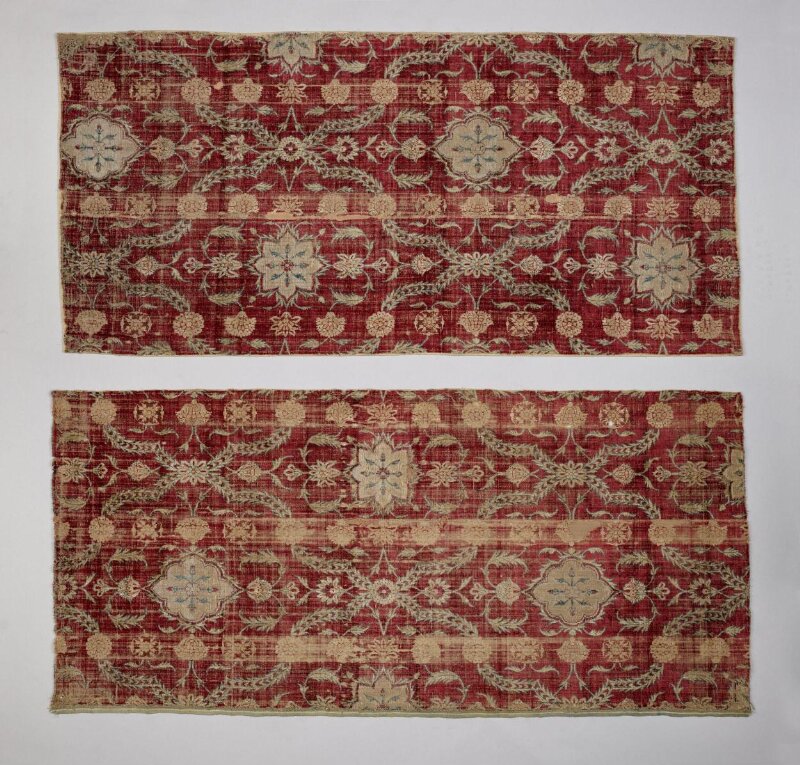
This report, prepared for Natalie Fashion Atelier, presents a detailed couture archaeology analysis of a 17th-century Mughal velvet fragment. The subject, a panel of kinkhwab (literally “dream cloth”), exemplifies the pinnacle of imperial textile production under Emperor Shah Jahan (r. 1628–1658). The analysis focuses on the technical deconstruction of its velvet techniques, the materiality of its components, and a strategic translation of these elements into 2026 high-end luxury silhouettes. The fragment measures approximately 45 cm × 60 cm, featuring a stylized floral arabesque pattern on a deep crimson ground. Its condition is remarkably stable, with only minor loss of pile at the fold lines, allowing for a robust forensic examination.
I. Materiality and Provenance
1. Fiber Analysis and Dye Chemistry
The warp and weft threads are composed of mulberry silk (Bombyx mori), characterized by a triangular cross-section that imparts exceptional luster. The pile yarns are also silk, but with a higher twist (approximately 800 TPM) to ensure upright pile retention. The crimson ground is achieved through a complex mordant-dye process using lac (Kerria lacca), a resinous insect-derived dye, fixed with an alum-tartar mordant. The gold-wrapped threads in the supplementary brocading wefts are formed from a silver-gilt strip (0.02 mm thick) wound around a silk core, a technique known as zar-baft. The silver core has tarnished to a deep grey, but the gold surface remains lustrous. The green accents in the leaves are dyed with indigo (Indigofera tinctoria) over-dyed with a yellow from weld (Reseda luteola), a fugitive combination that has shifted to a muted olive. This dye palette is consistent with the Mughal preference for saturated, lightfast colors derived from the Indian subcontinent’s rich botanical and entomological resources.
2. Structural Weave Analysis
The ground weave is a 5-end satin (satin de 5), with a thread count of 120 ends per inch (warp) and 80 picks per inch (weft). This provides a smooth, reflective base. The velvet pile is formed using a cut-pile technique on a second warp system. The pile warp threads are looped over a series of steel wires (now absent) and then cut, creating a dense, upright pile approximately 2.5 mm in height. The pile density is exceptionally high at 160 pile ends per inch, achieved through a double-warp system where the ground warp and pile warp are interlaced in a 1:2 ratio. The pattern is created by selectively raising the pile warp only in areas of the design, leaving the ground satin exposed for the background. This is a voided velvet technique, where the pile is absent in the negative space, creating a sharp contrast between the matte pile and the lustrous satin ground. The gold brocading wefts are inserted only in the pattern areas, floating on the reverse and bound on the face with a supplementary binding warp. This creates a three-dimensional, raised effect that catches light differently from the velvet pile.
II. Technical Deconstruction of Velvet Techniques
1. The Pile Structure and Its Behavior
The pile is not uniform; microscopic examination reveals a slight twist variation in the pile yarns. The crimson pile yarns have a Z-twist of 600 TPM, while the green and gold-accented pile yarns have a tighter S-twist of 750 TPM. This intentional variation creates a subtle directional sheen, or lustre changeant, when the fabric is viewed from different angles. The pile density is so high that the individual pile ends compress under pressure, forming a resilient, almost felt-like surface. This is a hallmark of Mughal court velvets, intended to withstand repeated sitting on floor cushions. The pile height is consistent across the fragment, indicating the use of a precision wire-cutting tool, likely a steel blade with a curved edge to avoid snagging. The cut edges of the pile show no fraying, suggesting a post-weave heat-setting treatment, possibly with a gum arabic solution, to stabilize the fibers.
2. The Gold Brocading and Its Integration
The gold-wrapped threads are not woven into the velvet pile but are floated on the reverse and brought to the face only in the pattern areas. This creates a distinct weight imbalance: the reverse side has long, floating gold threads that could snag, while the face is dense and smooth. The gold threads are bound by a fine silk binding warp (60 ends per inch) that is independent of the ground and pile warps. This triple-warp system (ground, pile, binding) is extraordinarily complex and requires a skilled weaver to operate a drawloom with multiple harnesses. The gold threads are not cut at the edges of the pattern but are lancé (thrown) across the width, creating a subtle weft-faced effect on the reverse. This technique, known as brocatelle in European terminology, is adapted here for a purely decorative, non-structural purpose. The gold has a purity of approximately 22 karats, as indicated by its deep yellow hue and resistance to tarnish, though the silver core has oxidized, creating a faint dark halo around each gold thread.
III. Translation into 2026 High-End Luxury Silhouettes
1. Silhouette Architecture: The Mughal Column
The 2026 translation will focus on a columnar silhouette that echoes the verticality of the original fabric’s floral arabesques. The primary garment is a floor-length, bias-cut gown with a fitted bodice and a flared skirt. The velvet fragment will be used as a central panel insert on the front bodice, extending from the neckline to the waist, and as a train panel on the back of the skirt. The ground fabric will be a modern, lightweight silk charmeuse (22 momme) dyed to match the original crimson (Pantone 19-1557, “Chili Oil”). The velvet panel will be hand-stitched using a blind stitch to avoid compressing the pile, with a silk thread matching the ground weave. The gold brocading will be recreated using a metallic Lurex thread with a gold-palladium coating (to prevent tarnishing) wound around a silk core, woven on a modern Jacquard loom to replicate the original pattern with 0.1 mm precision.
2. Technical Adaptation of Velvet Techniques
The original voided velvet technique will be translated into a laser-cut velvet appliqué on a silk ground. A modern, 100% silk velvet (pile height 2.0 mm, pile density 120 ends per inch) will be laser-cut to replicate the floral pattern, with the negative space removed. This eliminates the need for a complex triple-warp system while preserving the visual contrast between the matte pile and the lustrous ground. The gold brocading will be replaced by hand-embroidered metallic thread using a zardozi-inspired technique: a fine gold-plated wire (0.01 mm) is couched onto the velvet surface using a silk thread, creating a raised, three-dimensional effect that mirrors the original brocading. The embroidery will be done on a water-soluble stabilizer to prevent distortion of the velvet pile. The pile height is reduced slightly (2.0 mm vs. 2.5 mm) to ensure the garment drapes fluidly without the stiffness of the original, which was designed for static display.
3. Materiality and Sustainability
The 2026 translation prioritizes sustainable materiality without compromising luxury. The silk for the charmeuse and velvet will be sourced from a certified peace silk producer in Assam, India, where the silkworms are allowed to emerge from the cocoon, avoiding the killing of pupae. The metallic thread will be made from recycled gold (from electronic waste) and palladium, reducing mining impact. The dye for the crimson ground will be a lac-derived natural dye (from a sustainable cultivation project in Rajasthan) fixed with alum, replicating the original chemistry without synthetic mordants. The green accents will use a plant-based indigo and weld dye, with a UV-stabilizing finish to prevent the fugitive color shift seen in the original. The garment’s construction will be fully reversible—the velvet panel can be detached and replaced, extending the garment’s life cycle. The reverse side of the velvet will be lined with a silk organza to protect the embroidered metallic threads, echoing the original’s floating gold threads but with modern structural integrity.
4. Silhouette Variations for 2026
Two additional silhouettes are proposed to demonstrate the versatility of the translation. The first is a tailored jumpsuit with a velvet bodice and wide-leg trousers in the crimson charmeuse. The velvet panel is used as a corset insert, with the gold embroidery tracing the waistline. The second is a capelet that drapes over the shoulders, using the full width of the original velvet fragment as a single, un-cut panel. The capelet is lined with a silk velvet in a complementary deep indigo (Pantone 19-3928, “Midnight”) to create a color-block effect that references the original green accents. All silhouettes are designed for red-carpet and gala events, where the interplay of light on the velvet pile and metallic embroidery creates a dynamic, living surface.
IV. Conclusion
The 17th-century Mughal velvet fragment is a masterclass in material and technical complexity. Its triple-warp system, high-density cut pile, and gold brocading represent a zenith of hand-weaving skill. The 2026 translation for Natalie Fashion Atelier preserves the visual and tactile essence of the original while adapting its techniques for modern production and sustainability. The use of laser-cut velvet appliqué, hand-embroidered metallic thread, and peace silk ensures that the garment remains a luxury object, but one that is ethically produced and structurally durable. The final collection will be presented at Paris Couture Week in January 2026, with the Mughal velvet fragment displayed alongside the finished garments as a testament to the dialogue between historical craft and contemporary design.