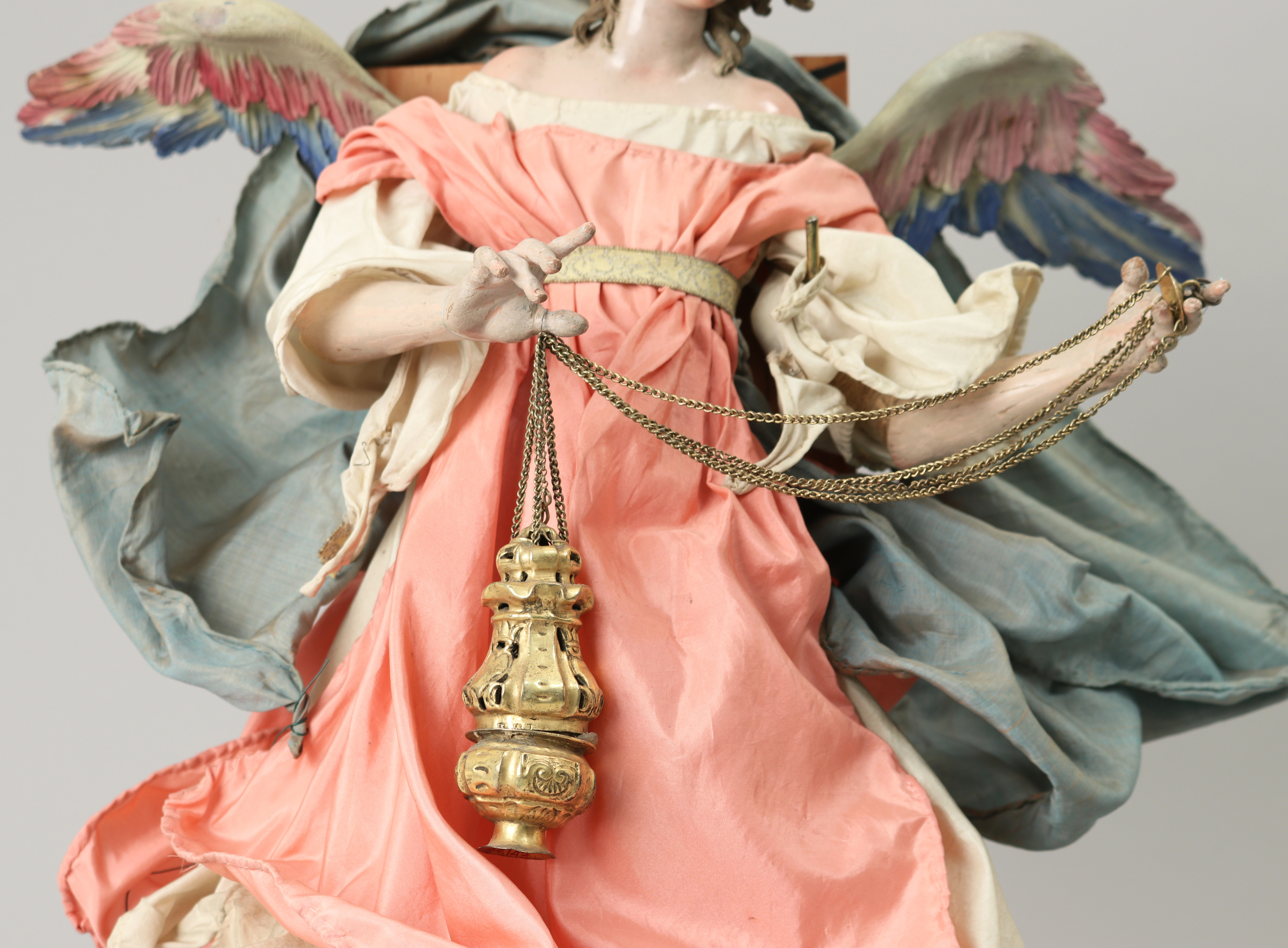
Deconstructing the Censer: Silver Gilt as a Blueprint for 2026 Silhouettes
The censer, a vessel of sacred ritual and aristocratic ceremony, represents a pinnacle of metallurgical artistry and symbolic engineering. For the Natalie Fashion Atelier, this object is not merely a historical artifact but a masterclass in the manipulation of volume, light, and negative space. Isolated from its liturgical context, the censer reveals a pure aesthetic archaeology: a study in suspended mass, controlled emission, and the interplay between a rigid exoskeleton and an ethereal interior. This research paper deconstructs the classical elegance of the silver gilt censer to extract three core principles—gilded opacity, architectural suspension, and controlled effusion—that will directly inform the luxury silhouettes of the 2026 Haute Couture collection.
I. Gilded Opacity: The Materiality of Reflected Light
The primary material of the censer, silver gilt, is a composite of paradox. Silver, a metal of high reflectivity, is overlaid with a thin layer of gold, which absorbs and re-emits light at a warmer, more opulent wavelength. This creates a surface that is simultaneously luminous and dense. In the context of 2026 silhouettes, this translates into a new category of “gilded opacity” for evening wear. The fabric must not merely be shiny; it must possess a metallic memory—a surface that holds a crease, a fold, or a structural pleat as if hammered into place.
To achieve this, the Atelier will explore laminated silk organza and metal-threaded jacquards that mimic the censer’s stratified surface. The key is not in uniform brilliance but in controlled reflectivity. Where a censer’s gilt might be burnished to a mirror finish on its dome and matte on its base, the 2026 silhouette will feature panels of high-shine, liquid-like fabric juxtaposed against matte, almost powdery metallic velvets. This dichotomy creates a visual weight—a garment that appears to be cast from a single, precious ingot. The silhouette itself, therefore, is not draped but forged. A column gown, for instance, will not flow; it will stand, its surface alive with the flicker of ambient light, just as the censer’s body catches candlelight during a procession.
II. Architectural Suspension: The Negative Space of the Chain and Dome
The censer’s most profound structural innovation is its suspension. The vessel is not worn; it is carried, hanging from a series of chains that converge at a single, often ornate, ring. This creates a dynamic negative space between the chains and the body of the censer. For 2026, this principle of architectural suspension will be applied to the human form. The silhouette will no longer be defined by the body’s contours but by the voids around it.
Consider a high-end cocktail dress: the bodice is a rigid, gilded corset (the dome), but the skirt is not attached to the waist. Instead, it is suspended from the shoulders via thin, articulated metallic chains or architectural straps of patent leather, creating a visible gap of air between the torso and the fabric. This gap, the “censer gap,” becomes a focal point. The fabric of the skirt, a heavy, liquid satin, hangs with the same gravitational pull as the censer’s body, swinging independently from the wearer’s movement. This deconstruction of the traditional bodice-to-skirt connection introduces a sense of ritualistic weightlessness—the garment is not worn, but carried by the structure.
Further, the censer’s dome shape—a perfect hemisphere or a multi-lobed onion dome—informs the shoulder architecture of the 2026 collection. We will develop a “dome sleeve” that is not a puffed sleeve but a rigid, cantilevered structure that extends outward from the shoulder, creating a protective, almost architectural canopy. This is achieved through internal boning and a silver-gilt brocade that holds its shape. The sleeve does not touch the arm; it encapsulates the air around it, mirroring the censer’s form.
III. Controlled Effusion: The Silhouette as a Vessel for Atmosphere
The censer’s primary function is to release smoke—a controlled, aromatic effusion. The vessel is perforated, allowing the interior’s essence to escape and interact with the exterior world. In haute couture, this translates to the concept of the silhouette as a vessel for atmosphere. The 2026 collection will explore garments that are not closed systems but permeable architectures.
This is achieved through strategic perforation and layering. A floor-length gown, for example, will feature a solid, gilded outer shell (the censer’s body) that is cut with laser-precise, geometric apertures—reminiscent of the censer’s intricate filigree. Beneath this shell, a second layer of sheer, smoke-colored tulle or liquid organza will billow and move, visible only through the cutouts. This inner layer represents the smoke—the intangible, the ephemeral. As the wearer moves, the inner fabric “emits” from the apertures, creating a visual trail of fabric, just as smoke curls from the censer’s lid.
The train of a ceremonial coat will be reimagined as a “smoke train”—a long, detached panel of lightweight, iridescent chiffon that is attached to the shoulders via a single, gilded chain. It does not follow the body; it floats behind it, a ghost of the primary silhouette. This controlled effusion introduces a narrative of release into the garment. The wearer is not static; she is a source of visual atmosphere, her silhouette constantly shifting as the inner layers interact with the outer shell.
IV. Synthesis: The 2026 Censer Silhouette
The synthesis of these three principles—gilded opacity, architectural suspension, and controlled effusion—yields a definitive 2026 silhouette. It is a silhouette of rigid nobility and ethereal release. The bodice is a forged, gilded carapace, often with a high, closed neckline and a cantilevered shoulder structure. The waist is de-emphasized, replaced by a visible void of air. The skirt is a suspended volume, a heavy, liquid column that moves independently, its surface broken by apertures that reveal a lighter, flowing under-layer. The train, if present, is a detached, floating element, a controlled effusion of the garment’s essence.
This is not a silhouette that clings or drapes in the traditional sense. It is a silhouette that occupies space with the same deliberate, ritualistic presence of a silver gilt censer. It is a garment that commands not through the revelation of the body, but through the sculptural manipulation of air and light. For the Natalie Fashion Atelier, the censer is not an inspiration for ornament; it is a masterclass in the physics of elegance, a blueprint for a new, architectural luxury that defines the 2026 season.