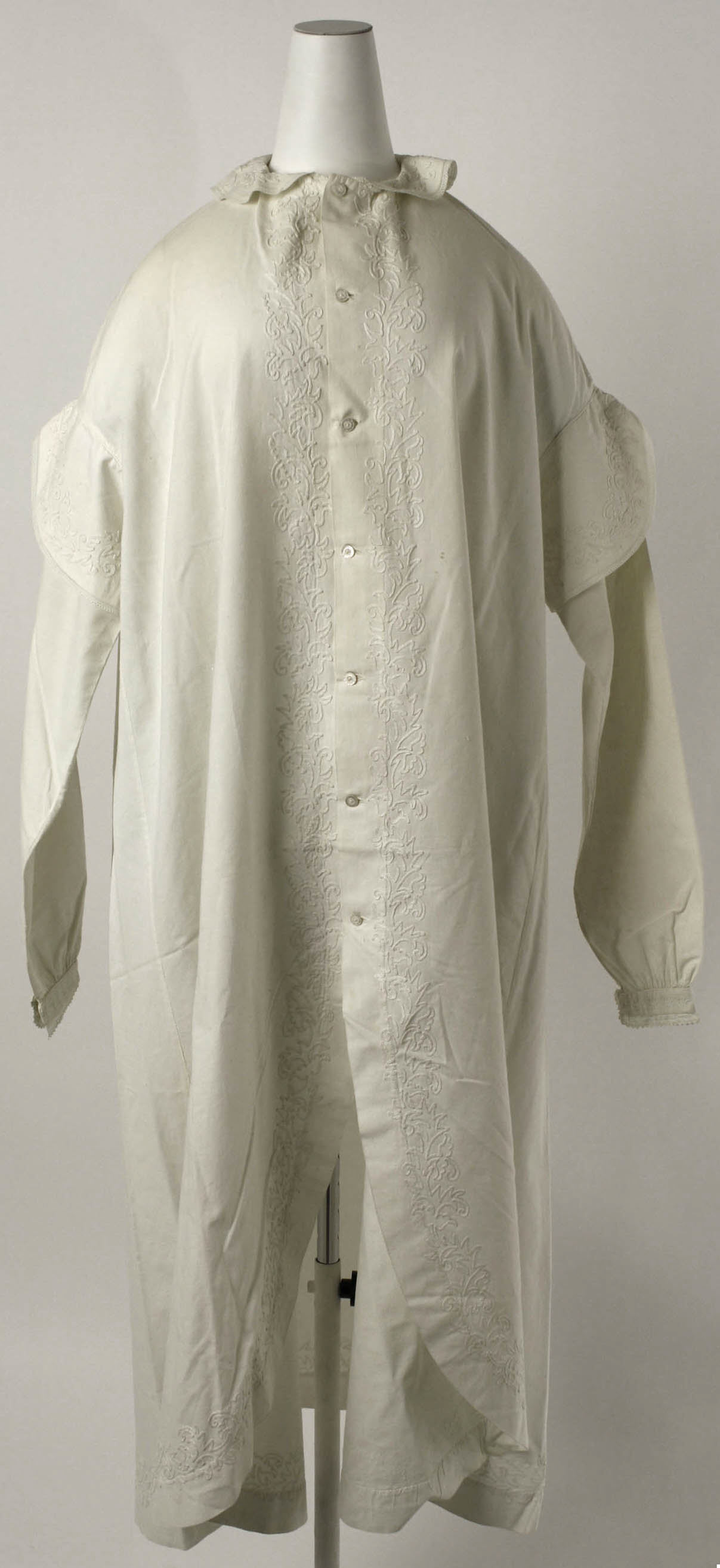
Archaeology of the At-Home Salon: The Cotton Dressing Gown as a Canvas of Unspoken Elegance
Within the isolated context of aesthetic archaeology, the historical dressing gown emerges not as a mere garment of repose, but as a profound sartorial manifesto on the private performance of self. Eschewing the overt spectacle of the boulevard, this artifact of the at-home salon—particularly in its European, cotton incarnations from the 18th and 19th centuries—codifies a dialectic of ease and authority, fluidity and structure. For Natalie Fashion Atelier, this archive is not a relic but a living lexicon. The classical elegance of the cotton dressing gown is deconstructed not to dismantle, but to distill its core principles: a mastery of volume through lightweight materiality, a strategic revelation of the layered self, and an elegance derived from tactile, cerebral luxury rather than ostentation. This technical analysis posits that these principles directly inform the 2026 luxury silhouette, transitioning the dressing gown’s intimate grammar into the syntax of high-day and evening wear.
Deconstructing the Classical Code: Volume, Void, and the Cotton Substrate
The historical cotton dressing gown—be it a French robe de chambre or an English banyan—leveraged its materiality to architect a specific silhouette. High-quality, finely woven cotton, such as Indian madras or later, European jaconet, provided a substrate that was simultaneously substantial and yielding. This allowed for generous, architectonic cuts—wide kimono sleeves, deep box pleats from the shoulder, and A-line skirts—that created a majestic, enveloping volume. Yet, crucially, the lightness of cotton meant this volume was dynamic, not static; it moved with the wearer’s body, creating a kinetic sculpture of folds and voids. The elegance was in the negation of constraint. The silhouette was defined by the space between the body and the cloth, a concept we term the authoritative void. This stands in direct opposition to the period’s structured public fashion, offering a blueprint for modern luxury that prioritizes sovereign comfort and kinetic form.
The Stratigraphy of Intimacy: Layering as Narrative
Archival examples reveal the dressing gown was rarely a solitary layer. It was worn over a shirt, waistcoat, and breeches, or a chemise. This intentional stratification created a narrative of revealed and concealed elements—a cuff protruding, a collar framing the neck, a hint of a finer fabric beneath at the parted front. This was a calculated composition of peekaboo refinement, a dialogue between the informal outer shell and the formal (or intimately personal) inner layers. The elegance was in the suggestion, the partial disclosure. The cotton gown itself, often featuring minimal closure systems (a simple tie belt), acted as a curtain to this layered performance. This stratigraphic dressing transforms the act of wearing into a continuous, subtle revelation, a concept ripe for translation into a contemporary layered silhouette that rejects monolithic, one-dimensional garments.
Material Intelligence: The Haptic Language of Elevated Cotton
The luxury of these historical pieces resided profoundly in their haptic and visual material intelligence. Cotton was not a humble choice but a deliberate one for its hygroscopic, breathable, and tactile properties. The elegance was experienced by the wearer first: the cool kiss of fine cotton on the skin, the soft rustle of a glazed finish, the crisp fall of a pristine linen collar attached to a cotton body. This fostered a self-referential, internalized luxury—an elegance felt rather than merely seen. The fabric’s capacity for intricate detail—from delicate piping and hand-stitched seams to sophisticated woven jacquard patterns or intricate embroidery—further elevated it, proving that ornamentation need not be heavy to be profound. This establishes a critical tenet for 2026: luxury is a sensorial, personal experience before it is an external signifier.
Informing the 2026 Silhouette: From the Private Salon to the Public Sphere
The deconstructed codes of the historical cotton dressing gown provide a precise framework for the evolution of the 2026 luxury silhouette. The future lies in garments that carry the intelligence of private elegance into the public domain.
The Kinetic Volume Silhouette
2026 will see the maturation of the authoritative void. We project silhouettes built on expansive, circular cuts and bias-draped volumes that use advanced, high-twist cotton blends and featherweight technical cottons to create structure from emptiness. Imagine a tailored coat dress with the sweeping volume of a banyan, its shape held not by interfacing but by the engineered tension of the fabric itself, moving in a clean, dramatic arc around the body. Sleeves become architectural extensions, wide and deep, referencing the kimono cut but refined with internal articulation for modern movement. The silhouette is majestic yet effortless, commanding through its use of space rather than constriction.
The Stratified Transparency System
Layering evolves into a precise system of transparency and opacity. The 2026 wardrobe will feature pieces designed as interdependent strata. A sheer, embroidered cotton organza tunic, worn over a sleek matte cotton bodysuit and under a solid, sculpted cotton twill vest, creates a modern echo of the historical layered reveal. The closure systems—asymmetric ties, hidden magnetic closures, wrap constructions—will facilitate this stratified effect, allowing the wearer to modulate coverage and disclosure. This approach generates visual depth and intellectual intrigue, making the act of dressing a continuous curation.
The Haptic Couture Finish
Materiality becomes the primary ornament. For 2026, Natalie Fashion Atelier will champion haptic couture, where the value is engineered into the fabric’s hand-feel and performance. We will source extra-long-staple cottons, treated with natural enzyme washes for an incomparable softness, or develop cotton-silk-cashmere blends that offer a warm, fluid drape. Embellishment, when present, will be integral: laser-cut fil coupé patterns on dense cotton poplin, or heat-pressed textural finishes that create a subtle, light-capturing topography. The belt—the sole accessory of the historical gown—is reimagined as a focal point: a wide band of hand-loomed cotton ottoman or a slender tie of braided horsehair, serving as the minimalist punctuation to the voluminous silhouette.
In conclusion, the isolated archaeology of the European cotton dressing gown yields a potent design philosophy for the future. By deconstructing its classical elegance—its mastery of the void, its narrative layering, and its haptic intelligence—Natalie Fashion Atelier extracts a blueprint for 2026. The resulting luxury silhouette is one of sovereign ease, cerebral composition, and profound materiality. It is a silhouette that does not shout but resonates, carrying the quiet authority of the private salon into the bright theatre of the modern world, proving that true elegance, like the finest cotton, is both resilient and profoundly soft to the touch.