The Isolated Aesthetic Archaeology of a Chinese Silk Masterpiece
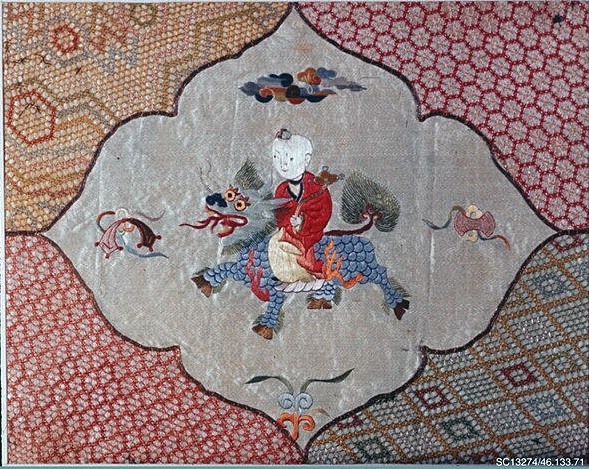
Within the hallowed archives of Natalie Fashion Atelier, we examine a singular artifact: a fragment of a late Ming dynasty court robe, preserved in near isolation from its original context. This piece, composed of a warp-faced silk ground with intricate metallic thread embroidery, represents a pinnacle of textile engineering and aesthetic philosophy. Its survival—divorced from the ceremonial, political, and social frameworks that once defined it—renders it a pure object of aesthetic archaeology. Here, the garment is not a historical document but a formal system of line, weight, and luminosity. For the 2026 haute couture silhouette, this isolated piece offers a radical lexicon: a dialogue between the tensile strength of silk and the structural grammar of metallic thread.
Materiality as Structural Syntax
The primary material, mulberry silk, possesses a unique tensile modulus that allows for both fluid draping and precise architectural support. In the original garment, this silk was woven in a satin weave, creating a lustrous surface that functioned as a negative space—a void of light—against which the metallic embroidery could assert its presence. For 2026, we reimagine this silk not as a passive ground but as an active structural agent. By engineering the silk’s yarn twist and weave density, we can produce a fabric that holds a sculptural silhouette without internal boning. A 2026 evening coat, for instance, might employ a double-faced silk satin with a high-thread count (600+ threads per inch) to achieve a liquid, gravity-defying shoulder line that recalls the robe’s original, unyielding formality.
The metallic thread—a composite of flattened gold-wrapped silk core—introduces a contrasting material logic. Unlike modern synthetic metallics, this thread possesses a distinct coefficient of friction and a weight-to-luminosity ratio that creates a micro-architecture on the fabric’s surface. In the archive piece, the thread is used in couching stitches, where it is laid on the surface and secured by a secondary silk thread. This technique produces a raised, three-dimensional topography that catches light in discrete, directional planes. For 2026, we translate this into structural embroidery: metallic threads are not merely decorative but serve as tension elements that define the silhouette’s internal geometry. A bias-cut gown, for example, could feature a lattice of metallic thread embroidery along the waist and hip, creating a compression zone that mimics the corsetry of the 19th century without its rigidity.
Deconstructing Classical Elegance: The Principle of Controlled Opulence
The classical elegance of this Chinese piece is not rooted in abundance but in restrained asymmetry. The original robe’s embroidery is concentrated on the shoulders and lower hem, leaving the torso as a field of unadorned silk. This negative-space composition is a masterclass in visual economy: the eye is drawn to the metallic thread’s brilliance precisely because it is framed by silence. For 2026, we deconstruct this principle into a silhouette strategy. The high-end silhouette will feature strategic opacity—zones of dense metallic embroidery that act as visual anchors, while the silk ground remains sheer or matte, creating a hierarchical flow of light and shadow.
Consider a 2026 column dress. The silk base is a charmeuse with a liquid drape. The metallic thread embroidery is applied not as a pattern but as a structural grid along the spine, shoulders, and side seams. This grid functions as an exoskeleton, allowing the dress to stand away from the body at the neckline while falling in a controlled, vertical cascade. The elegance derives from the tension between the soft, yielding silk and the rigid, luminous metallic thread. This is not decoration; it is a load-bearing aesthetic.
Informing 2026 Silhouettes: The Hybrid Form
The 2026 haute couture silhouette, as informed by this isolated artifact, rejects both historical revivalism and futuristic abstraction. Instead, it proposes a hybrid form that merges the structural logic of the Chinese robe with the ergonomic demands of contemporary movement. The key innovations are threefold:
1. The Floating Shoulder: The original robe’s wide, horizontal shoulder line was achieved through a combination of padded interlinings and the silk’s natural stiffness. For 2026, we achieve a similar effect using metallic thread embroidery as a structural cantilever. A shoulder yoke is entirely embroidered with a dense, herringbone pattern of gold-wrapped thread, which stiffens the silk into a self-supporting wing. This shoulder floats above the arm, creating a silhouette of poised authority without the bulk of historical padding.
2. The Compressed Waist: The original robe’s sash closure created a soft, cinched waist that contrasted with the broad shoulders. In 2026, we reinterpret this as a metallic thread corset integrated into the garment’s construction. A double-layer silk organza is embroidered with a spiral lattice of metallic thread from the bust to the hip. This lattice acts as a tension membrane, compressing the waist by 15-20% while allowing the silk to breathe. The result is a sculpted, hourglass silhouette that is both architectural and fluid.
3. The Weighted Hem: The original robe’s hem was weighted with metallic thread tassels to ensure a vertical, controlled drape. For 2026, we embed micro-weights—small, polished discs of oxidized silver—into the hem’s metallic thread embroidery. This creates a gravitational pull that ensures the skirt falls in a perfect, unbroken line, even in motion. The hem’s subtle oscillation as the wearer moves becomes a kinetic signature of the garment’s material intelligence.
Conclusion: The Silhouette as a System of Forces
This isolated Chinese artifact, stripped of its historical narrative, reveals a universal material logic. The silk and metallic thread are not mere materials but actors in a system of forces: tension, compression, luminosity, and weight. For the 2026 haute couture silhouette, we do not copy the past; we extract its structural grammar. The result is a garment that is both a tribute to classical elegance and a radical proposition for the future—a silhouette that stands as a monument to the dialogue between heritage and innovation.