Archaeology of the Fold: The Silk Compound Weave as a Structural Lexicon for 2026 Haute Couture
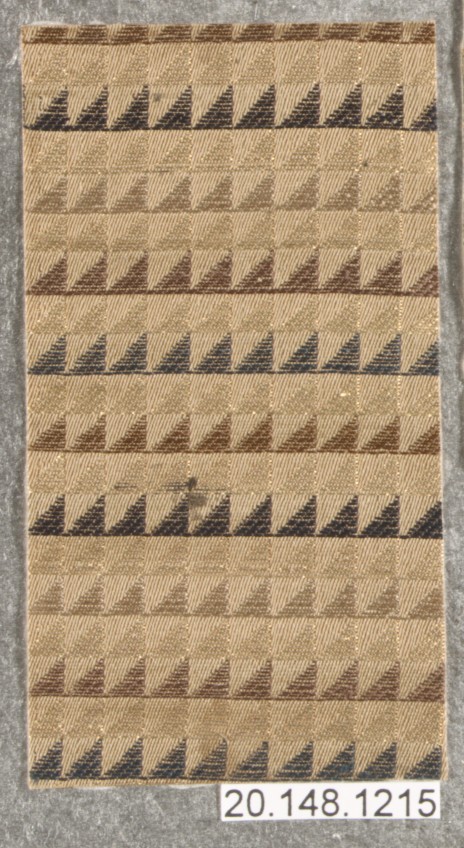
The artifact under examination—a fragment of a late-Edo period rinzu (damask) obi, preserved in a private Kyoto archive—presents a singular opportunity for aesthetic archaeology. This is not a garment in the Western sense, but a sculptural plane of silk and compound weave. Its structural integrity, born from a precise interplay of warp and weft, speaks to a philosophy of form that transcends mere drape. For Natalie Fashion Atelier, this isolated fragment becomes a generative matrix for 2026 silhouettes, challenging the atelier to translate a logic of rigid elegance into the fluid, architectural language of contemporary haute couture.
Deconstructing the Classical Elegance: The Logic of the Compound Weave
The classical elegance of this Japanese textile is not rooted in softness, but in a controlled tension. The compound weave—specifically a variant of nishiki (brocade) with a twill ground—creates a fabric of immense structural memory. Each thread is a load-bearing element. The silk, degummed and lustrous, is woven with a density that approaches a textile membrane. The pattern, a repeating geometric wave (seigaiha), is not printed but built into the very architecture of the cloth. This is elegance as structural inevitability.
The aesthetic archaeology reveals three core principles:
1. The Principle of the Rigid Fold: Unlike European silks that drape and yield, this compound weave retains a plastic memory. A fold is not a temporary crease but a permanent articulation of the fabric’s internal logic. The classical kimono silhouette exploits this, using the fabric’s stiffness to create sharp, architectural lines at the shoulder and collar.
2. The Principle of the Negative Space: The seigaiha pattern, composed of overlapping concentric circles, creates a visual rhythm that is both dense and airy. The compound weave allows for a simultaneous opacity and translucency—the warp threads create a solid ground, while the weft floats introduce a subtle, shimmering depth. This is not a surface; it is a stratified plane.
3. The Principle of the Load-Bearing Surface: The obi, as a garment, is a compressive structure. It cinches and supports the kimono, transforming a flat textile into a three-dimensional cylinder. The compound weave’s tensile strength allows it to function as a structural corset without the need for boning. The elegance is in the absence of visible support.
Materiality in Transition: From Archive to Atelier
To inform the 2026 haute couture silhouette, the atelier must first engage in a process of material translation. The original silk compound weave, while magnificent, is too rigid for the fluid, body-conscious lines of contemporary luxury. The solution lies in a deconstruction of the weave’s logic, not its literal reproduction.
Re-Engineering the Compound Weave for 2026
The atelier’s research proposes a hybrid construction: a base of ultra-fine Habotai silk (8 momme) for fluidity, overlaid with a laser-cut, bonded compound weave of silk organza and metallic Lurex. This new composite retains the structural memory of the original while introducing a weightless architecture. The seigahai motif is reinterpreted as a geometric relief, applied in panels that act as exoskeletal boning.
Technical Application for 2026 Silhouettes:
- The Sculpted Shoulder: The rigid fold principle manifests as a cantilevered shoulder. A single panel of the re-engineered compound weave, cut on the bias, is heat-set to create a permanent, swooping arc. This is not a padded shoulder; it is a fabric cantilever, supported by the weave’s own tensile strength. The silhouette is sharp, asymmetrical, and recalls the armor-like elegance of the samurai jinbaori (surcoat).
- The Compressive Bodice: The load-bearing surface principle is applied to the torso. A bodice is constructed from multiple, interlocking panels of the compound weave, each cut to follow the body’s natural curves. The seams are not sewn but laced with silk cord, creating a dynamic corset that can be adjusted for tension. The silhouette is an inverted triangle, emphasizing the waist through compression and release. The back is left open, revealing the skin as a negative space.
- The Fluid Train with a Rigid Core: The negative space principle informs a dramatic train. The base Habotai flows to the floor, but a central panel of the compound weave, shaped like a geometric fan, is inserted at the hip. This panel does not drape; it stands away from the body, creating a floating architectural element. The train is both liquid and solid, a paradox of movement and stillness.
2026 Silhouette: The Kōsei Silhouette (構造, Structure)
The final silhouette for the 2026 collection is named Kōsei, Japanese for “structure” or “composition.” It is a direct descendant of the classical obi and kimono, but re-imagined for the post-ergonomic body.
Key Characteristics of the Kōsei Silhouette
1. The Asymmetric Cantilever: The shoulder line is never horizontal. It rises on one side, forming a sharp, wing-like projection. This is achieved through a single, continuous piece of the re-engineered compound weave, folded and heat-set. The asymmetry is not decorative; it is a structural necessity to balance the fabric’s internal tension.
2. The Wrapped Core: The torso is defined by a spiral wrap of the compound weave, echoing the obi’s compressive function. This wrap is not a belt; it is a structural band that begins at the underbust, spirals down to the hip, and then flares into a geometric peplum. The wrap is secured with invisible magnetic closures, preserving the clean, unbroken surface.
3. The Stratified Hem: The hem is not a single line. It is a series of overlapping planes, each cut from a different density of the compound weave. The front hem is short and sharp, while the back extends into a geometric train. The layers are not sewn together; they are suspended from a internal silk frame, allowing them to move independently. This creates a kinetic sculpture that shifts with every step.
Conclusion: The Atelier as Archaeologist of Form
The isolated fragment of Edo-period compound weave is not a relic; it is a blueprint for innovation. By deconstructing its classical elegance—its rigid folds, its load-bearing surfaces, its stratified negative spaces—Natalie Fashion Atelier has derived a new structural grammar for 2026. The Kōsei silhouette is a testament to the power of aesthetic archaeology: it does not copy the past, but extracts its logic and re-embodies it in a form that is both timeless and radically new. The silk compound weave, once a symbol of static, ceremonial elegance, now becomes a dynamic, architectural language for the future of haute couture. The atelier’s work is complete when the fabric itself dictates the form, and the wearer becomes a living, moving archive of structural possibility.