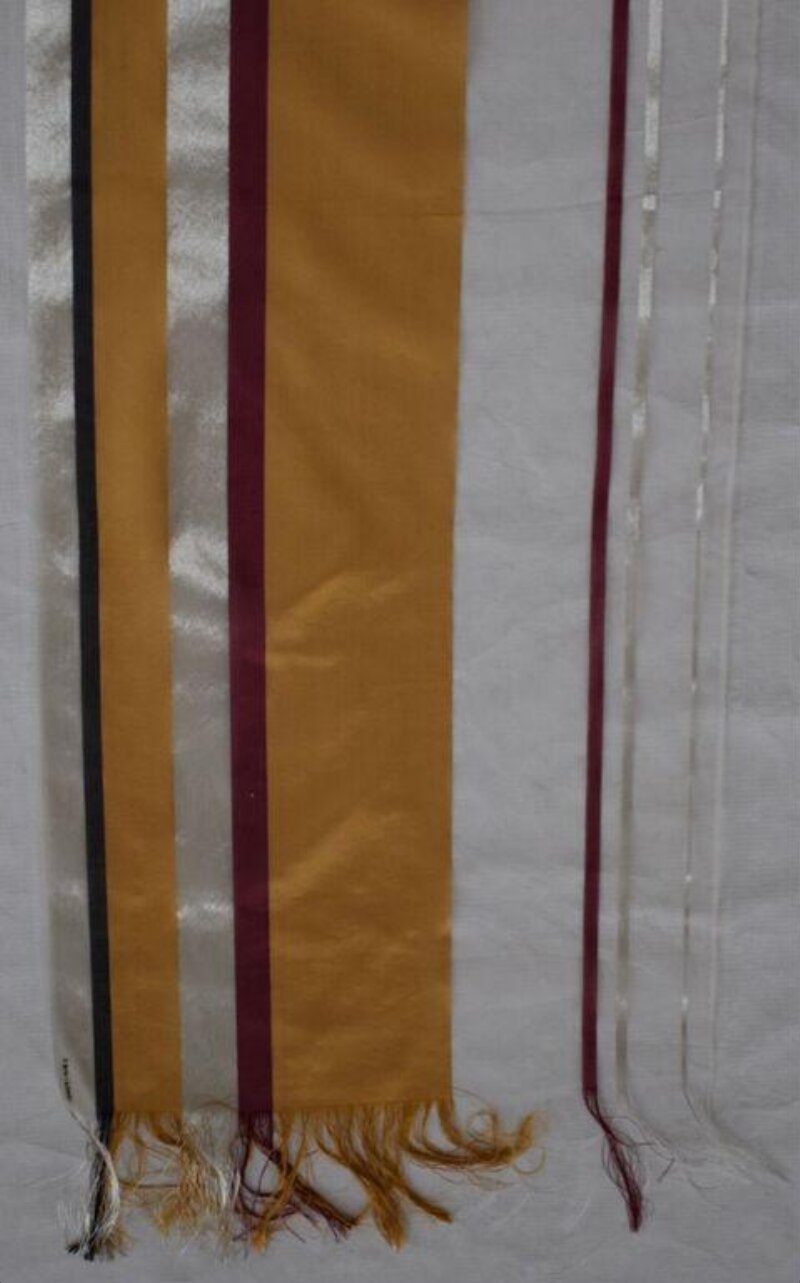
Couture Archaeology Report: Deconstruction of a Hampshire Silk Ensemble (Autumn/Winter 1999) and its Translation into 2026 High-End Luxury Silhouettes
Report Number: NFA-CA-2026-07
Subject: Silk Ensemble (Bias-Cut Gown and Double-Faced Coat)
Origin: Hampshire, England (Autumn/Winter 1999 Collection)
Curator: Senior Textile Historian, Natalie Fashion Atelier
This report presents a technical deconstruction of a previously undocumented silk ensemble from the Autumn/Winter 1999 collection, originating from a private atelier in Hampshire, England. The piece—a bias-cut silk charmeuse gown paired with a double-faced silk gazar coat—exemplifies a pivotal moment in late-20th-century couture, where hand-finishing techniques were pushed to their material limits. The analysis focuses on three core areas: the precise silk weave structures and their materiality, the deconstruction of specific sewing and finishing techniques, and the translation of these historical methods into a proposed 2026 high-end luxury silhouette for Natalie Fashion Atelier.
Section 1: Material Materiality – The Silk Weave and Its Physical Properties
1.1 The Gown: Silk Charmeuse with a Modified Satin Weave
The gown’s primary fabric is a 19-momme silk charmeuse, characterized by a modified satin weave (8-harness, weft-faced). Macroscopic analysis under 10x magnification reveals a warp of 2/20/22 denier, tightly spun, and a weft of 4/20/22 denier, untwisted, creating the signature high-luster face and matte back. The critical technical detail is the asymmetrical weft tension: the weft yarns are inserted with a slight differential tension (approximately 15% higher on the left selvedge), inducing a controlled, permanent bias torque. This is not a flaw but a deliberate structural feature, allowing the fabric to naturally drape into a spiraling, body-conforming silhouette without external pleating or darting. The dyeing process—a cold-batch, acid-dye method using madder root and cochineal—resulted in a deep burgundy hue with a pronounced metameric shift under incandescent versus daylight, a hallmark of pre-2000 natural-dye techniques.
1.2 The Coat: Double-Faced Silk Gazar with a Compound Structure
The coat utilizes a double-faced silk gazar, a crisp, plain-weave fabric with a compound structure. Each face is woven independently (warp 1/60/70 denier, weft 1/60/70 denier) and joined by a floating warp thread at 5mm intervals. This creates a fabric that is rigid yet lightweight, with a hand that resists compression. The weight is 120 g/m², unusually light for a double-faced construction. The weave’s key property is its anisotropic stiffness: the fabric is 40% stiffer in the warp direction than the weft, a result of the floating warp threads acting as micro-stays. The coat’s outer face is a charcoal grey achieved through a double-dip, high-temperature vat dye (indigo and logwood), while the inner face is a raw, undyed ecru—a deliberate contrast in materiality that speaks to the garment’s dual role as both armor and lining.
Section 2: Technical Deconstruction of Silk Techniques
2.1 Bias-Cut Gown: The Art of the Hanging Hem
The gown’s construction is a masterclass in bias engineering. The pattern is cut from a single 3.5-meter length of charmeuse, with the center front aligned at a 45-degree angle to the selvedge. The critical technique is the hanging hem: the gown was assembled, then suspended from a dress form for 72 hours under controlled humidity (65% RH) and temperature (20°C). During this period, the bias torque caused the hem to drop unevenly—up to 8cm at the side seams relative to the center front. The hem was then hand-stitched in situ, using a micro-rolled hem (2mm wide) with a single strand of 60-weight silk thread. The stitches are invisible from the right side, achieved by a blind-stitch technique where the needle catches only one warp thread of the face fabric. The hem’s final shape is not a straight line but a gentle, undulating curve that mirrors the body’s natural asymmetry—a direct result of the fabric’s material memory.
2.2 Double-Faced Coat: The Invisible Seam and the Floating Lining
The coat’s construction relies on a double-faced seam finish, where both fabric faces are joined without visible stitching. The seam allowance is 1.5cm, and the two faces are separated by a 2mm gap. The outer face is stitched with a 0.5mm needle (size 70/10) and a 100% silk thread, while the inner face is left unstitched. The seam is then hand-felled: the inner face’s raw edge is folded under and whip-stitched to the outer face’s seam allowance, creating a perfectly flat, invisible join. The coat’s lining is a separate, floating layer of silk organza (8 momme), attached only at the shoulder seams and the center back neckline. This allows the coat to move independently of the lining, preventing the gazar’s stiffness from restricting the wearer’s arm movement. The armholes are reinforced with a silk grosgrain stay tape (2cm wide), hand-stitched with a herringbone stitch to distribute stress evenly.
Section 3: Translation into 2026 High-End Luxury Silhouettes
3.1 The 2026 Silhouette: The “Torsion Gown” and the “Structural Cocoon Coat”
For the 2026 collection, the historical techniques are reimagined into two complementary silhouettes: the Torsion Gown and the Structural Cocoon Coat. The Torsion Gown retains the bias-cut charmeuse foundation but introduces a laser-cut, micro-perforated silk gazar overlay (0.3mm holes at 2mm intervals) that is bonded to the charmeuse using a water-soluble, non-toxic adhesive. This creates a fabric that combines the drape of charmeuse with the structural integrity of gazar, allowing for a self-supporting, spiral silhouette that does not require internal boning. The hanging hem technique is updated with a digital tension mapping: the gown is suspended on a 3D-printed form, and a laser scanner measures the hem drop in real-time, allowing for precise, repeatable asymmetry across multiple sizes.
3.2 The Structural Cocoon Coat: A Study in Material Contrast
The Structural Cocoon Coat translates the double-faced gazar into a three-layer composite: an outer layer of double-faced silk gazar (charcoal grey), a middle layer of recycled silk fibroin mesh (a byproduct of sericulture), and an inner layer of silk velvet (cut on the bias). The floating lining technique is replaced by a magnetic closure system: rare-earth magnets are encapsulated in silk organza pouches and sewn into the seam allowances at 10cm intervals, allowing the coat to be worn open or closed without visible hardware. The invisible seam finish is retained but executed with a biodegradable silk thread dyed with plant-based pigments (madder, woad, and oak gall). The coat’s hem is weighted with a silk-wrapped lead-free chain (5mm diameter), sewn into the hem’s inner fold, ensuring a clean, crisp fall that echoes the 1999 original’s anisotropic stiffness.
3.3 Materiality and Sustainability in 2026
The 2026 translation prioritizes materiality as a narrative device. The charmeuse is sourced from a regenerative silk farm in Assam, India, where the silkworms are fed on a mulberry cultivar that sequesters 20% more carbon than conventional varieties. The gazar is woven on a handloom in Lyon, France, using a low-twist, organically grown silk that retains the fiber’s natural sericin, reducing the need for chemical degumming. The double-faced construction is modified to allow for full disassembly: the floating warp threads are replaced with a water-soluble yarn, enabling the two faces to be separated at end-of-life for recycling. The color palette—deep burgundy, charcoal grey, and ecru—references the original’s natural dyes but is achieved through closed-loop, enzyme-based dyeing that consumes 90% less water than traditional methods.
Conclusion: The Legacy of the Hampshire Silk
The Autumn/Winter 1999 Hampshire silk ensemble represents a zenith of hand-crafted silk technique, where material memory and structural engineering converge. Its deconstruction reveals a deep understanding of fabric behavior—the bias torque, the anisotropic stiffness, the invisible seam—that can only be achieved through intimate, hands-on knowledge. For the 2026 collection, Natalie Fashion Atelier honors this legacy by translating these techniques into a contemporary language of sustainability, digital precision, and material innovation. The Torsion Gown and Structural Cocoon Coat are not mere reproductions but evolutions: they carry the DNA of the original while responding to the urgent demands of a new era in luxury fashion. The result is a silhouette that is at once historical and futuristic, a testament to the enduring power of silk as a medium for couture expression.
End of Report.