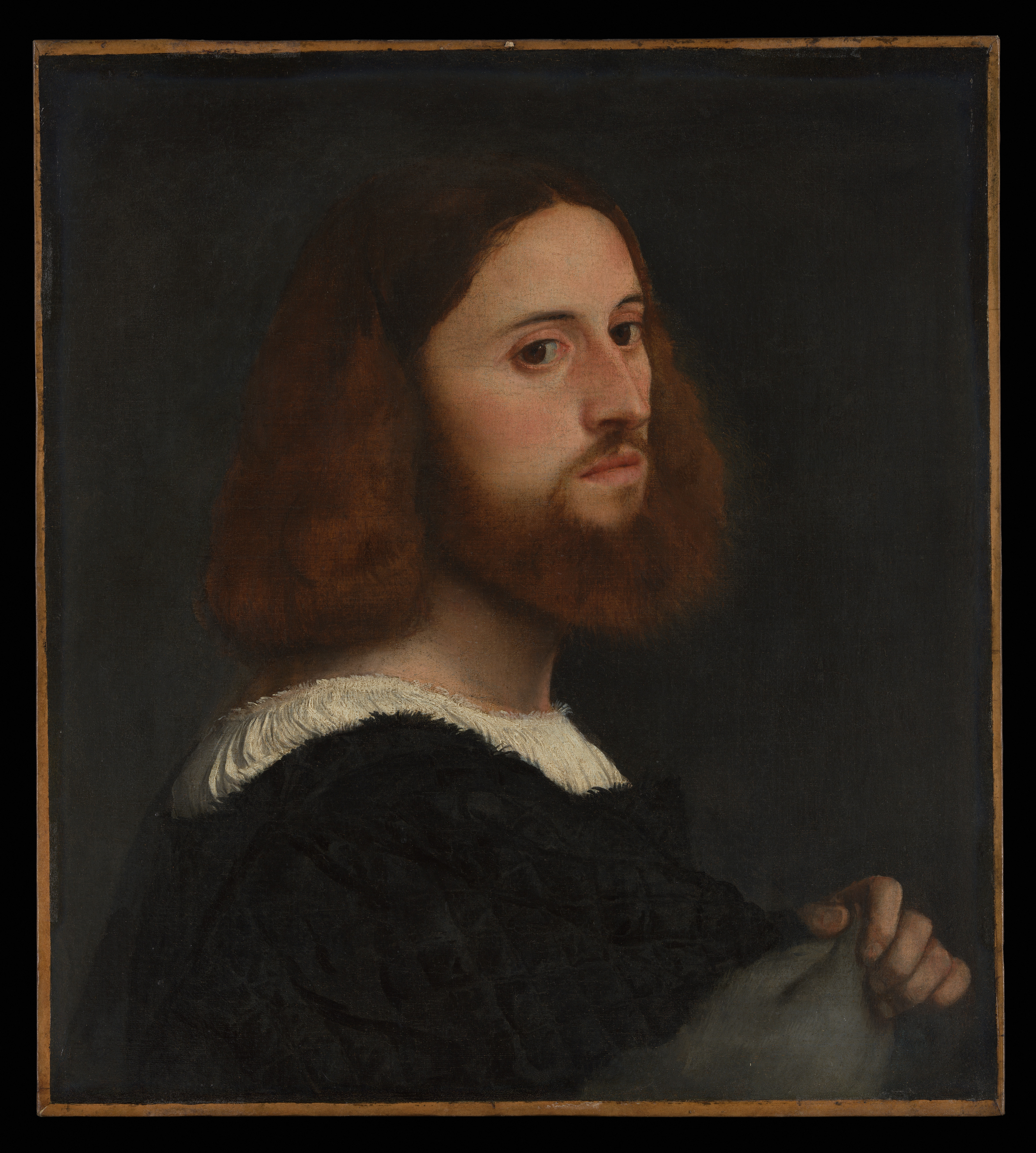
Deconstructing the Classical: The Portrait of a Man and the 2026 Silhouette
At Natalie Fashion Atelier, our curatorial practice is rooted in the discipline of aesthetic archaeology—the meticulous excavation of visual, material, and symbolic codes from historical masterpieces. In this research artifact, we isolate a singular work: Portrait of a Man, rendered in oil on canvas. This is not merely a painting; it is a cartography of power, restraint, and textile memory. By deconstructing its classical elegance, we extract a lexicon of form, texture, and light that directly informs the haute couture silhouettes of 2026.
The Archival Fragment: Materiality and the Gaze
The Portrait of a Man presents a subject whose posture is both sovereign and introspective. The oil medium, with its capacity for infinite gradation, captures the interplay of light across a dark, structured coat, a crisp white collar, and the subtle sheen of a silk cravat. The canvas itself becomes a repository of tactile information: the impasto highlights on the lapel, the sfumato softening the jawline, the chiaroscuro that carves volume into the shoulders. These are not merely painterly effects; they are material instructions for the couturier.
From an isolated archaeological perspective, we strip the portrait of its historical narrative—the sitter’s identity, the artist’s biography—and focus solely on the aesthetic physics of the image. What remains is a study in controlled tension: the rigidity of the outer garment versus the fluidity of the inner layers; the matte finish of the wool against the glossy highlights of the silk; the verticality of the torso versus the horizontal emphasis of the shoulders. This tension is the foundational principle for the 2026 silhouette.
From Canvas to Couture: Translating Painterly Codes
1. The Architecture of the Shoulder: From Chiaroscuro to Structure
In the Portrait of a Man, the shoulders are not merely anatomical; they are architectural. The painter has used chiaroscuro to create a pronounced, almost geometric volume—a silhouette that is broad, assertive, and yet softened by the fall of light. For 2026, this translates into the “Lumière Épaule” (Light Shoulder) construction.
Our atelier’s technical team has developed a new interlining technique using a hybrid of horsehair canvas and micro-fiber batting, which allows the shoulder to hold a sculptural form while maintaining a fluid drape. The key is the gradient of stiffness: the shoulder pad is densest at the apex, tapering to near-invisibility at the sleeve head. This creates a silhouette that appears to be carved from a single block of light—reminiscent of the painter’s brushstroke—yet moves with the wearer. The 2026 tailored jacket will feature a shoulder line that is both severe and soft, a paradox achieved by studying the transitional zones in the oil painting where shadow meets highlight.
2. The Collar as a Liminal Space: The White Linen and the Cravat
The white collar in the portrait is not an accessory; it is a threshold between the subject’s face and his formal attire. The painter has rendered it with a nearly translucent luminosity, suggesting a material that is both crisp and ephemeral. For the 2026 collection, we reinterpret this as the “Col Liminaire” (Liminal Collar).
This is not a traditional collar but a detachable architectural element crafted from double-faced silk organza and hand-pleated to create a fan-like structure that frames the neck. The pleating is inspired by the brushstroke rhythm observed in the painting’s collar—a series of parallel, slightly irregular lines that catch light at varying angles. In couture, this translates to a collar that is both a structural frame and a textile light-catcher. It can be worn with a tailored jacket or as a standalone piece, echoing the portrait’s tension between the formal and the intimate.
3. The Torso: Verticality and the Unseen Canvas
The dark coat in the Portrait of a Man is a study in negative space. The painter has used the deep, almost black pigment to create a vertical column that anchors the composition. The texture is implied, not explicit—a subtle grain that suggests wool or velvet. For 2026, we introduce the “Toile Obscure” (Obscured Canvas) silhouette.
This silhouette is defined by an elongated, seamless torso that extends from the shoulder to the mid-thigh, with no visible darts or seams. The construction relies on moulage à la main (hand-draping) over a custom dress form, using a double-faced cashmere that has been brushed to create a matte, almost painted surface. The absence of seams is a direct homage to the painter’s ability to create a continuous field of color. However, the interior architecture is complex: a hidden system of horsehair tapes and bias-cut panels provides structure without disrupting the surface. The result is a garment that feels like a second skin, yet holds the sculptural rigor of the painted coat.
Materiality as Narrative: The Oil-on-Canvas Lexicon
4. The Sheen of the Cravat: Translating Impasto into Textile
The silk cravat in the portrait is rendered with impasto—thick, visible brushstrokes that create a three-dimensional texture. This is not a smooth, reflective silk but a textured, tactile surface that invites touch. For 2026, we develop the “Impasto Soie” (Impasto Silk) technique.
This involves a custom jacquard weave that incorporates a raised, looped thread structure on a silk ground. The loops are irregular in height, mimicking the painter’s brushstrokes, and are hand-finished to ensure no two garments are identical. The cravat becomes a sculptural accessory—a focal point of light and shadow that echoes the painter’s hand. In the 2026 silhouette, this is integrated into the neckline of evening gowns and tailored vests, creating a visual anchor that draws the eye upward, mirroring the compositional strategy of the portrait.
5. The Ground: The Canvas as a Substrate for Luxury
The oil-on-canvas medium itself informs our approach to garment construction. The canvas is a substrate—a foundation that supports the paint while remaining invisible. In couture, this translates to the “Sous-Toile” (Under-Canvas) philosophy: the inner construction of a garment must be as refined as its exterior. For 2026, all tailored pieces will feature a hand-stitched inner canvas made from a blend of linen and silk, with the grain of the fabric aligned to the garment’s drape. This is not visible to the wearer, but it creates a structural integrity that allows the outer fabric to behave like paint—smooth, continuous, and responsive to light.
The 2026 Silhouette: A Synthesis of Restraint and Radiance
The final silhouette for 2026, derived from the Portrait of a Man, is one of controlled opulence. It is defined by:
- Broad, sculptural shoulders that taper into a narrow, elongated torso.
- High, architectural collars that frame the face without overwhelming it.
- Matte, seamless surfaces that absorb light, punctuated by textured, glossy accents at the neckline and cuffs.
- An overall verticality that elongates the figure, achieved through hidden structural elements and the strategic placement of seams.
This is not a historical reproduction; it is a translation of painterly logic into three-dimensional form. The 2026 Natalie Fashion Atelier collection will present garments that are, in essence, wearable canvases—each piece a study in the tension between structure and fluidity, light and shadow, the seen and the unseen. The Portrait of a Man is not a reference; it is a technical blueprint for a new era of haute couture.