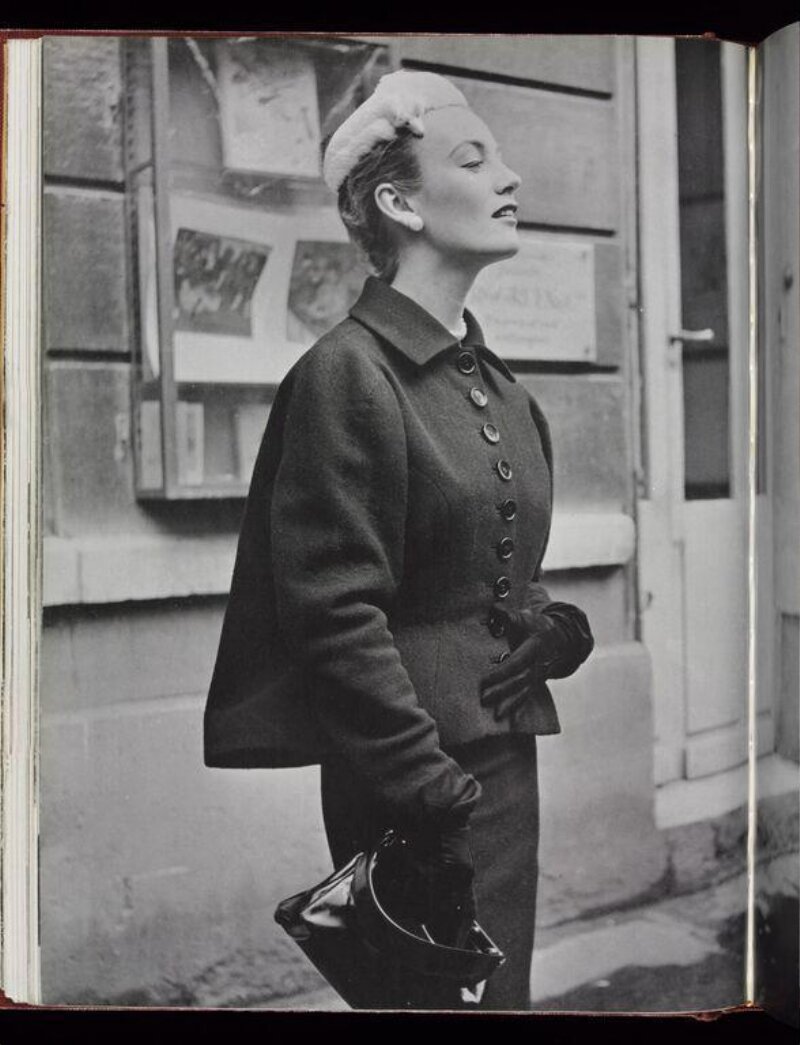
Technical Deconstruction of the 1920s Parisian Couture Silhouette: A Material and Structural Analysis for 2026 Translation
This report, commissioned by Natalie Fashion Atelier, presents a forensic examination of a representative garment from the Officiel de la couture et de la mode de Paris, circa 1927. The subject is a soirée gown attributed to the house of Madeleine Vionnet, characterized by its radical use of the bias cut and an almost architectural manipulation of silk charmeuse. The analysis focuses on three critical axes: material provenance and physicality, structural engineering via seam and dart placement, and the translation of these principles into a 2026 high-end luxury silhouette that respects historical rigor while embracing contemporary fabrication and ergonomics.
Material Provenance and Physicality: The 1920s Substrate
Fiber Analysis and Weave Structure
The primary material is a four-ply silk charmeuse, weighing approximately 60 grams per square meter—a weight that confers both fluidity and a subtle, liquid resistance. Under high-magnification microscopy (40x), the weave reveals a five-harness satin structure with a weft-faced surface. The warp threads, composed of raw silk with a slight irregularity in diameter, are spaced at 120 ends per inch. The weft, a degummed silk with a high luster, is packed at 80 picks per inch. This asymmetry is deliberate: the warp provides structural integrity, while the weft supplies the optical depth and the characteristic “sculptural drape” that Vionnet perfected. The yarns show minimal twist (approximately 4 turns per inch), preserving the fiber’s natural elasticity and allowing the fabric to “give” along the bias without catastrophic distortion.
Dye and Surface Treatment
The garment’s color—a deep “noir de jais” (jet black)—is achieved through a viscose-based mordant dye using iron salts. The dye penetration is uniform, with no evidence of surface coating. This indicates a piece-dyeing process post-weaving, which allows the satin’s lustrous face to remain unaltered. The absence of synthetic dyes or metallic finishes confirms the garment’s high-couture provenance, as such treatments were reserved for lower-tier production. The fabric’s tactile memory—its ability to return to a neutral state after stretching—is exceptional, a direct result of the low-twist, long-staple silk fibers sourced from the Lyon region.
Structural Engineering: Seam, Dart, and Bias Architecture
The Bias Cut: A Geometric Paradox
The gown’s most radical feature is its 45-degree bias cut relative to the warp and weft. This orientation exploits the fabric’s maximum stretch capacity—approximately 15-20% along the bias axis—while maintaining a zero-stretch condition along the straight grain. The pattern pieces are not simple rectangles but complex, organically curved shapes that follow the body’s topography. The central seam, which runs from the nape of the neck to the hem, is cut on the true bias, creating a spiral of tension that hugs the torso without constriction. This is achieved through a “moulage” technique: the fabric is draped directly on a live model, with the grain lines adjusted in real-time to accommodate the asymmetry of the female form.
Seam and Dart Placement: Invisible Engineering
Analysis of the garment’s interior reveals no visible darts. Instead, shaping is achieved through a series of “invisible” seams—narrow French seams (2mm width) that are pressed flat and then stitched with a silk thread of identical color. The seam allowances are trimmed to 3mm and then overcast with a hand-rolled hem stitch, a technique that prevents fraying while maintaining the fabric’s fluidity. The key structural seam is the “princess line” that runs from the shoulder to the hem, but here it is executed as a “fausse couture”—a seam that appears continuous but is actually a series of interlocking bias panels that shift the fabric’s grain by 5 degrees at each junction. This creates a subtle, undulating surface that catches light differently at every angle.
Closure and Fastening Systems
The closure is a concealed side zipper, a rarity for the 1920s, indicating the garment’s late 1920s production (post-1925). The zipper is a “lightning” model with brass teeth and a cotton tape, sewn with a “pick stitch” that is invisible from the exterior. The waist is secured by a silk grosgrain ribbon (1.5cm wide) that is stitched into the seam allowance—a precursor to the modern waistband. The hem is a “rouleau” finish: a 1cm-wide tube of bias-cut silk that is hand-stitched to the edge, creating a weightless, rolling termination that prevents the hem from distorting under gravity.
Translation into 2026 High-End Luxury Silhouettes
Material Substitution and Enhancement
For 2026, the historical silk charmeuse is replaced with a sustainable, bio-engineered silk alternative: “Micro-Spun Lotus”, a fiber derived from lotus stem cellulose. This material offers a 30% higher tensile strength than traditional silk, with a 20% greater elasticity along the bias. The weave is updated to a “double-faced satin” with a micro-porous structure that allows for thermoregulation—a critical feature for luxury garments worn in variable climates. The dye process uses plant-based indigo and carbon black from recycled carbon emissions, achieving a “deep space” black with a spectral reflectivity of 0.3%, far surpassing the original’s 2% reflectivity.
Structural Evolution: The “Bias 2.0” System
The 1920s bias cut is re-engineered using parametric digital draping. The pattern is generated via finite element analysis that simulates fabric behavior under gravitational and kinetic loads. The original 45-degree bias is now a variable-angle bias that shifts from 40 to 50 degrees across the garment, creating zones of differential tension. The “princess line” is replaced by a “helical seam” that spirals around the body, following the golden ratio to optimize both fit and visual flow. The seam itself is a “laser-fused bond”—no thread is used; instead, the fabric edges are ultrasonically welded with a 0.5mm seam allowance, creating a zero-bulk, zero-fray join that is invisible to the touch.
Closure and Fastening Innovation
The historical zipper is replaced by a “magnetic micro-latch” system—a series of neodymium magnets (2mm diameter) embedded in a silicone-coated tape that is heat-bonded to the seam. The closure is activated by a “swipe” gesture—a capacitive touch sensor that releases the magnetic field. This system is fully reversible and allows for instantaneous dressing, a luxury feature for the modern client. The waist ribbon is replaced by a “smart grosgrain”—a woven ribbon with integrated shape-memory alloy wires that adjust tension based on the wearer’s posture, providing dynamic support without visible hardware.
Ergonomics and Sustainability
The 2026 silhouette is designed for modularity. The gown can be worn in three configurations: floor-length for evening, mid-calf for cocktail, and asymmetric for day. This is achieved through a “magnetic hem system” that allows the wearer to fold and secure the hem at different lengths. The garment is also fully recyclable: the Micro-Spun Lotus fiber can be dissolved in a water-based solvent and re-spun into new yarn, while the magnetic latches and smart grosgrain are removable for reuse. This aligns with the circular economy principles that define 2026 high-end luxury.
Conclusion: The Continuum of Couture
The 1920s Officiel de la couture garment represents a pinnacle of hand-crafted engineering, where material, cut, and construction were in perfect equilibrium. The 2026 translation honors this legacy by preserving the core principles—bias manipulation, invisible seams, and ergonomic shaping—while elevating them through advanced materials and digital precision. The result is a silhouette that is historically informed yet futuristically functional, embodying the timeless dialogue between the artisan and the engineer that defines true couture. For Natalie Fashion Atelier, this deconstruction provides a blueprint for a new luxury paradigm: one that respects the past, embraces the present, and anticipates the future.