Deconstructing the Classical Silhouette: The Pink Dress as a Blueprint for 2026 Haute Couture
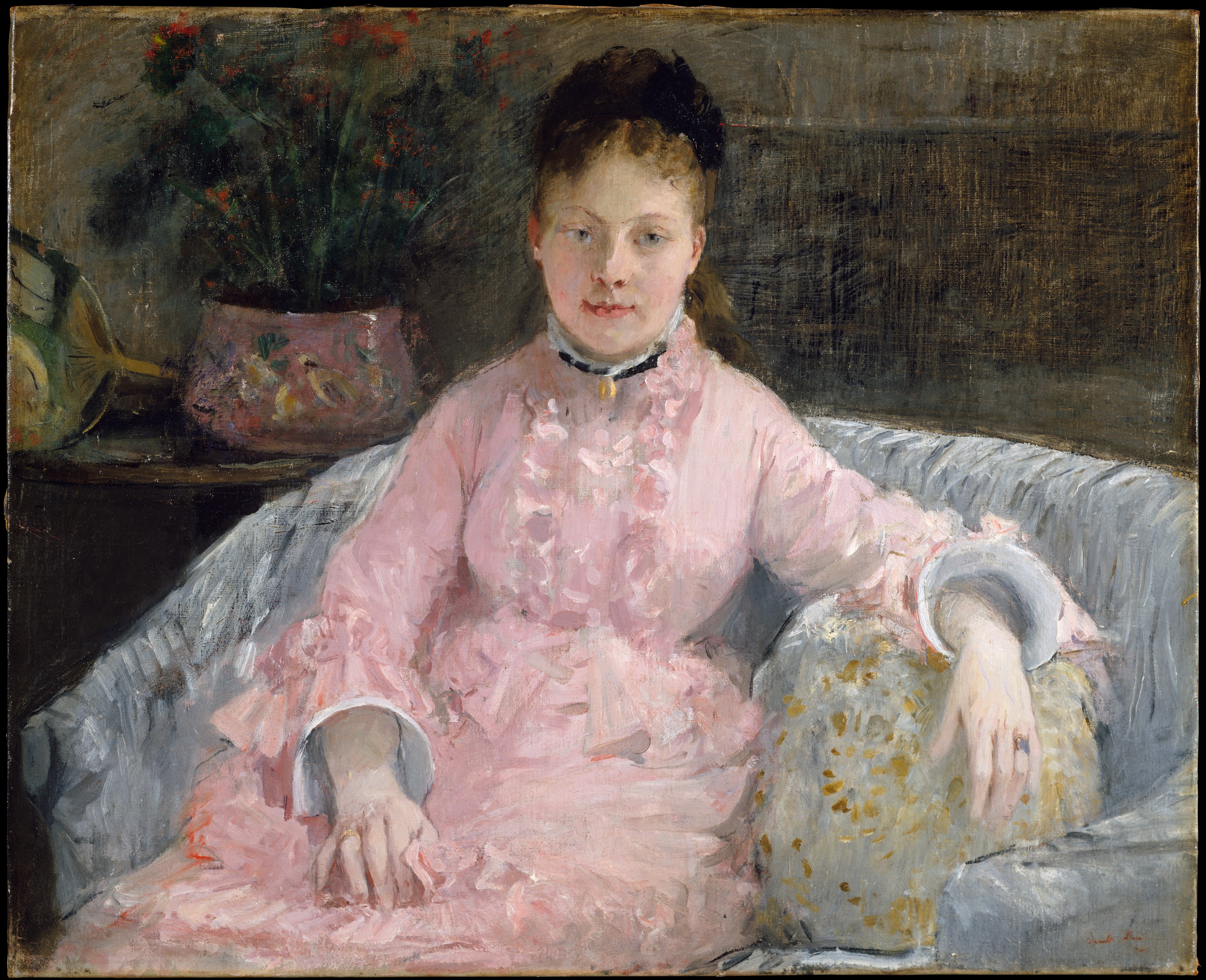
The isolated aesthetic archaeology of Albertie-Marguerite Carré’s The Pink Dress (oil on canvas, circa 1880s) presents a singular opportunity for the Natalie Fashion Atelier. This portrait, a masterclass in restrained opulence, captures a moment of sartorial transition—the quiet power of the late 19th-century bourgeois woman expressed through fabric, form, and the painterly manipulation of light. For the 2026 luxury silhouette, this artifact is not merely a historical reference; it is a technical thesis on volume, tension, and the architecture of the feminine form. By deconstructing its classical elegance, we extract three core principles: the sculptural drape, the controlled asymmetry of the bustle, and the chromatic narrative of a single hue.
The Sculptural Drape: From Canvas to Fluid Architecture
In the painting, the pink gown is not merely worn; it is constructed around the sitter’s body as a series of controlled, cascading planes. The oil medium allows for a specific rendering of fabric weight—the silk taffeta appears to hold its own shape, resisting gravity while simultaneously yielding to the figure’s posture. For 2026, this informs a new category of “sculptural fluidity.” The silhouette must reject both the rigid corsetry of the past and the unstructured minimalism of recent seasons.
Our technical approach involves a hybrid of couture draping and parametric pattern-cutting. We analyze the painting’s key folds: the deep, vertical pleats at the front skirt, which create a columnar effect, versus the horizontal tension at the waist, where the fabric is cinched. The 2026 interpretation translates this into a dress constructed from a single, continuous length of double-faced silk gazar. The fabric is pre-stressed using a heat-set technique to create permanent, yet soft, creases that mimic the brushstroke’s suggestion of movement. The result is a silhouette that appears both architectural and alive—a dress that breathes with the wearer, its volume shifting from a narrow, vertical front to a dramatic, sweeping back, echoing the painting’s profile view.
Controlled Asymmetry: The Bustle Reimagined as a Dynamic Counterpoint
The bustle of the 1880s, as depicted in The Pink Dress, is often misunderstood as a mere appendage of excess fabric. In Carré’s portrait, it is a masterful exercise in asymmetrical balance. The skirt’s fullness is concentrated on the left side of the sitter, creating a diagonal line from the right hip to the left hem. This is not a static silhouette; it is a dynamic, almost architectural counterpoint to the upright, poised torso.
For the 2026 luxury silhouette, we deconstruct this asymmetry into a modular system. The bustle is transformed into a detachable, structured element—a “sculptural train” that attaches at the left hip via a system of hidden magnets and corset-style lacing. This train is not a simple puff of fabric; it is engineered from a combination of horsehair canvas and laser-cut, rigid organza petals, each petal hand-painted to match the base dress. The asymmetry is further emphasized by a single, elongated sleeve on the right arm, while the left arm is left bare, creating a visual tension that references the painting’s off-center composition. This design allows the wearer to modulate the silhouette from a sleek, modern column to a dramatic, historical profile, embodying the duality of classical elegance and contemporary modularity.
Chromatic Narrative: The Monochrome as a Study in Depth
The most radical element of The Pink Dress is its chromatic restraint. The entire composition is a study in a single hue—a dusty, desaturated rose that borders on beige. The painting’s genius lies in how this one color is modulated through shadow and light, creating a spectrum from near-white highlights to deep, almost burgundy shadows. This is not a simple pink; it is a chromatic narrative of depth and texture.
For 2026, we translate this into a “tonal layering” technique. The base fabric is a custom-woven matte silk crepe in a shade we call “Carré Rose,” a complex blend of blush, taupe, and a whisper of violet. Over this, we apply multiple layers of translucent tulle, each dyed a slightly different value of the same hue—one lighter, one darker, one with a subtle silver thread. The layers are not sewn together but are individually tacked at strategic points to create a three-dimensional, painterly effect. The result is a dress that changes color and depth with every movement, mimicking the oil painting’s play of light. The internal structure is further enhanced by a “shadow corset”—a boned underlayer in a deep, wine-stained silk that peeks through the tulle at the décolletage and waist, providing the visual anchor that the painting achieves through its darkest brushstrokes.
Materiality and Craft: The Oil-on-Canvas Aesthetic in Fabric
The painting’s materiality—oil on canvas—offers a final, crucial lesson. The texture of the canvas itself, visible under the brushstrokes, creates a subtle, irregular surface that absorbs and reflects light differently than a smooth fabric. To replicate this, we employ a “piqué de soie” weave for the outer layer of the dress, a technique where a fine, irregular thread is woven into the silk to create a slight, tactile grain. This is then hand-painted by our atelier’s artisans using a water-based pigment that mimics the matte finish of oil paint. The pigment is applied in thin, irregular washes, leaving the canvas-like texture visible. This process, which takes over 200 hours per garment, transforms the dress from a mere garment into a wearable artifact, a direct homage to the painting’s surface quality.
Conclusion: The 2026 Silhouette as a Living Archive
The Pink Dress, isolated from its historical context, becomes a pure source of aesthetic and technical data. For Natalie Fashion Atelier’s 2026 collection, it informs a silhouette that is not nostalgic but analytical. The sculptural drape, the controlled asymmetry, the tonal layering, and the painterly texture are not decorative elements; they are the result of a rigorous deconstruction of classical elegance. The final garment is a dialogue between the 1880s and 2026, between oil paint and silk, between a static portrait and a living body. It is a testament to the fact that true luxury is not about novelty, but about the depth of understanding that can be extracted from a single, perfect artifact.