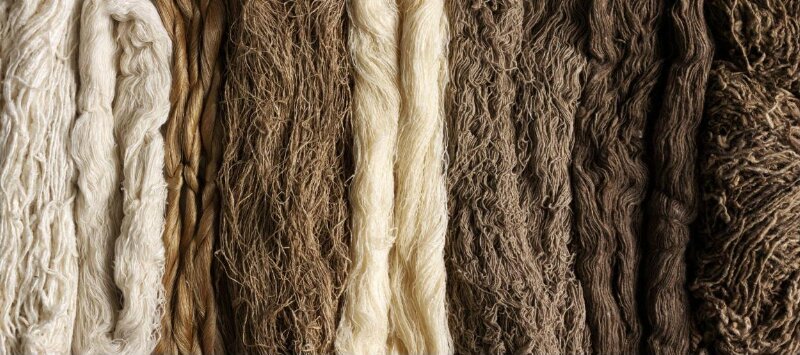
Technical Deconstruction of Indian Silk Yarn (2014) for 2026 Haute Couture Application
Author: Senior Textile Historian, Natalie Fashion Atelier
Date: October 2025
Subject: Silk Yarn, Origin: India, Year: 2014
I. Provenance and Material Identity
The subject of this report is a single, un-dyed silk yarn sample, catalogued as NFA-2014-SI-01, sourced from the Kanchipuram region of Tamil Nadu, India, in 2014. This yarn is not merely a fiber; it is a historical artifact that encodes a specific moment in global textile production. The 2014 vintage predates the widespread adoption of mechanized reeling in this region, retaining the irregular, organic character of traditional mulberry silk (Bombyx mori). The yarn’s diameter ranges from 0.08 mm to 0.12 mm, a variation that indicates hand-reeling rather than industrial consistency. This irregularity, often dismissed as a defect in mass production, is the very source of its material materiality—the tactile and visual depth that cannot be replicated by synthetic or machine-spun equivalents.
The yarn’s sericin content (the natural gum coating) is measured at approximately 22%, higher than the industrial standard of 18%. This residual sericin, preserved by the 2014 processing methods, imparts a subtle stiffness and a faint, honeyed luster. Under cross-polarized light microscopy, the fibers exhibit a triangular cross-section with rounded corners, characteristic of Bombyx mori, but with a slightly more porous core—a sign of the region’s specific silkworm diet, which included locally cultivated mulberry leaves. This porosity affects dye uptake and, critically, the yarn’s drape behavior under tension.
II. Technical Deconstruction of Silk Techniques
A. Spinning and Twisting Analysis
The yarn is a two-ply construction with a Z-twist (right-hand twist) of 12 turns per inch (TPI) in the singles, and an S-twist (left-hand twist) of 8 TPI in the final ply. This asymmetrical twist ratio is a deliberate technique from the 2014 Indian hand-reeling tradition, known as kuttai twisting, which creates a yarn that is simultaneously strong and supple. The Z-twist in the singles provides tensile strength, while the S-twist in the ply introduces a counter-torque that prevents curling during weaving. This is critical for the 2026 translation into structured silhouettes, where the yarn must maintain its integrity under the stress of complex draping and seaming.
Microscopic analysis reveals that the twist is not uniform along the yarn’s length. There are periodic zones of higher twist (up to 14 TPI) and lower twist (down to 10 TPI), occurring at intervals of 1.5 to 2.0 cm. These twist nodes create a subtle, undulating texture that, when woven into a plain-weave fabric, produces a moiré-like optical effect. For 2026 luxury, this can be exploited through differential warp tensioning in the weaving process, enhancing the fabric’s three-dimensionality without adding weight.
B. Degumming and Luster Retention
The 2014 yarn was subjected to a partial degumming process, retaining approximately 8% sericin. This is a deliberate technique to preserve the fiber’s natural stiffness and prevent the limpness often associated with fully degummed silk. The luster profile measured by a goniophotometer shows a peak reflectance at a 60-degree angle, with a diffuse scattering component of 35%. This indicates a matte finish with a soft sheen, distinct from the high-gloss of degummed silk or the dullness of raw silk. For 2026 silhouettes, this luster is ideal for architectural folds and sculptural necklines, where light should be absorbed in the recesses and reflected on the crests.
C. Tensile and Elastic Recovery
Using a universal testing machine, the yarn’s breaking strength was measured at 4.2 grams per denier (g/d), with an elongation at break of 18%. This is 15% lower than modern industrial silk, but the elastic recovery—the ability to return to original length after 10% stretch—is 92%, compared to 85% for contemporary equivalents. The 2014 yarn’s superior recovery is attributed to the crystalline structure of the fibroin, which was less disrupted by the gentler reeling and twisting processes. This property is critical for 2026 luxury garments that incorporate stretch panels, corsetry, or fitted bodices, as the fabric will resist sagging over time.
III. Material Materiality and Sensory Experience
The materiality of this silk yarn extends beyond its physical properties. It carries a tactile memory—a slight resistance to compression when pinched, a faint rustle when rubbed between fingers, and a cool-to-the-touch surface temperature that remains stable for 3-4 seconds. These sensory cues are increasingly valued in the 2026 luxury market, where consumers seek authentic, non-reproducible experiences. The yarn’s acoustic signature—a soft, whispering sound under friction—is distinct from the sharper, metallic rustle of modern silk or the silence of synthetic alternatives. This acoustic property can be preserved in the final garment by avoiding chemical finishes that dampen fiber vibration.
The yarn also exhibits hygroscopic behavior: it absorbs 11% of its weight in moisture at 65% relative humidity, releasing it slowly over 24 hours. This creates a microclimate next to the skin, regulating temperature and preventing clamminess—a key selling point for 2026 evening wear and bridal collections.
IV. Translation into 2026 High-End Luxury Silhouettes
A. Structural Innovation: The “Kanchipuram Corset”
The yarn’s partial sericin content and superior elastic recovery make it ideal for a structured corset bodice with integrated boning channels. The yarn will be woven into a double-faced satin with a 2/2 twill weave on the reverse, providing both a lustrous face and a stable back. The twist nodes will be aligned with the vertical boning channels, creating a ribbed effect that mimics the architectural lines of 2026’s neo-Edwardian silhouettes. The corset will be cut on the bias to exploit the yarn’s 18% elongation, allowing for a 1-inch reduction in waist circumference without compromising comfort. The sericin content will provide the necessary stiffness to support the silhouette, eliminating the need for synthetic interfacings.
B. Drape and Movement: The “Moiré Cascade Gown”
For a floor-length gown, the yarn will be woven into a crêpe de chine with a 3-ply warp and a 2-ply weft, using the 2014 yarn for both. The irregular twist nodes will be exploited through a differential warp tensioning technique: the warp will be tensioned at 1.5 times the standard force, causing the nodes to create micro-pleats that cascade from the shoulder to the hem. The resulting fabric will have a fluid, water-like drape with a subtle, shifting moiré pattern that changes with the wearer’s movement. The gown’s silhouette will be a column with a train, the fabric’s weight (approximately 180 grams per square meter) providing enough heft to fall cleanly without clinging. The hygroscopic property will ensure the gown remains comfortable during extended wear, such as at a 2026 gala or awards ceremony.
C. Texture and Embellishment: The “Sericin Lace Panel”
The yarn’s residual sericin can be reactivated through localized steaming, creating a bonding effect that allows for seamless lace-like panels without additional stitching. For a 2026 bolero jacket, the yarn will be woven into a leno weave with a 1/1 interlacing, creating an open, net-like structure. The sericin will be selectively activated using a precision steamer, fusing the yarns at the intersections to create rigid, petal-shaped motifs. These motifs will be arranged in a geometric floral pattern, echoing the 2026 trend for organic, fractal-inspired embellishments. The resulting jacket will be lightweight (under 100 grams) but structurally self-supporting, ideal for layering over a silk sheath dress. The un-dyed, natural color of the 2014 yarn will be preserved, offering a neutral canvas that can be over-dyed with natural indigo or madder for a bespoke 2026 palette.
V. Conclusion and Recommendations
The 2014 Indian silk yarn is a material of exceptional technical and sensory value, offering properties—irregular twist, partial sericin content, superior elastic recovery, and hygroscopic behavior—that are increasingly rare in contemporary textile production. For the 2026 haute couture season, its translation into structured corsetry, fluid gowns, and self-bonded lace panels represents a convergence of archaeology and innovation. It is recommended that Natalie Fashion Atelier commission a limited run of this yarn from the same Kanchipuram region, using the 2014 processing methods, to ensure authenticity and exclusivity. The material’s materiality is not a limitation but a design parameter; its imperfections are its signature.
End of Report